Difference Between Led And Incandescent Light Bulb

Alright, gather 'round, folks! Let's talk light bulbs. You know, those little glowing orbs that keep us from bumping into furniture in the dark? Specifically, we're going to have a showdown: LED vs. Incandescent. Think of it as the tortoise and the hare, only one's powered by ancient wizardry and the other by, well, slightly less ancient wizardry.
First up, the Incandescent bulb. Ah, the classic! Remember these? They’re like the grandpa of lighting, constantly complaining about how things were better “back in their day.” And by "better," they mean "less efficient and more likely to burst into flames if you look at them wrong."
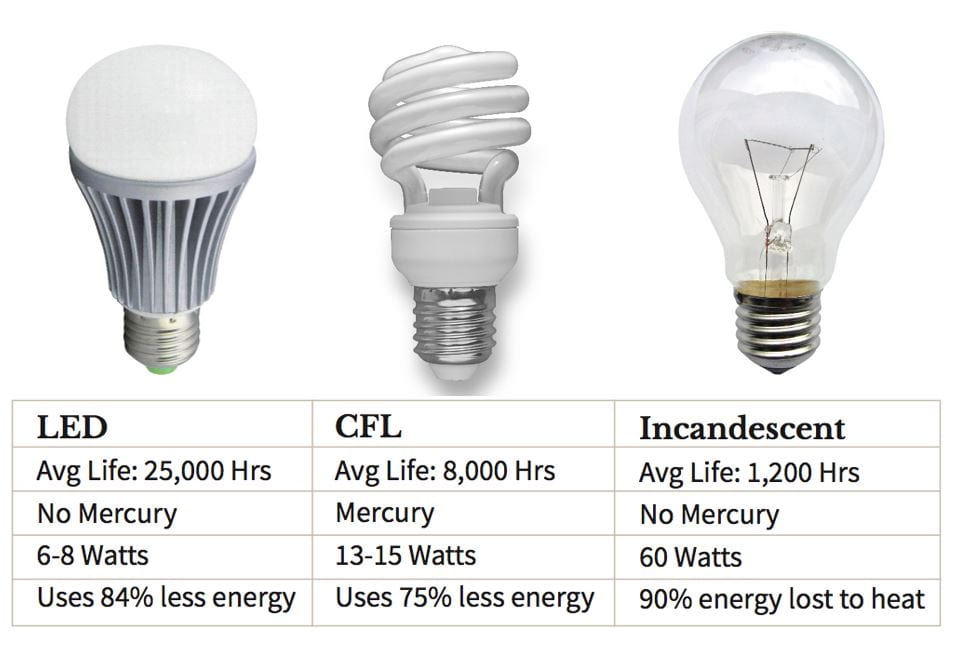
The magic (or lack thereof) behind an incandescent bulb is simple: you run electricity through a tiny wire (the filament) until it gets so hot it glows. Think of it like that time you left your phone charger plugged in all day and it became hotter than the surface of Mercury. Except, in this case, the heat is supposed to happen. But here's the kicker: only about 5% of the energy used by an incandescent bulb actually becomes light. The other 95%? Pure, unadulterated heat. That's why touching a lit incandescent bulb is a terrible idea, unless you're trying to perform a magic trick where you pretend to be a fire-breathing dragon. (Don't do that.)
Must Read
Now, let's bring in the LED, or Light Emitting Diode. The cool kid on the block. The one who's always on their phone but is surprisingly good at parallel parking. LEDs are basically tiny, super-efficient computers that spit out light. It’s all very technical involving semiconductors and quantum physics, but the important thing to remember is that it doesn't involve turning a wire into a miniature volcano.
Think of it this way: an incandescent bulb is like trying to heat your house with a bonfire in the middle of the living room. Sure, it'll get warm, but you'll also probably burn the house down and use a lot of fuel. An LED, on the other hand, is like having a perfectly efficient, miniature sun in every room, but without the skin cancer risk (probably. Don't quote me on that). They are cool to the touch and so much more energy efficient.
The Great Bulb Face-Off: Round 1
Energy Efficiency: This is where the LED absolutely destroys the incandescent. LEDs use up to 80% less energy to produce the same amount of light. That means lower electricity bills and a happier planet. The incandescent bulb just sits in the corner, sweating profusely and muttering about how "energy efficiency is just a fad."
Lifespan: Incandescent bulbs last, on average, about 1,000 hours. That's like, a month or two of regular use. LEDs, on the other hand, can last for 25,000 hours or more! That's years! You could install an LED and forget about it until your grandkids ask you what a light bulb even is. Meanwhile, you will be replacing the incandescent every few weeks. It’s like a never-ending game of "bulb whack-a-mole."
Cost: Okay, here's the one area where incandescent bulbs used to have a slight advantage. They were cheap. But let’s be honest, even factoring in the initial higher purchase price of LEDs, the energy savings and long lifespan mean you'll save money in the long run. It's like buying a really expensive pair of boots that last you ten years versus buying a cheap pair every year. You think you're saving money with the cheap boots, but your feet are cold and wet, and you're constantly having to replace them.

The Great Bulb Face-Off: Round 2
Heat: We've already touched on this, but it's worth reiterating: incandescent bulbs are miniature heaters. LEDs are cool to the touch. This is especially important if you have kids or pets who like to touch things they shouldn't. Or if you live in a hot climate and don't want your light bulbs contributing to global warming. Plus, imagine using incandescent bulbs for a disco party: the heat would be unbearable.
Color: Okay, incandescent bulbs do have a certain warm, cozy glow that some people find appealing. It's like the lighting in a romantic movie scene, all soft and flattering. LEDs, however, can now be made in a huge range of colors and color temperatures, from warm white to cool blue. Want to make your living room look like a spaceship? LEDs can do that. Want to recreate the ambiance of a tropical sunset? LEDs have got you covered. The possibilities are endless.

Durability: Incandescent bulbs are fragile. Drop one, and it's game over. LEDs are much more durable. You could probably drop one off a building and it would still work (don't try this at home. I am not responsible for any broken LEDs or personal injuries). This is especially useful for things like outdoor lighting, where the bulbs might be exposed to the elements.
The Verdict
So, who wins the great bulb showdown? The answer is clear: LEDs are the future. They're more efficient, longer-lasting, cooler, and more versatile. Incandescent bulbs are like that old, unreliable car that you keep meaning to replace but never get around to. It's time to ditch the gas guzzler and embrace the future of lighting! Plus, think of all the money you'll save on electricity bills. You could use that money to buy something really cool, like a self-stirring coffee mug or a lifetime supply of socks.
So, there you have it. The next time you're shopping for light bulbs, remember this epic battle. And choose wisely. Your wallet (and the planet) will thank you.