Difference Between Ac Generator And Dc Generator

Alright, let's talk generators! Not the kind that power your grandma's life support (hopefully not!), but the electrifying kind that make our modern world tick. We're diving into the difference between AC and DC generators. Think of it as the battle of the currents, but way less dramatic and with more explanation… and hopefully, some laughs.
So, what's the deal? Imagine your favorite superhero – let’s say, Flash. Now, imagine he’s not just running in one direction, but zig-zagging back and forth constantly. That’s kind of like AC, or Alternating Current. The electricity flows one way, then reverses, then flows the other way, creating this wave-like pattern.
DC, or Direct Current, on the other hand, is like Superman flying in a straight line. Steady, reliable, and always going in one direction. No zig-zagging here! It’s like the difference between a toddler with a sugar rush and a disciplined marathon runner.
Must Read
The Inner Workings: It's All About the Spin
The magic happens with spinning magnets and coils of wire. Seriously, that's the gist of it! Both AC and DC generators use the principle of electromagnetic induction. It's a fancy way of saying that when you move a magnet near a wire, it creates electricity. Think of it as waving your hand really fast to cool down... except instead of cooling, you're making power!
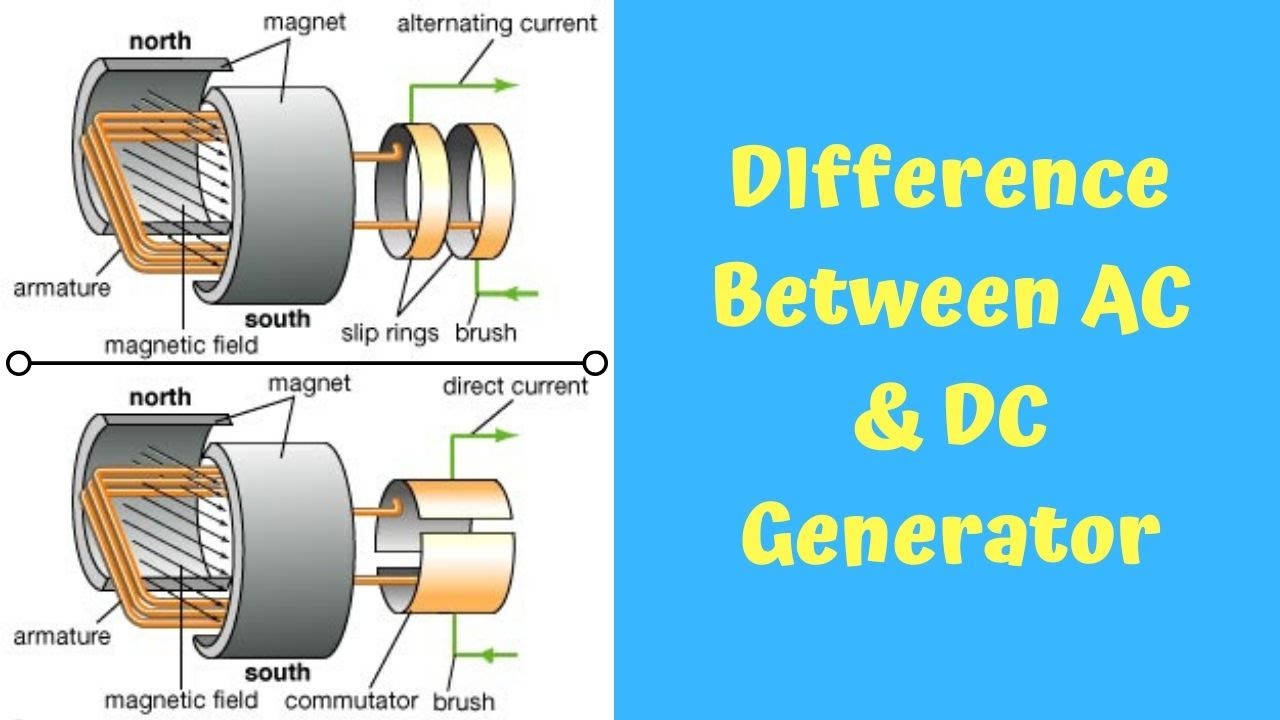
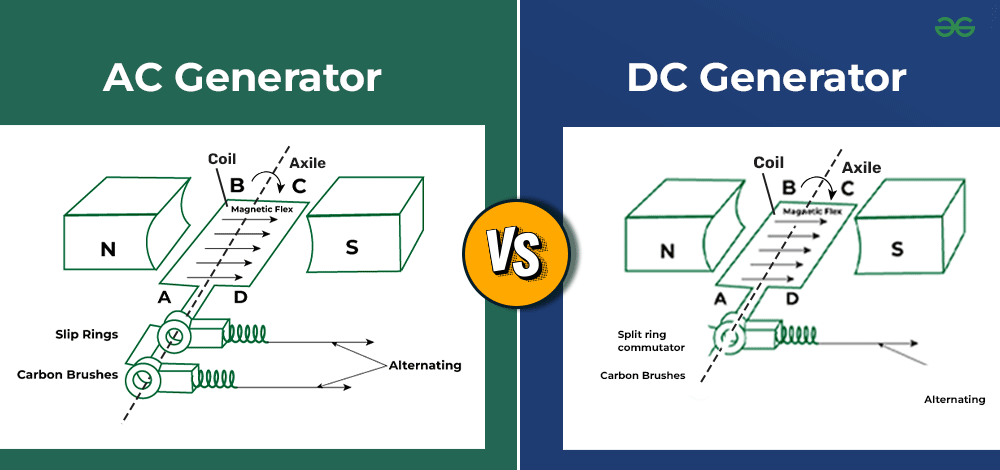
In an AC generator, the coils and magnets are arranged so that the current naturally changes direction as it spins. Think of it like a revolving door – you're constantly entering and exiting on different sides. This creates that alternating current we talked about earlier.

A DC generator is a bit more clever. It uses something called a commutator. This little device is like a switch that flips the current's direction at just the right moment, ensuring it always flows in one direction. Imagine it as a tiny traffic cop inside the generator, constantly directing the flow of electricity.
Where Do We Find Them? Everyday Examples
Okay, so where do you actually see these things in action? AC is the rockstar of the power grid. Your wall outlets at home? Almost certainly AC. It’s super efficient for transmitting power over long distances because it can be easily stepped up or down using transformers. Think of those huge power lines you see across the countryside – they’re carrying AC power all over the place!
DC is the reliable workhorse. Batteries? DC. Electronic devices like your phone, laptop, and tablet? They run on DC. Those cute little solar panels on your roof? They actually generate DC, which is then often converted to AC for your home.
Imagine your car. The alternator (which is basically an AC generator with some extra bits) creates AC power, but it gets converted to DC to charge your battery and run things like your headlights and radio. It's a whole team effort!

So, Which One Wins?
There's no real "winner" here. Both AC and DC have their strengths and weaknesses, and they’re used for different purposes. AC is great for long-distance transmission and powering homes and businesses. DC is ideal for battery-powered devices and electronics.
Think of it like this: AC is like ordering pizza for a big party – efficient, convenient, and everyone gets a slice. DC is like making a gourmet sandwich for yourself – precise, controlled, and perfect for a specific task.
In the end, understanding the difference between AC and DC generators is like understanding the difference between a comedy and a drama. They both entertain us, but in completely different ways. And just like we need both comedies and dramas, we need both AC and DC to keep our world powered up and running!