Difference Between A Windmill And A Wind Turbine

Ever driven past a field dotted with giant spinning structures and wondered, "Is that a windmill or a wind turbine?" Don't worry, you're not alone! The terms are often used interchangeably, but there's a key difference that makes them fascinatingly distinct. Understanding this difference isn't just trivia; it's about appreciating how we've harnessed the power of the wind for centuries, evolving from grinding grain to powering our homes. So, let's dive into the world of wind-powered technology!
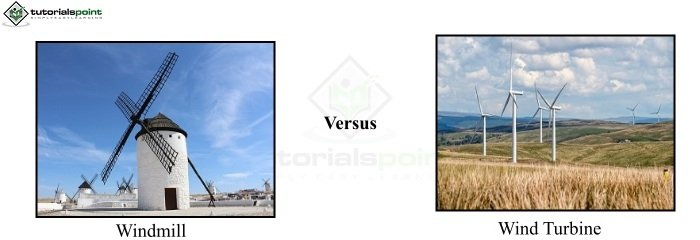
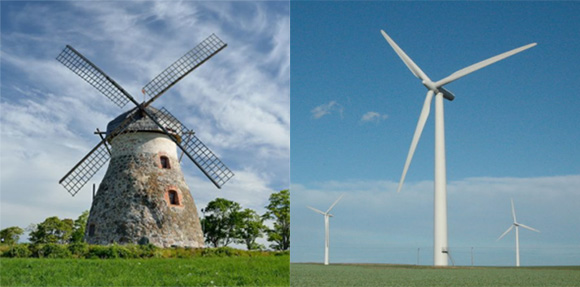
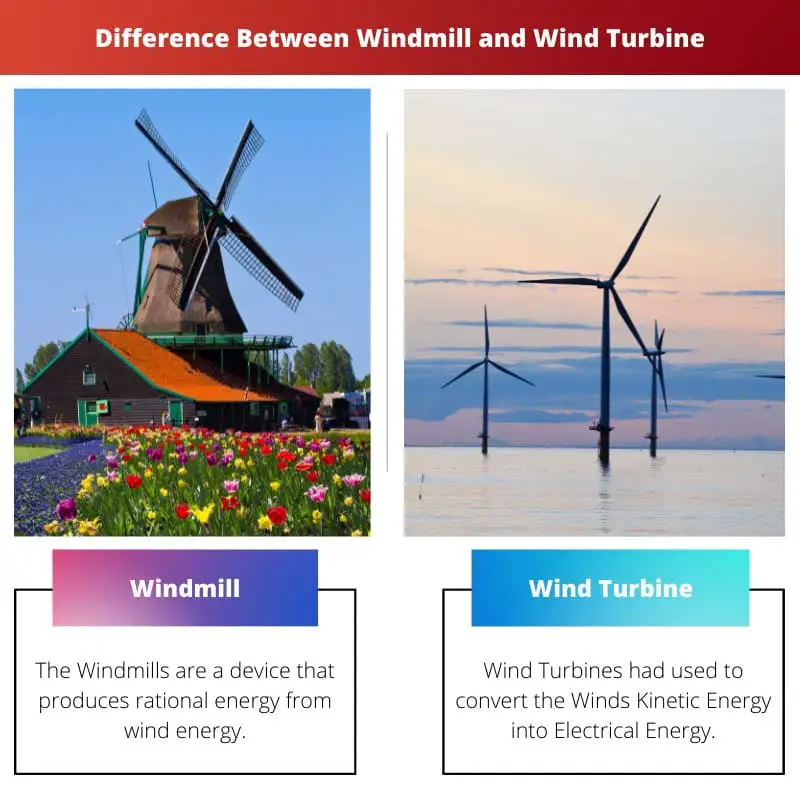
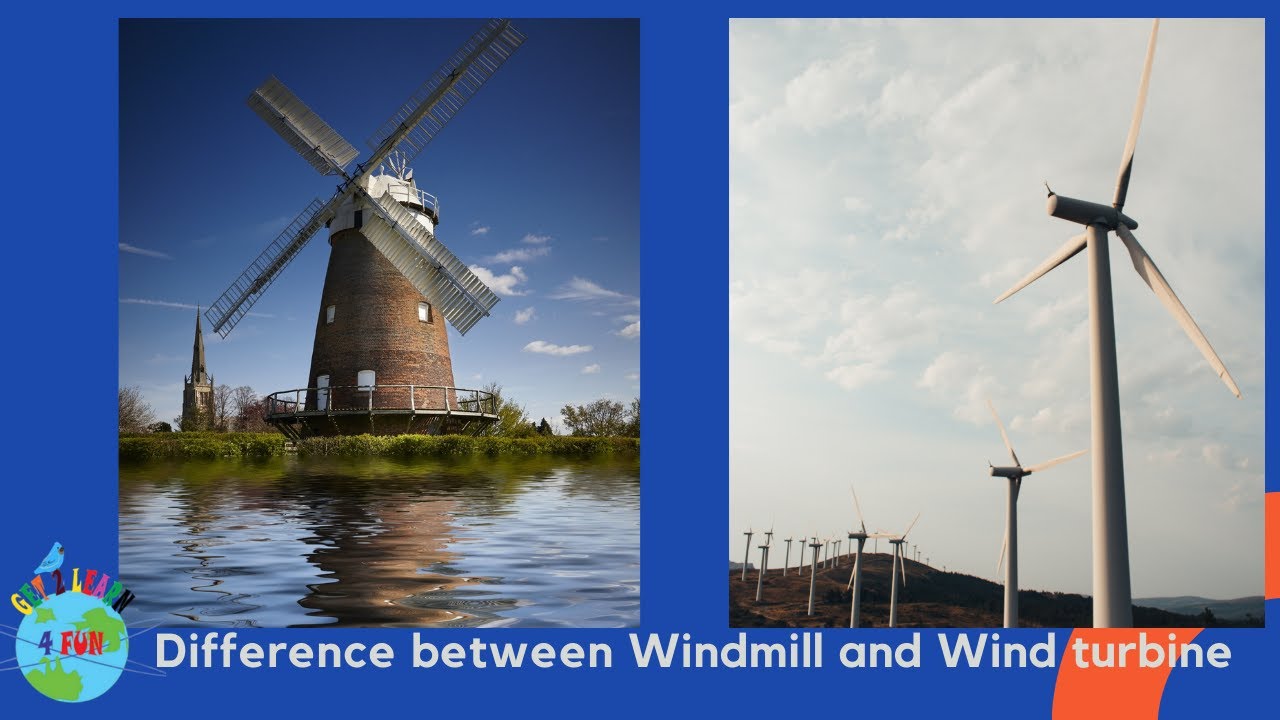
First, let's talk about the windmill. Think of a picturesque scene from a Dutch landscape – a charming, often wooden, structure with sails gracefully turning. The primary purpose of a windmill is to perform mechanical work. Traditionally, this meant grinding grain into flour (hence the name!), pumping water for irrigation, or sawing wood. The wind's energy directly powers this mechanical process. The sails catch the wind, rotating a central shaft that's connected to gears and other machinery inside the mill. This mechanical energy is then used to accomplish the desired task. For example, turning massive millstones to grind wheat.
The benefits of windmills are rooted in their simplicity and sustainability. They utilize a readily available, renewable energy source – the wind! They were crucial for agriculture and industry for centuries, providing essential services in areas with consistent wind. While windmills are less common today, their historical significance is undeniable, and some are still used in traditional settings or as tourist attractions.
Must Read
Now, let's move on to the wind turbine. These modern marvels are designed for one specific goal: generating electricity. Unlike windmills that directly convert wind energy into mechanical work, wind turbines use the wind to rotate blades connected to a generator. This generator then converts the mechanical energy into electrical energy, which can be fed into the power grid, stored in batteries, or used to power individual homes or businesses. Think of them as miniature power plants harnessing the breeze.
The benefits of wind turbines are significant in today's world. They provide a clean, renewable source of energy, reducing our reliance on fossil fuels and minimizing carbon emissions. Wind farms, clusters of many wind turbines, can generate substantial amounts of electricity, contributing to a more sustainable energy future. They are also becoming increasingly efficient and cost-effective, making wind power a viable alternative to traditional energy sources.
So, to recap: a windmill uses wind power for mechanical tasks like grinding grain or pumping water, while a wind turbine converts wind power into electricity. Both represent ingenious ways to harness the power of the wind, but their purpose and the way they function are fundamentally different. Next time you see one of these structures, you'll know exactly what it's doing and appreciate its unique contribution to our world, past and present!