
Difference Between A Kilowatt And A Kilowatt Hour

Hey there! Ever get tripped up by the difference between a kilowatt (kW) and a kilowatt-hour (kWh)? Don't worry, you're not alone! It's a common confusion, but trust me, once you get it, you'll be explaining it to everyone at parties. (Okay, maybe not parties... unless you're really into energy efficiency).
Think of it this way: Imagine you're talking about speed and distance in a car. A kilowatt is like the speed you're driving – how fast you're using energy at a specific moment. A kilowatt-hour is like the distance you've traveled – how much energy you've used over a period of time.
Kilowatt: The Instant Power Punch
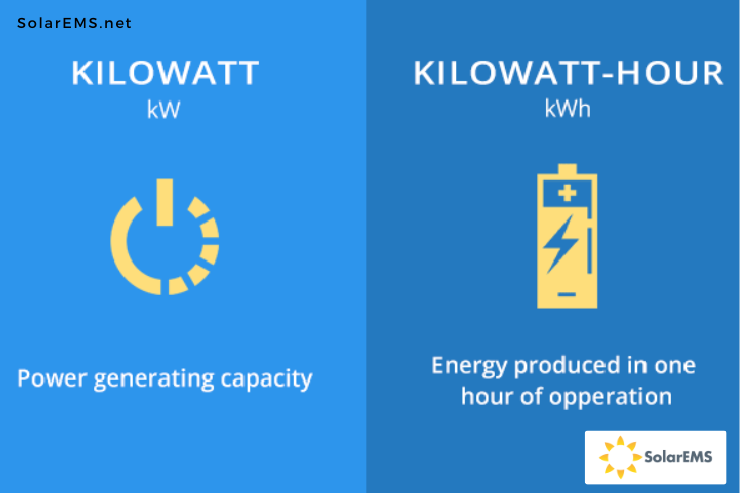
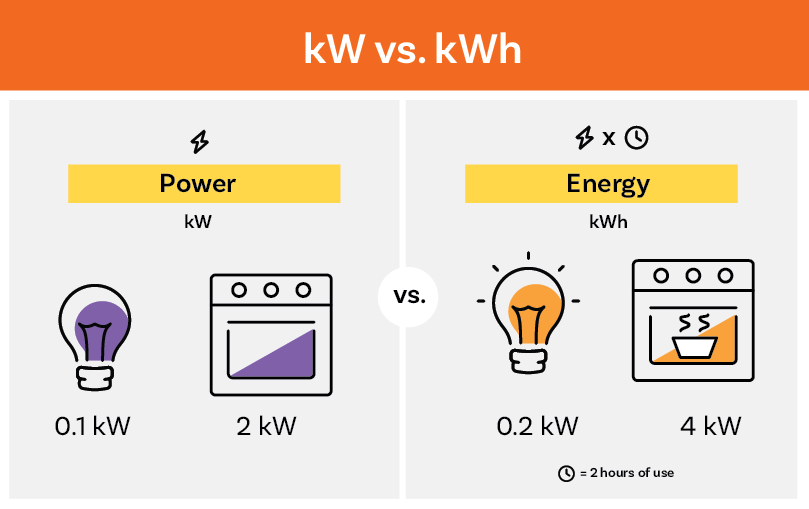
So, let's break down the kilowatt (kW). It's a unit of power. Power is simply the rate at which energy is being used or generated. Picture a light bulb. A 100-watt light bulb (0.1 kW) is using energy at a rate of 100 watts at any given second it's switched on. A kilowatt is just 1,000 watts. That's all! It’s like saying you're driving at 60 miles per hour right now.
Must Read
Think of your appliances: a microwave might draw 1.2 kW, your hairdryer maybe 1.5 kW, and that monster gaming PC? Probably even more! It tells you how much power they're pulling when they're running. Basically, the kilowatt tells you how thirsty an appliance is when it's drinking.
Key takeaway: Kilowatts measure the instantaneous rate of energy use.
Kilowatt-Hour: The Energy Log
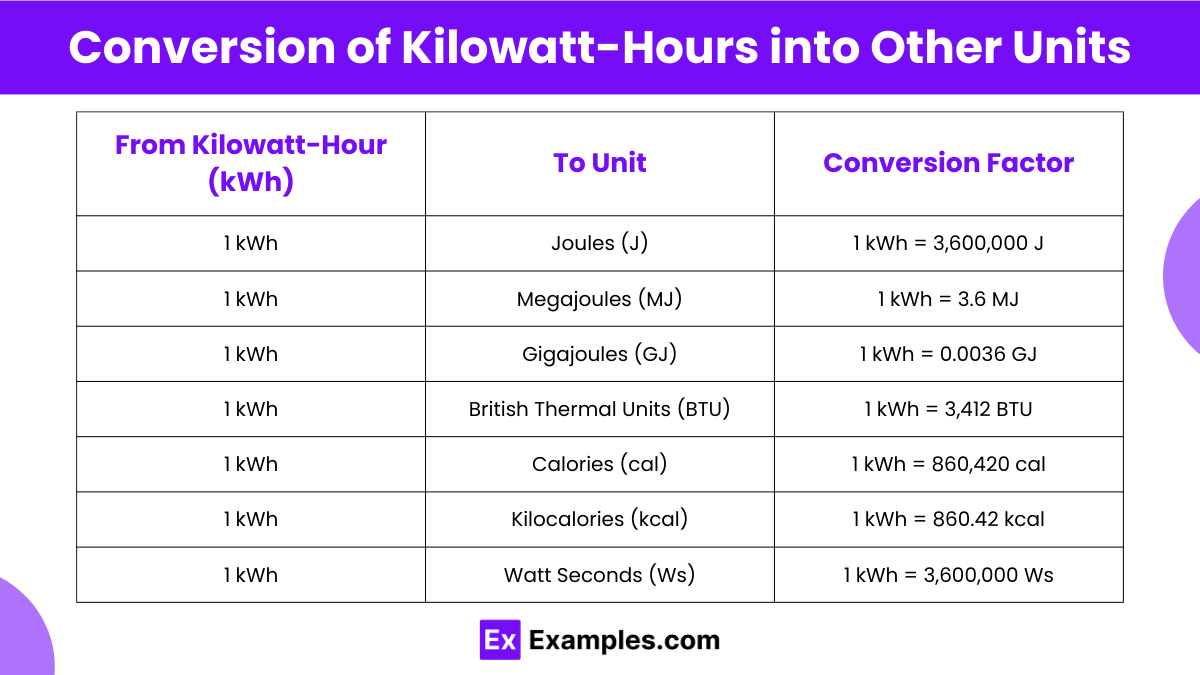
Now, let's talk kilowatt-hours (kWh). This is where the magic happens! A kilowatt-hour is a unit of energy. It tells you how much energy you've used over a period of time. It’s calculated by multiplying the power (in kilowatts) by the time (in hours). Back to our car analogy – it's like saying you drove 300 miles. You don't know how fast you were going, just how far you went.
For instance, if you leave that 100-watt light bulb (0.1 kW) on for 10 hours, you've used 1 kilowatt-hour of energy (0.1 kW x 10 hours = 1 kWh). And that is what your electricity bill is based on! They charge you for the total amount of energy you've consumed, measured in kilowatt-hours.
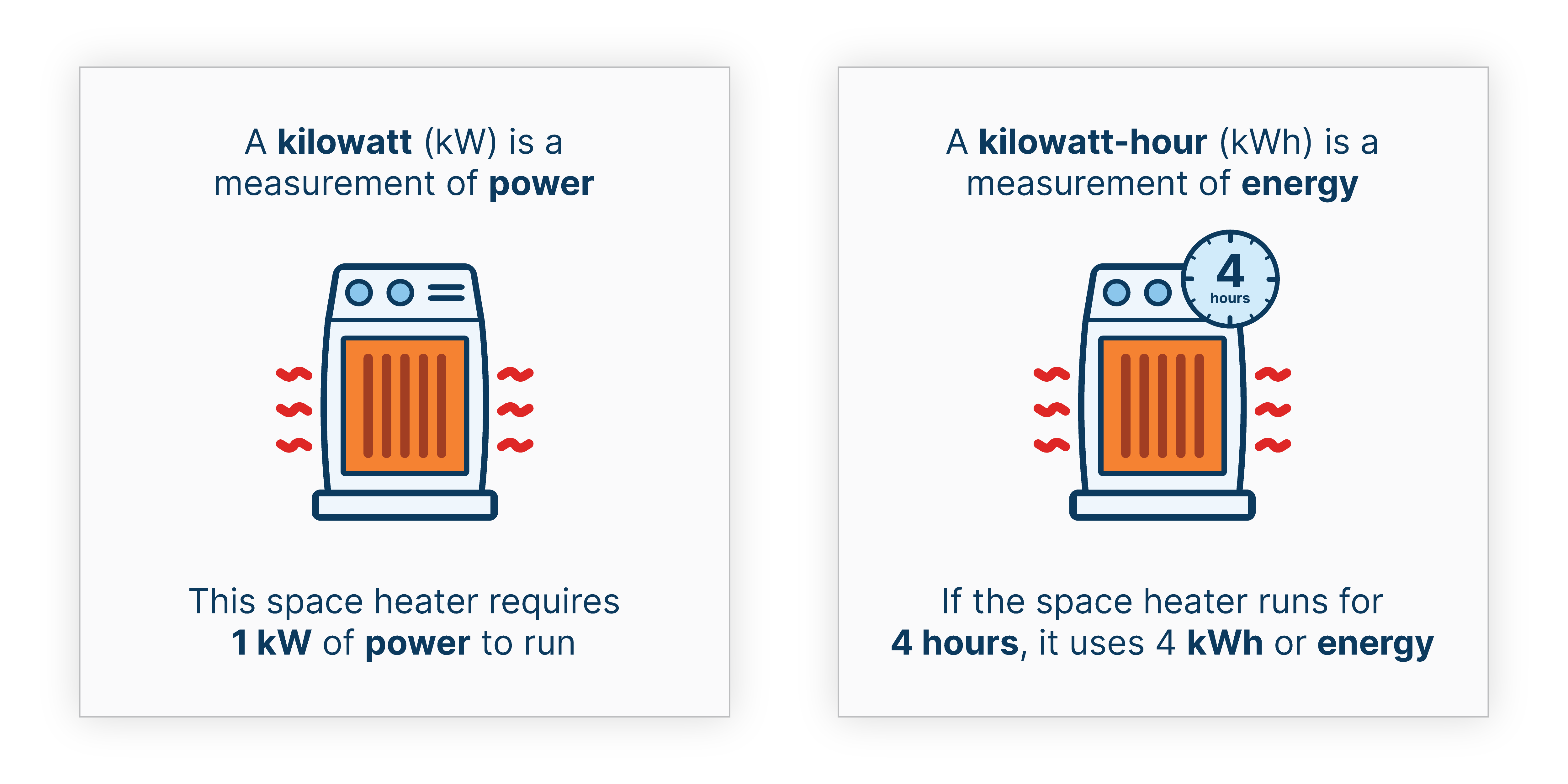
Think about it: running a 1 kW heater for one hour will use 1 kWh. Running a 0.5 kW fan for two hours will also use 1 kWh. See? It's the total energy used, regardless of how powerful the appliance is or how long you run it.
Key takeaway: Kilowatt-hours measure the total energy used over time.
Why Does This Matter? (Besides Bragging Rights)
Understanding the difference between kW and kWh helps you make smart energy choices. Knowing how many kilowatts your appliances draw lets you estimate how many kilowatt-hours they'll use over time. This helps you predict your energy bill and find ways to save money! For instance, you might decide to use a less powerful (lower kW) appliance or use appliances for a shorter amount of time (fewer hours) to reduce your kWh consumption. Clever, right?
Imagine you’re choosing between two air conditioners. One has a lower kW rating but a higher energy efficiency rating (meaning it uses less kWh to cool the same amount). Knowing this difference, you can calculate which AC will save you more money in the long run, even if the initial purchase price is higher. You're basically a superhero of energy efficiency!
Plus, understanding these concepts is crucial when considering solar panels or other renewable energy sources. You need to know how much power your panels can generate (kW) and how much energy you'll actually produce over time (kWh).
In a nutshell: Kilowatt = Instant Oomph. Kilowatt-hour = Total Energy Used.
Final Thoughts: You've Got This!
So, there you have it! The mystery of the kilowatt and kilowatt-hour is solved! You can now confidently explain the difference to your friends, family, and even that slightly confused neighbor. And remember, every little bit of energy understanding helps us make smarter choices for our planet and our wallets. Go forth and be energy-wise! You’re now officially equipped to conquer your energy bills and maybe, just maybe, impress someone at a party. Now go forth and shine... efficiently!