
Diagram Of How Wind Power Work
Ever found yourself staring at a diagram? You know the type. Lots of lines. Even more arrows. A confusing jumble of boxes and labels.
Your brain probably does a quick scan, then politely says, "Nope." It’s like a secret language, meant only for a select few.
Today, we're going to bravely explore one of these mythical beasts: the diagram of how wind power works. Not the actual science, but the diagram itself!
Must Read
The Intimidating Diagram: A Tourist's Guide
First glance at a wind power diagram can feel like trying to assemble IKEA furniture without instructions. Or maybe with too many instructions.
There are so many little bits and pieces. Each with a technical name that sounds like it belongs in a sci-fi movie.
But fear not! We're here to playfully peek behind the curtain. We'll simplify, exaggerate, and maybe even share an "unpopular" opinion or two.
The Majestic Blades: Nature's Giant Spoon
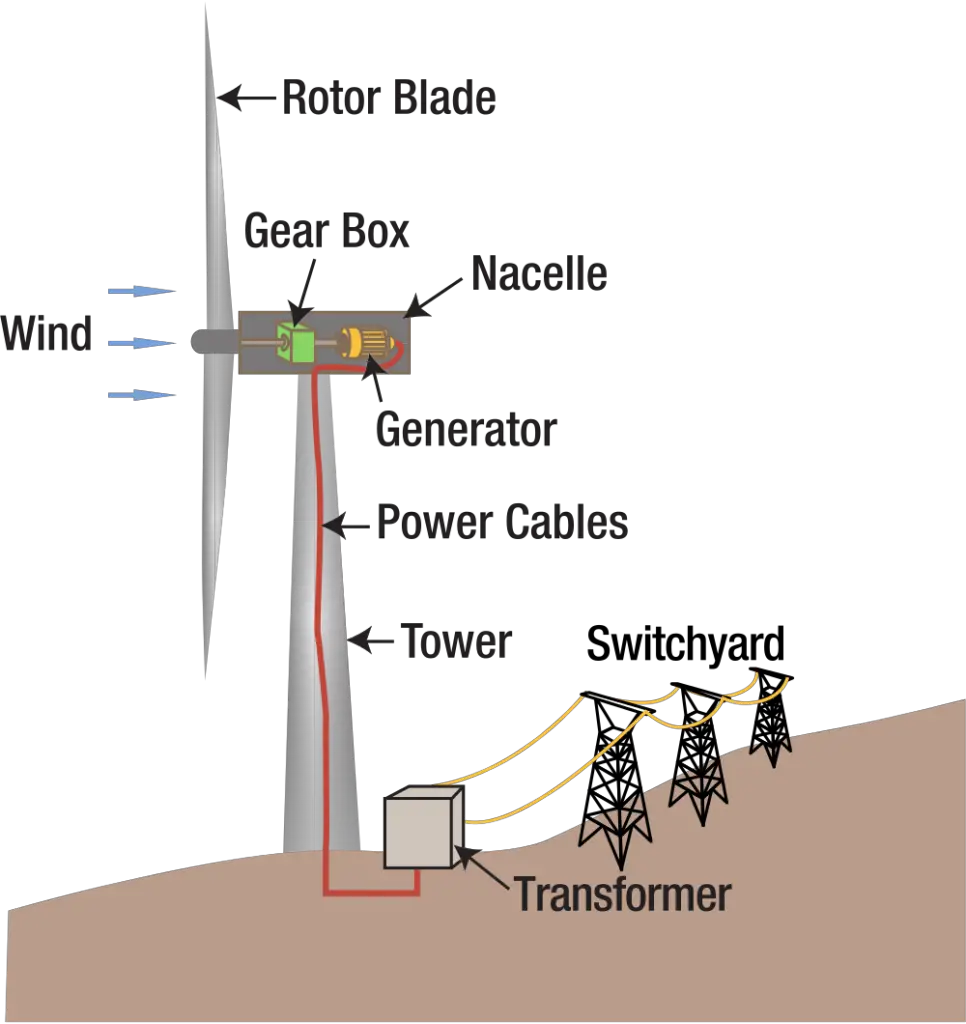
Let's start with the most obvious part: those absolutely enormous blades. They look like airplane wings, or perhaps the world's biggest dessert spoons.
They stretch high into the sky, catching every breeze. It’s their primary job, and they’re really good at it.
Their task is surprisingly straightforward: just let the wind push you. Like a child's pinwheel, but on a colossal scale.
When the wind blows, these graceful giants start to turn. Slowly at first, then gaining a steady, mesmerizing rhythm.
It's this simple rotation that kicks off the entire process. It’s the very first domino in a very clever, invisible chain.
You might see arrows on the diagram showing the wind direction. As if the wind needs directions to do its thing!
It just blows where it wants. The blades just happen to be in the way, in a very intentional sort of way.
The Mysterious Nacelle: The Brainy Box
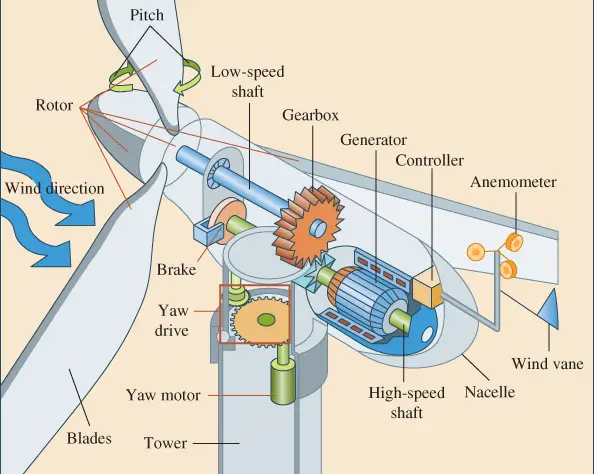
Follow those spinning blades back to the huge box they're attached to. This is called the nacelle.
It sounds like something out of a complicated medical textbook, doesn't it? But really, it's just a big, smart box.
Inside this box? Oh, it’s a whole universe of clever engineering. Gears! Shafts! And more gears!
Think of it like the gearbox in a car, or even a super-sized bicycle chain. The blades spin relatively slowly.
The nacelle's job is to take that slow, powerful spin and speed it way, way up. It's a fantastic little trick.
The diagram will probably show a bunch of cogs interlocking here. Don't worry about counting them all.
Just know they're working hard, transforming a gentle whirl into a rapid spin. It's like magic, but with metal.
Sometimes you see a little wind vane or anemometer on top. These tell the nacelle which way the wind is blowing, and how fast.
This allows the entire nacelle to rotate, facing the blades into the wind for maximum capture. Like a sunflower tracking the sun.
The Powerful Generator: Electricity's Secret Sauce
All that speedy spinning from the nacelle leads directly to the generator. This is where the real electrical magic happens.
The diagram might show coils of wire and magnets. It looks complicated, but the core idea is elegantly simple.
When magnets spin around wires (or wires spin around magnets!), something wonderful occurs: electricity is born.
It's an invisible force, suddenly brought to life by the simple act of turning. A true marvel of physics.
This is the moment wind energy transforms into the power that lights our homes. It’s the grand finale of the internal process.
Without the generator, all that spinning would just be a very impressive, very pointless show. It’s the heart of the operation.
So when you see that section labeled 'Generator', just whisper, "That's where the zap comes from." You'll be pretty close.
The Sturdy Tower: The Unsung Hero
And all this incredible machinery? It's perched high atop a massive, unassuming tower. Just standing there, looking tall and stoic.
The diagram might just show a long vertical line. But this tower is crucial, a true unsung hero.
Its job is simple, yet vital: lift everything up. The higher you go, the stronger and more consistent the wind usually is.
It's like a giraffe stretching its neck to reach the tastiest leaves. Or a very tall lamppost with a spinning head.
It also securely anchors the entire turbine. Imagine the forces involved with those giant blades catching the wind!
The tower has to be incredibly strong and stable. It’s the quiet backbone of the whole operation.
Without its immense strength, the whole elegant structure would be nothing more than a heap of metal. So give a nod to the tower.
The Invisible Force: The Wind Itself
We've talked about all the visible parts, but what about the invisible star? The actual wind?
The diagram might show some wavy lines or arrows, representing its movement. But it's far more profound than that.
It just blows. Effortlessly. A constant, natural phenomenon, driven by the sun's energy and the Earth's rotation.
It doesn't ask for a salary. It doesn't need a coffee break. It simply provides the raw power.

Without it, those magnificent blades would stand perfectly still. A very expensive, very dramatic lawn ornament.
So, next time you feel a breeze, remember it's not just messing up your hair. It’s powering entire cities.
The wind truly is the original, free fuel. And it’s always on offer, swirling around us.
Connecting to the Grid: To Your Toaster!
So, the generator makes electricity. Great! But what happens next? It needs to go somewhere useful, right?
The diagram will show thick cables running down the inside of the tower. Like super-fast internet, but for electrical power.
These cables carry the newly generated electricity from the turbine. Out from the base of the tower, and into the ground.
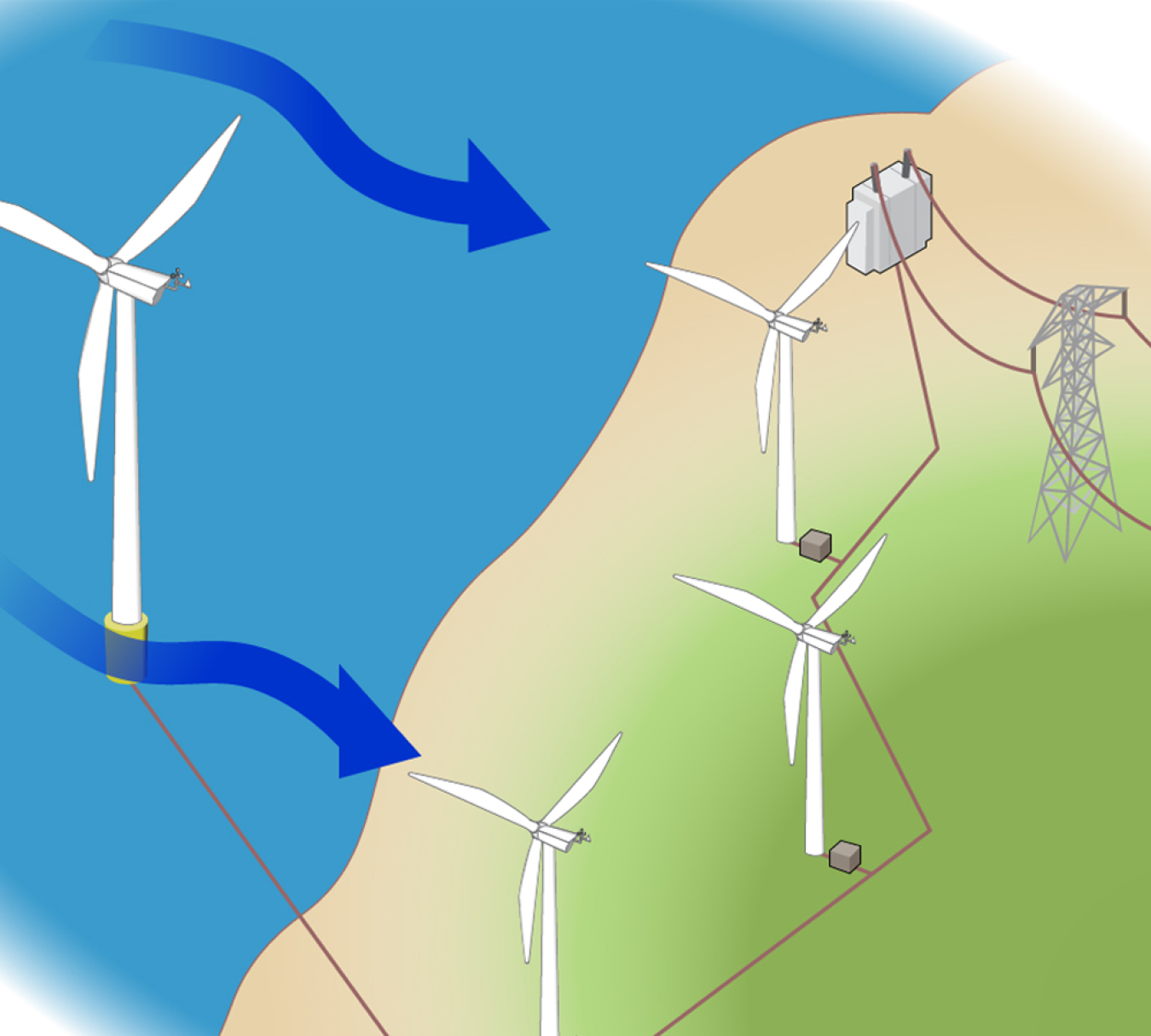
They connect to a larger network. This grand network is called the electrical grid. It’s like the internet for power.
The grid then distributes this power far and wide. To towns, cities, homes, and businesses.
So, eventually, that very wind that pushed the blades could be powering your refrigerator. Or charging your phone.
Maybe it’s even heating your water for a morning shower. Or, most importantly, making your toast!
It's a journey from a gust of wind to your breakfast. Pretty cool, if you ask me.
My (Unpopular?) Take on Diagrams
Now, for my confession. These elaborate diagrams? They're often just a bit... much.

All those arrows pointing in every direction. Labels for things like "pitch system" and "converter."
Do we really need to be fluent in every single technical term? Or can we just grasp the awesome big picture?
"Sometimes, understanding less of the minutiae makes you appreciate the grand concept even more."
The basic concept of wind power is actually quite elegant. Wind spins blades. Blades turn gears. Gears make electricity.
It’s like a fantastically engineered child’s pinwheel connected to a giant power plant. Simple, right?
Engineers, bless their brilliant minds, love to showcase every tiny component. And that's perfectly fine for them!
But for us regular folks, looking at a comprehensive diagram can feel like a pop quiz we never even knew existed.
So next time you encounter that intricate wind power diagram, don't let it overwhelm you. Just remember the core story.
Remember the invisible wind, pushing giant blades. Remember those clever bits inside the big box speeding things up.
And remember that crucial generator, transforming motion into invisible power. Power for your everyday life.
It’s a true marvel of human ingenuity, harnessing nature's might. Even if the diagram gives you a slight eyebrow twitch.
So go ahead, nod knowingly next time someone talks about clean energy. You understand the gist of it now.
You don't need a PhD in diagram interpretation. Just a healthy appreciation for big, spinning things and invisible, clean power.
And maybe, just maybe, a quiet smile. A smile knowing you’ve tamed the diagram beast, at least in your own entertaining way.