
Diagram Of How Solar Power Works
Ever looked up at that giant, fiery orb in the sky – our sun – and thought, "Wow, that's a lot of energy just hanging out there?" Well, you're not wrong! That big ball of light and warmth has been doing its thing for billions of years, and guess what? We've figured out a pretty clever way to tap into it right from our rooftops. No capes or superpowers required, just a bit of science and some really cool tech.
The Magic of Sunlight Catchers (aka Solar Panels)
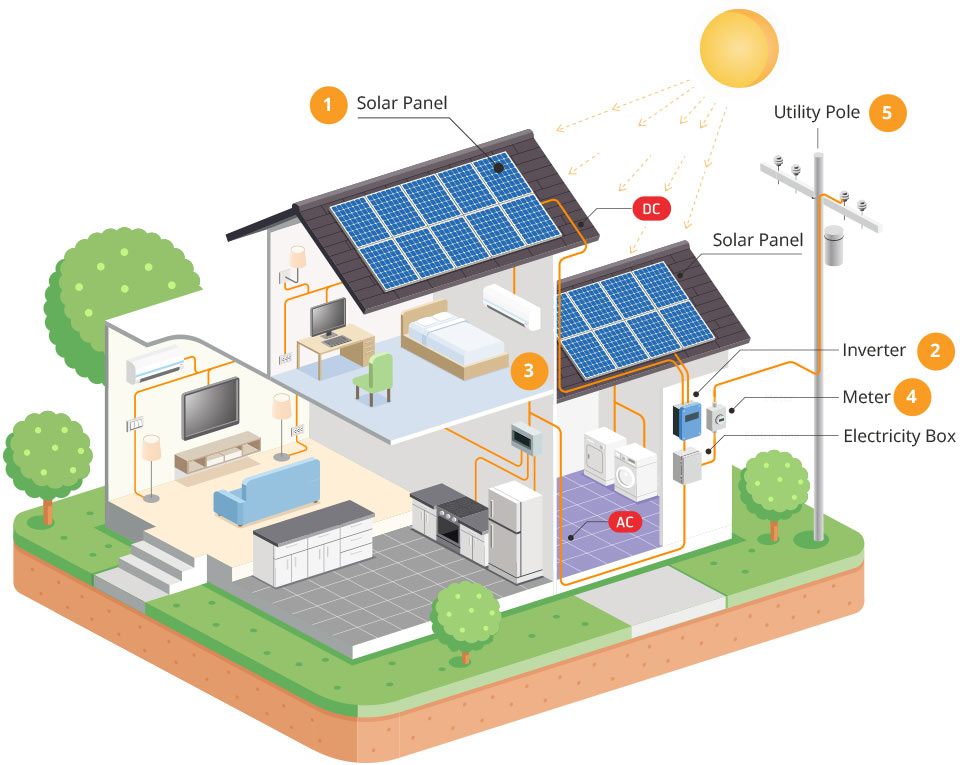
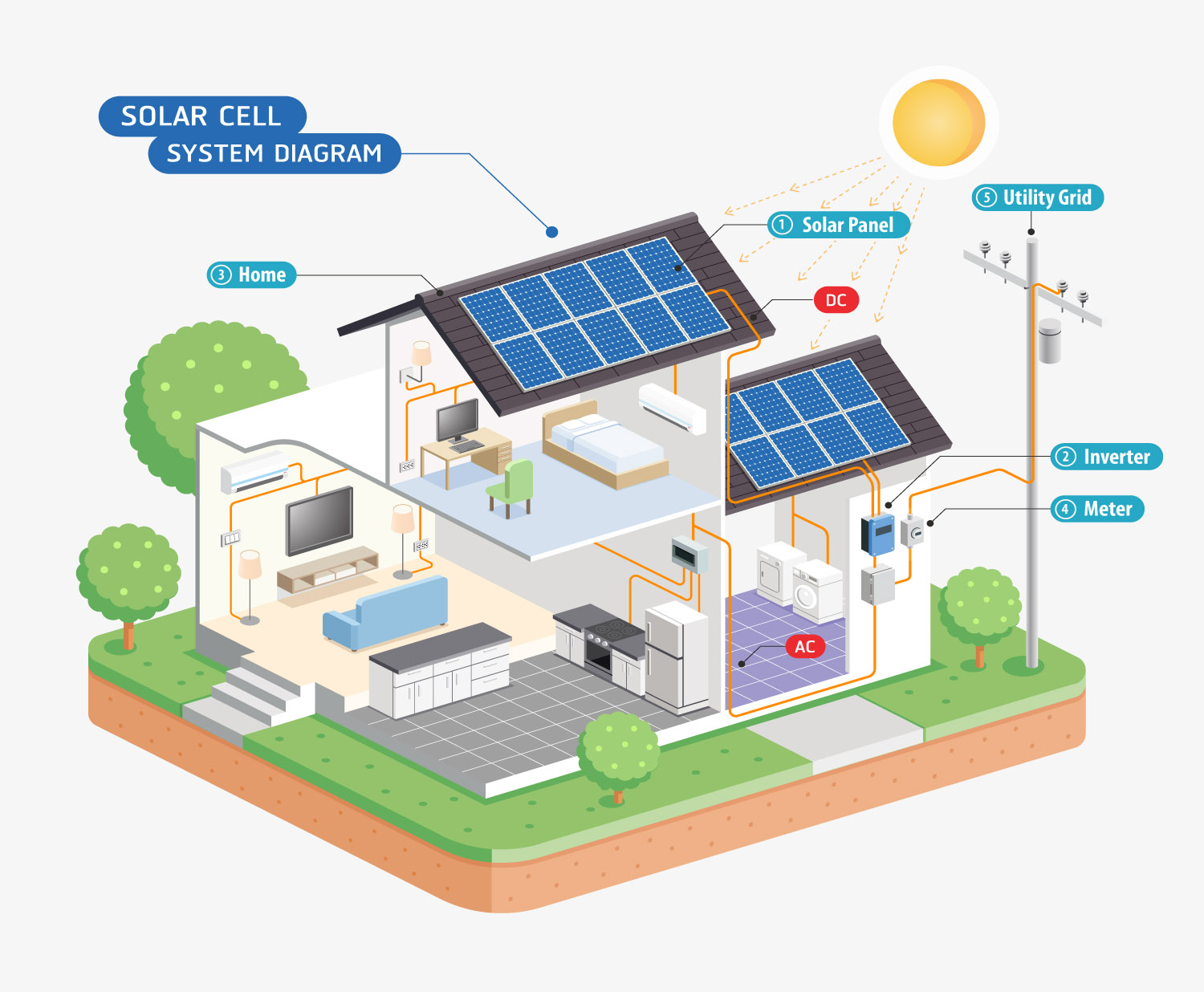
Imagine you're trying to catch raindrops in a bucket. That bucket is kind of like a solar panel. But instead of water, it's catching tiny packets of light energy called photons. These panels are typically made of silicon – a material you might recognize if you've ever crunched on sand at the beach (don't worry, the silicon in panels is much more refined!).
When those little photon friends hit the silicon in a solar panel, they get the atoms inside all excited. Think of it like a tiny, invisible dance party kicking off. This excitement forces electrons – the super tiny building blocks of electricity – to start moving. And when electrons move, guess what we have? You got it: electricity! This phenomenon is called the photovoltaic effect, which sounds super fancy, but it just means "light-electricity effect." Easy peasy!
Must Read
So, at this stage, your panels are generating electricity. But it's a specific kind of electricity called DC (Direct Current). Imagine electricity flowing in one steady, straight line, like a calm river. That's DC.
The Great Power Translator: The Inverter
Now, here's a tiny wrinkle: most of the gadgets and gizmos in your home – your fridge, your TV, your phone charger, even that silly singing fish your aunt gave you – they all speak a different electrical language. They want AC (Alternating Current). Think of AC as electricity that constantly changes direction, wiggling back and forth, like ocean waves.
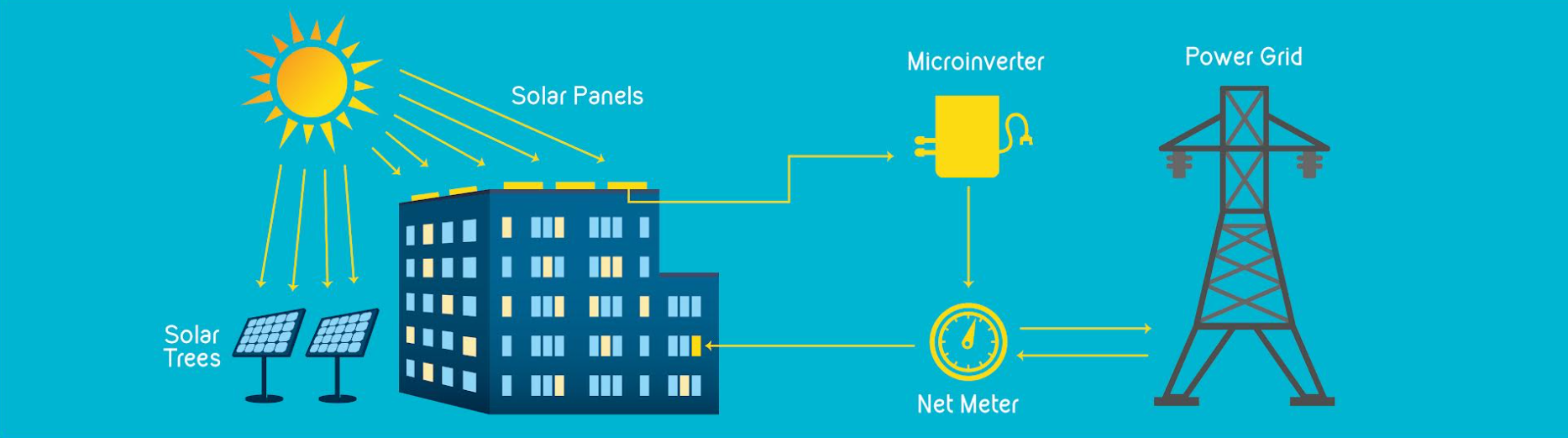
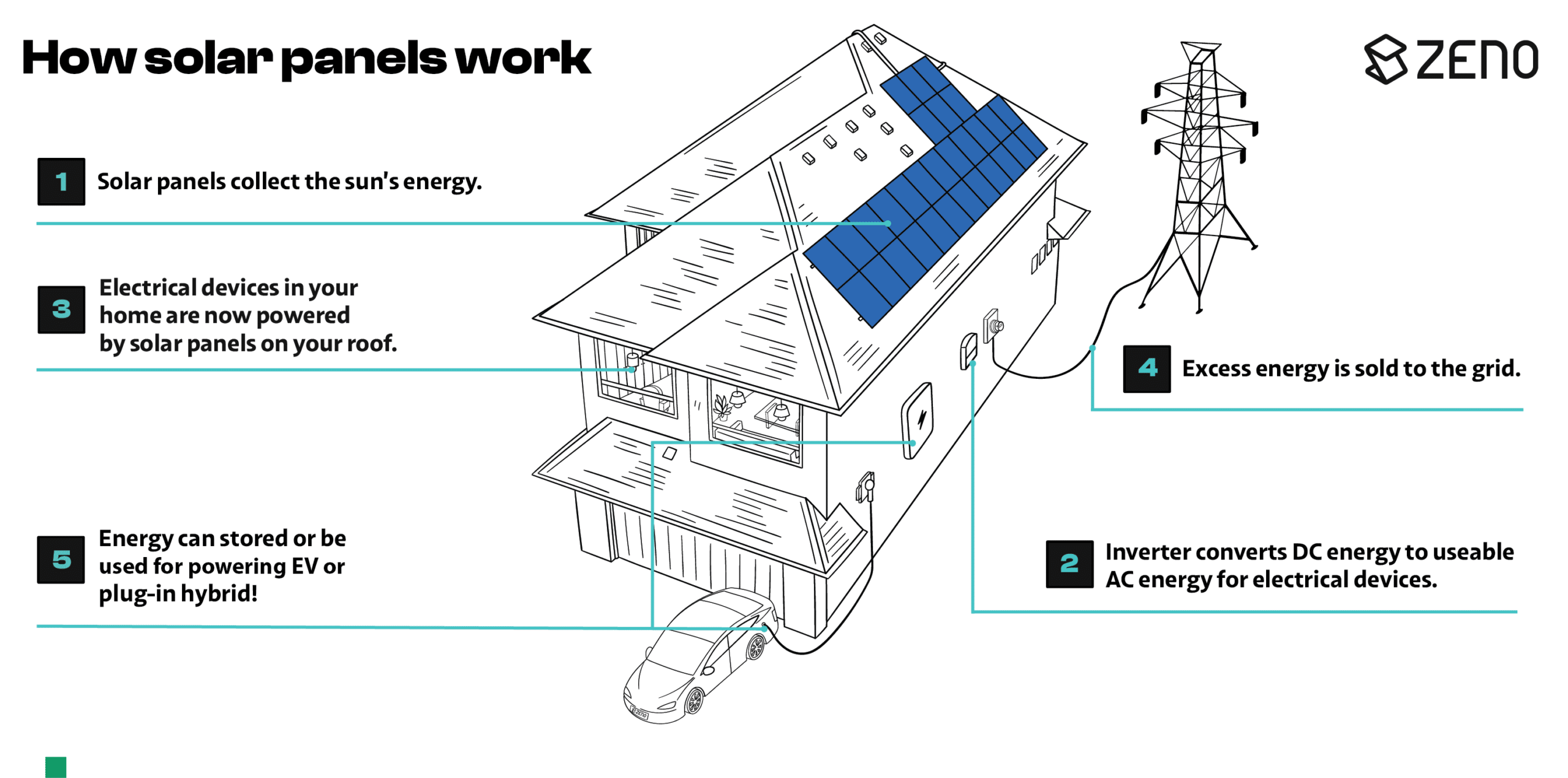
This is where our superhero, the inverter, swoops in! The inverter is like a brilliant translator or a skilled conductor. It takes all that DC electricity from your panels (the straight-line river) and seamlessly transforms it into AC electricity (the ocean waves) that your home understands perfectly. Without the inverter, your fridge would just stare blankly, wondering what all that direct current fuss was about.
Bringing the Power Home & Sharing the Love
Once the inverter has done its magic, the newly translated AC electricity flows into your home's electrical panel – that big box with all the circuit breakers, usually in your garage or basement. From there, it's distributed throughout your house, powering everything you plug in. Voila! You're now running on sunshine!
But what if the sun is super bright, and your panels are pumping out more electricity than your house is using at that exact moment? Maybe you're at work, and only the fridge is humming along. Does it go to waste? Nope! This is where it gets really cool.
Thanks to something called net metering, any excess electricity your panels produce is sent back to the main power grid. Your electric meter actually spins backwards! It's like your house is giving power back to the neighborhood, and the utility company gives you credit for it. Think of it as sharing your delicious homemade cookies with your neighbors, and they promise to bring you some cake later. Sharing is caring, and in this case, it helps everyone!

So, Why Should YOU Care? (Beyond the Awesome Science)
Okay, the science is neat, but why should you, an everyday awesome human, actually care about this whole solar thing?
First, let's talk about your wallet. When you generate your own electricity, you buy less from the utility company. This means smaller electricity bills, or sometimes, no electricity bill at all! Imagine that extra cash staying in your pocket for that weekend getaway, a fancy dinner, or just more avocado toast. Your future self (and your bank account) will thank you.
Second, you become an instant Earth superhero. Traditional electricity often comes from burning fossil fuels, which releases greenhouse gases that contribute to climate change. By using solar, you're choosing clean, renewable energy. You're reducing your carbon footprint, helping to keep our air cleaner for picnics and playgrounds, and protecting our planet for future generations. It's like giving Mother Earth a big, warm hug.
And third, it's about a little thing called energy independence. Remember that feeling when the power goes out during a storm? While solar panels typically don't keep your lights on during a blackout without a battery backup, having solar means you're less reliant on those big, sometimes unpredictable, power grids on a day-to-day basis. You're harnessing your own power, right from your roof! How empowering is that?
So, the next time you feel the warmth of the sun on your face, give a little nod. That sunshine isn't just for tanning and growing tomatoes; it's a powerful, clean, and surprisingly simple way to fuel our lives. Pretty cool, right?