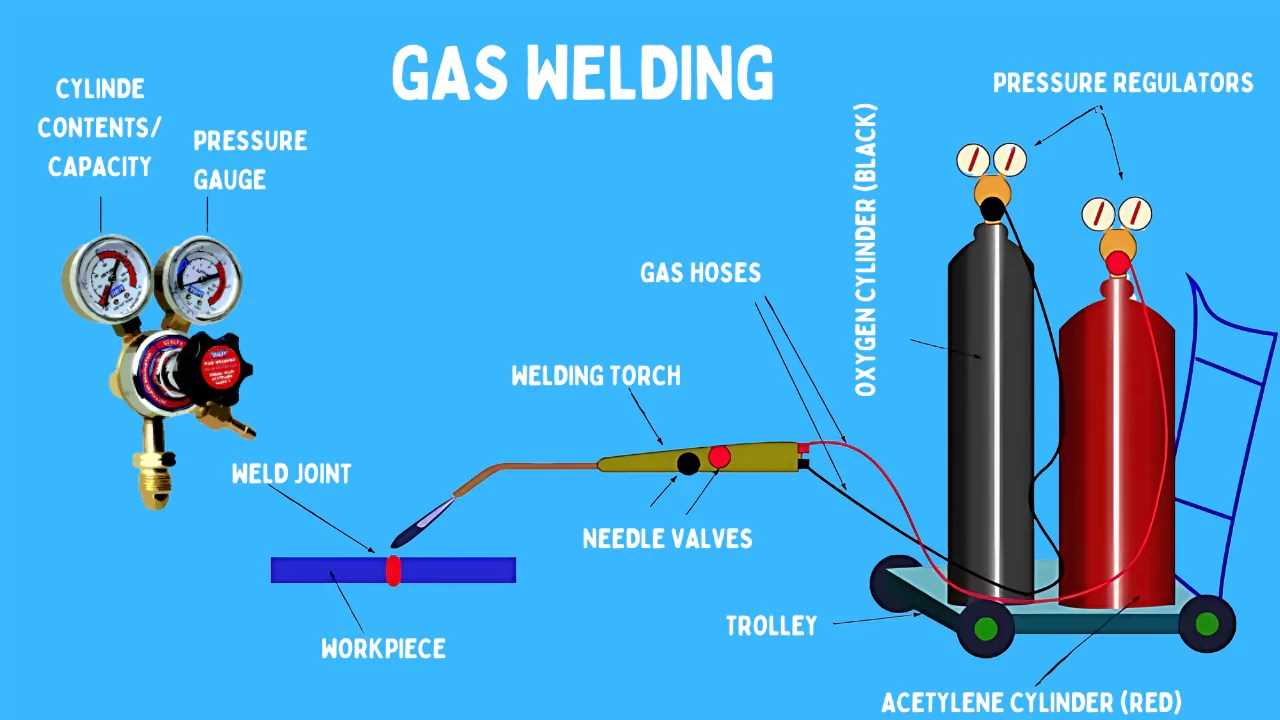
Diagram Of A Welding Machine

Ever looked at a welding machine and thought, "Whoa, that's some serious hardware!"? You're not wrong. These metal-melting beasts seem like they belong in a sci-fi movie. But guess what? Peeking under the hood – or, you know, at a diagram – is actually a ton of fun. It’s like discovering the secret sauce to making controlled lightning! So, grab your imaginary safety goggles, and let's dive into the guts of these incredible machines, without getting a single speck of slag on us.
The Power Players: Where the Zap Begins
Alright, first things first: every welding machine needs juice. And by juice, I mean a serious dose of electricity. We're talking about the power source. This is where it all kicks off, pulling power from your wall socket or a generator. Think of it as the starting pistol for a race, but instead of runners, we have electrons!
But here's a quirky bit: that everyday house current? It’s usually too much of one kind of power, and not enough of another, for welding. It's like trying to pour a gallon of water into a thimble. So, the machine needs a smart way to manage it.
Must Read
The Brains of the Operation: The Transformer and Inverter
Enter the transformer or inverter. These are the unsung heroes, the real magicians in the box. Their job? To transform that raw, wild electricity into something perfectly suited for melting metal. A transformer basically takes high-voltage, low-current power and turns it into low-voltage, high-current power. It’s like a bouncer at a club, letting in only the right kind of energy!
Inverters are the newer, trendier kids on the block. They do a similar job but in a much more compact, efficient way. They can switch power super-fast, making them lighter and more versatile. If a transformer is a sturdy old muscle car, an inverter is a sleek, modern sports car. Both get the job done, just with different styles.

Then we have the control circuit. This is the machine's actual brain. It dictates how much current flows, how fast the wire feeds (if it's a wire-fed welder), and all the other nitty-gritty details. It’s the conductor of this electrical orchestra, ensuring every note (or spark!) is just right. Without it, you’d have uncontrolled arcing and a big mess. Nobody wants that!
The Hands-On Heroes: Ground Clamp and Torch
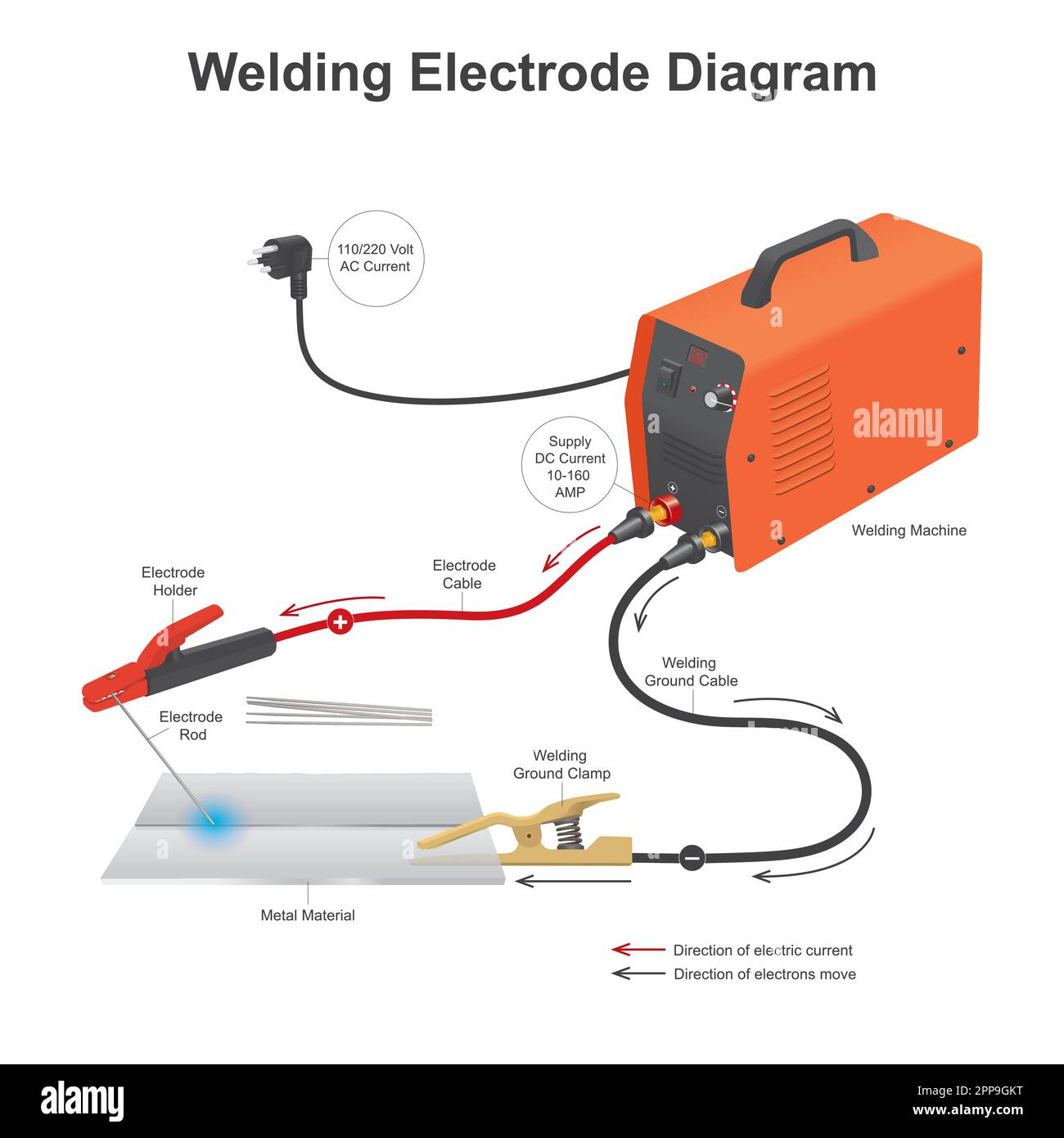
Okay, power's ready, brains are whirring. Now, how do we actually do the welding? You need two main connections. First, the work clamp, often called the ground clamp. This guy attaches directly to the metal piece you’re welding. But here’s the fun fact: it's not actually "grounding" in the electrical sense of burying a rod in the earth. Instead, it’s completing the circuit. Think of it as the return ticket for the electricity, ensuring it flows through your workpiece and back to the machine. No return ticket, no journey, no weld!
On the other side, we have the electrode holder or welding torch. This is where the magic happens! If you’re using a "stick" welder, this holder grips the consumable electrode – basically, a metal stick that melts to form your weld. For MIG or TIG welding, you’ll have a torch. This is your high-tech pen, ready to draw with molten metal and sparks!

The torch or holder delivers the concentrated electrical energy, creating an arc. This arc is essentially a super-hot, sustained spark, like a mini lightning bolt, that melts the metals together. It’s incredibly bright – so bright you absolutely need those special welding helmets to protect your eyes. Seriously, don't peek without them, unless you want to see spots for a long, long time!
The Sidekicks: Shielding Gas and Wire Feeder
Now, some welding machines have special helpers. Take MIG and TIG welders, for instance. They use shielding gas. This gas flows out of the torch, creating a protective bubble around your molten weld pool. Why? Because hot, gooey metal doesn't like oxygen or other atmospheric gases – they can cause porosity and make the weld weak. So, the shielding gas is like a tiny, invisible bodyguard, keeping impurities out of your perfect weld. Pretty neat, right?
For MIG welding, you’ll also see a wire feeder. This is a mechanism that automatically spools out welding wire through the torch as you work. It’s like an endless pencil lead, constantly supplying the material you need to build up your weld. It makes welding faster and easier, especially for beginners. It's truly a marvel of engineering to watch that wire feed so precisely!
Why It's All So Cool
So, there you have it – a quick, casual peek at the diagram of a welding machine. It might look like a bunch of wires and boxes, but once you understand the dance of electricity, the intelligence of the control circuit, and the fiery precision of the arc, you realize it's a masterclass in controlled chaos. It's taking raw power and turning it into something strong, functional, and even beautiful. It’s literally turning sparks into art and utility. How cool is that?
Next time you see a welder at work, remember the unseen diagram within, humming with power, poised to fuse metal with a flash of brilliance. It’s a bit like watching a superhero in action, isn’t it?