
Definition Of Stress In Mechanical Engineering
Ever tried squeezing a stress ball until your knuckles turned white? That's a pretty good visual for what we're going to talk about: Stress, but not the kind that makes you binge-watch cat videos! We're diving into the world of mechanical engineering, where stress has a whole different, but equally fascinating, definition.
What Is This "Stress" We Speak Of?
Forget looming deadlines and overflowing inboxes. In mechanical engineering, stress is all about how a solid object responds when a force is applied to it. Think of it as the internal resistance the object puts up against that external force trying to squish, stretch, or shear it.
Imagine a majestic bridge spanning a wide river. All those cars and trucks driving across? That's a force, a big force. The bridge's internal stress is what keeps it from crumpling into the water like a discarded paperclip!
Must Read
Force vs. Stress: They're Not the Same!
Okay, let's clear up a common misconception right away. Force is the external push or pull acting on an object. Stress, on the other hand, is the internal reaction within the object to that force. Think of force as the instigator and stress as the internal bodyguard.
It's like trying to hug a grumpy cat (not recommended, by the way!). Your hug is the force. The cat's resistance – the hissing, the swatting – that's its internal "stress"! Okay, maybe not a perfect analogy, but hopefully, you get the idea.
Stress: The Math-y Part (Don't Panic!)
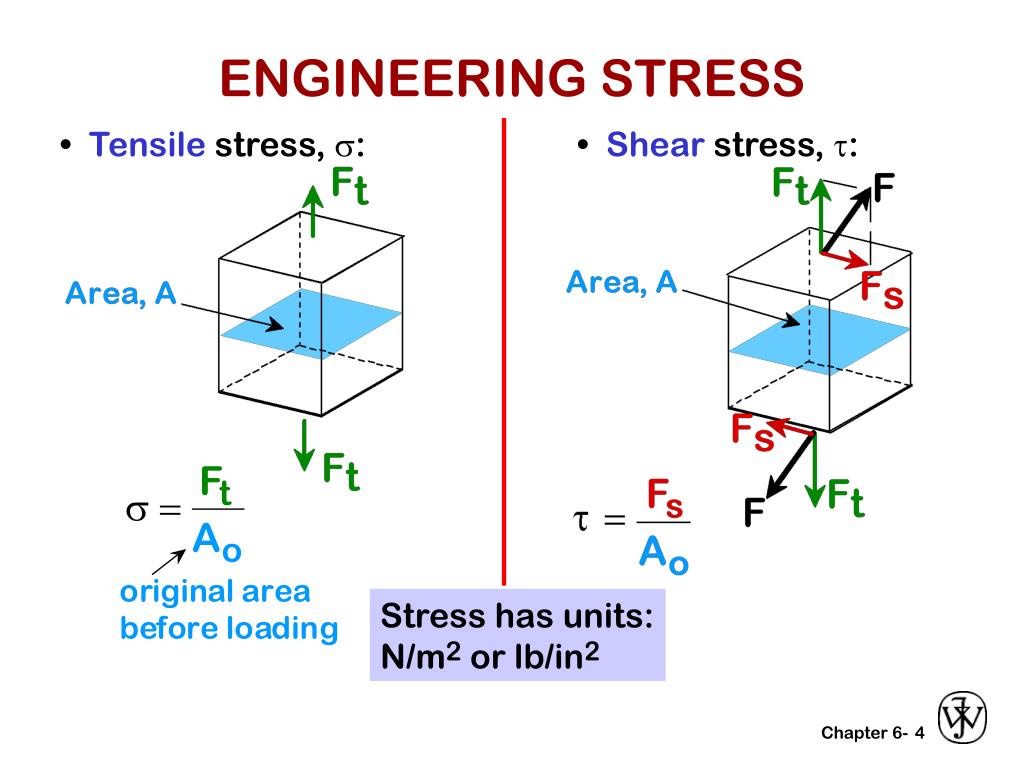
Now, let's add a tiny dash of math. Don't worry, it's not scary math, I promise! Stress is actually defined as the force acting per unit area. Imagine spreading peanut butter on toast – the more peanut butter (force) you spread over the same amount of toast (area), the thicker the layer (stress).
So, the formula for stress is often written as: Stress = Force / Area. Keep in mind that area is the area that the force is acting on. Easy peasy!

Types of Stress: A Stressful Situation
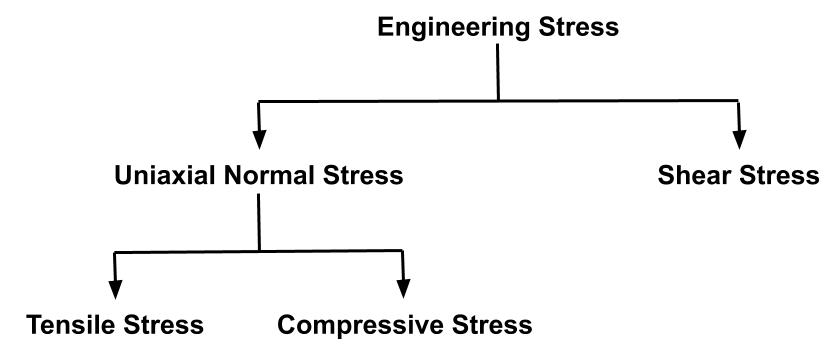
Just like there are different kinds of pizza (pepperoni, Hawaiian, veggie – the possibilities are endless!), there are different types of stress in mechanical engineering. Let's look at a few of the headliners:
Tensile Stress: The Pulling Game
This is the stress that occurs when you pull on an object, trying to stretch it. Think of a tug-of-war. The rope is experiencing tensile stress. Or imagine stretching a rubber band – that satisfying thwang is thanks to tensile stress doing its thing.
Compressive Stress: The Squeeze Play
On the flip side, compressive stress happens when you push or squish an object. Think of stacking books. The books at the bottom are experiencing compressive stress from the weight of the books above them. Or consider an elephant standing on a marshmallow (poor marshmallow!). That's massive compressive stress!
Shear Stress: The Slide and Dice
This is where things get a little…sideways. Shear stress occurs when forces are applied parallel to a surface, causing one part of the object to slide relative to another. Imagine cutting paper with scissors. The blades are applying shear stress to the paper.
Another good example is a bolt holding two plates of metal together. When a force tries to pull the plates apart horizontally, the bolt experiences shear stress as it resists the sliding motion.

Stress and Strain: The Dynamic Duo
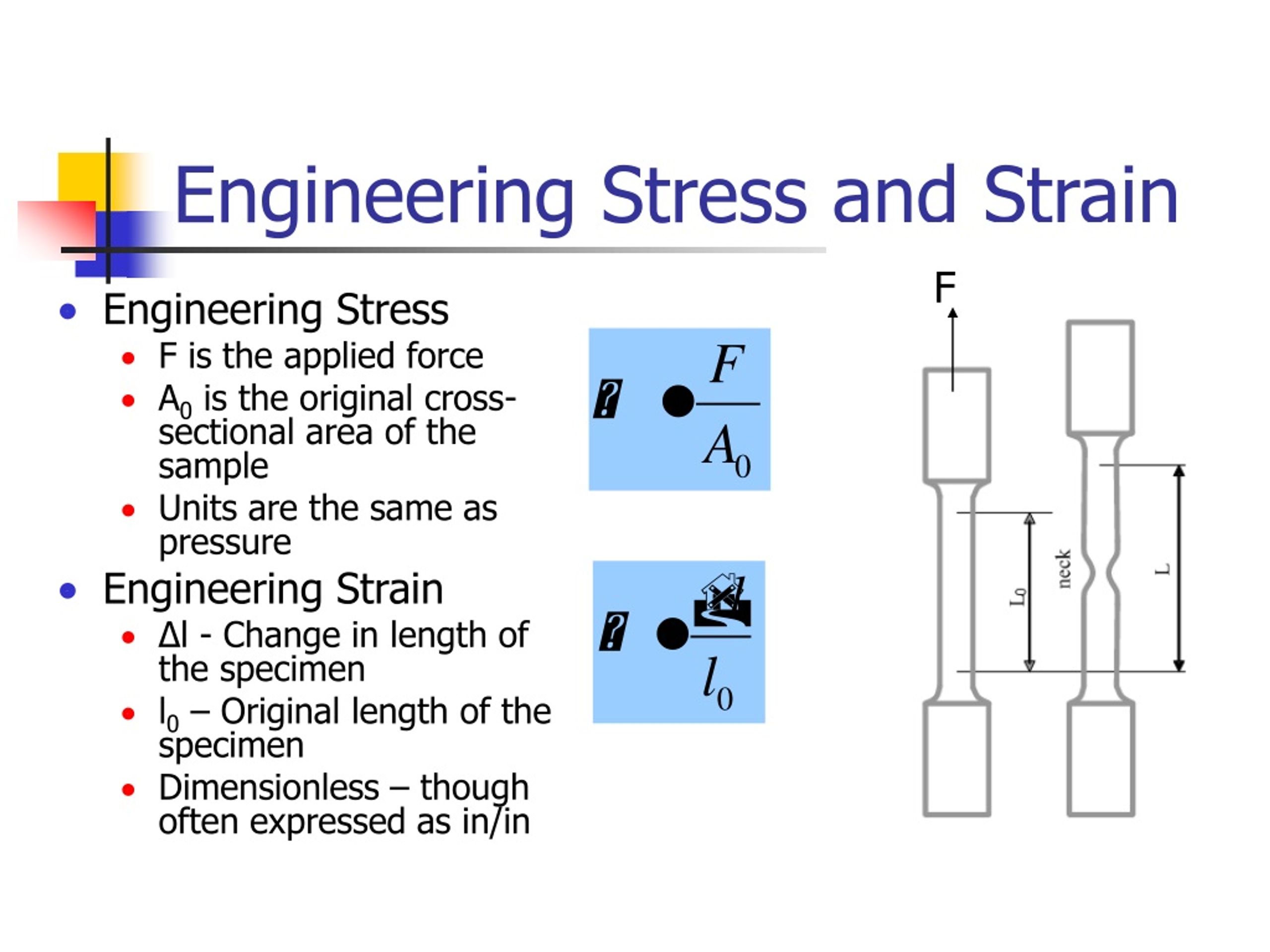
Now, you can't talk about stress without mentioning its partner in crime: strain. Strain is the deformation (change in shape or size) of an object caused by stress. Think of it as the effect of the stress.
Going back to the rubber band example, the stress is the internal resistance to being stretched, and the strain is how much the rubber band actually stretches. They are like a great comedy team!
Basically: Stress is the cause, and strain is the effect!
Why Should You Care About Stress?
Okay, so stress and strain might sound like something only engineers need to worry about. But understanding the basics can actually be pretty useful in everyday life. If you know the stress limits of materials, you might make smarter decisions about what products to buy, or how to use them!
Imagine buying a flimsy plastic chair versus a sturdy wooden one. Understanding the concept of compressive stress, you'd probably choose the wooden one if you knew a particularly large person would be using it. (No judgment, just good engineering sense!).
Stress: A Crushing Blow!
Think about your phone screen shattering. It probably didn't break from a single, gentle tap. It likely succumbed to accumulated stress from being dropped a few too many times (we've all been there!). Each impact created microscopic stress, weakening the glass until it reached its breaking point. BAM!
Stress analysis is used in designing everything from airplanes and cars to buildings and bridges. Engineers need to carefully calculate the stresses that these structures will experience to ensure they can withstand the loads placed upon them and to ensure we don’t experience any unfortunate failures.
Stress: It's All About the Material!
Different materials react differently to stress. Some materials, like steel, can withstand a lot of stress before they break. These materials are considered “strong”. Other materials, like glass, are more brittle and break more easily under stress.
That's why bridges are made of steel and not, say, cooked spaghetti. Although a bridge made of spaghetti would be a sight to behold! Now that's food for thought!
Think of the different textures and strengths of cookies! You can have a chewy cookie, a soft cookie, a crunchy cookie, each reacts to force differently, and therefore each has different stress properties.
Stress Testing: Putting Materials to the Limit
To determine how much stress a material can handle, engineers perform stress tests. These tests involve subjecting a material to different types of forces and measuring its response. It’s like a material version of an obstacle course!
These tests help engineers determine the material's strength, stiffness, and ductility. This information is critical for designing safe and reliable structures.
Conclusion: Stressing the Importance of Understanding Stress!
So, there you have it! Stress in mechanical engineering, demystified! It's not about pulling your hair out over deadlines; it's about the internal forces within an object resisting external forces. From bridges to buildings to even your trusty coffee mug, stress is at play everywhere.
Understanding stress is crucial for engineers to design safe and durable structures. It's also pretty cool to know, even if you're not an engineer! Now, go forth and appreciate the stress around you. (Just don't actually stress about it!)
Now, back to that stress ball. Squeeze away!