
Cuanto Es Un Kilowatt En Watts

Ever found yourself staring at an appliance label or your electricity bill, seeing numbers like "W" and "kW" float around, and wondered, "What's the big deal with these power terms?" You're not alone! It's a common little mystery in our modern, electrified lives. So, let's dive into a frequently asked question, phrased beautifully in Spanish, that really gets to the heart of it: Cuanto Es Un Kilowatt En Watts? Or, in plain English, "How many watts are in a kilowatt?"
Demystifying the Watt: Your Everyday Power Pal
Let's start with the basics. A watt (W) is the fundamental unit of power. Think of it as how much energy an electrical device needs to operate at any given moment. It’s like the "oomph" factor.
For example, a traditional incandescent light bulb might be 60 watts. An LED bulb, designed for efficiency, might only need 9 watts to produce the same amount of light. Your phone charger? Probably around 5-10 watts. A powerful hairdryer? That could be upwards of 1500 watts!
Must Read
It’s all about context. Small devices use small amounts of watts; bigger, more demanding appliances use many more.
Enter the Kilowatt: The Bigger Picture
Now, what about the kilowatt (kW)? This is where our main question comes in. The "kilo" prefix is your biggest clue! Just like a kilogram is 1,000 grams, or a kilometer is 1,000 meters, a kilowatt is simply one thousand watts.

So, to answer our original question directly:
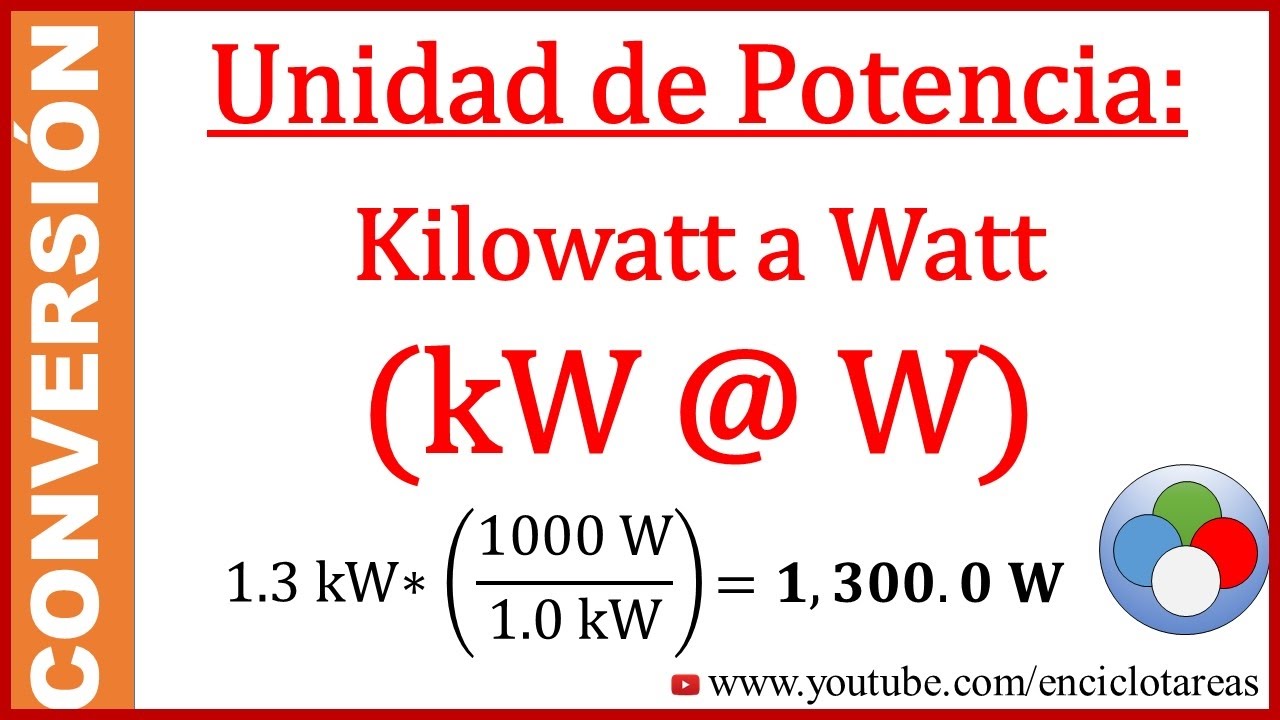
Un kilowatt son mil watts.
Or, 1 kilowatt = 1,000 watts.
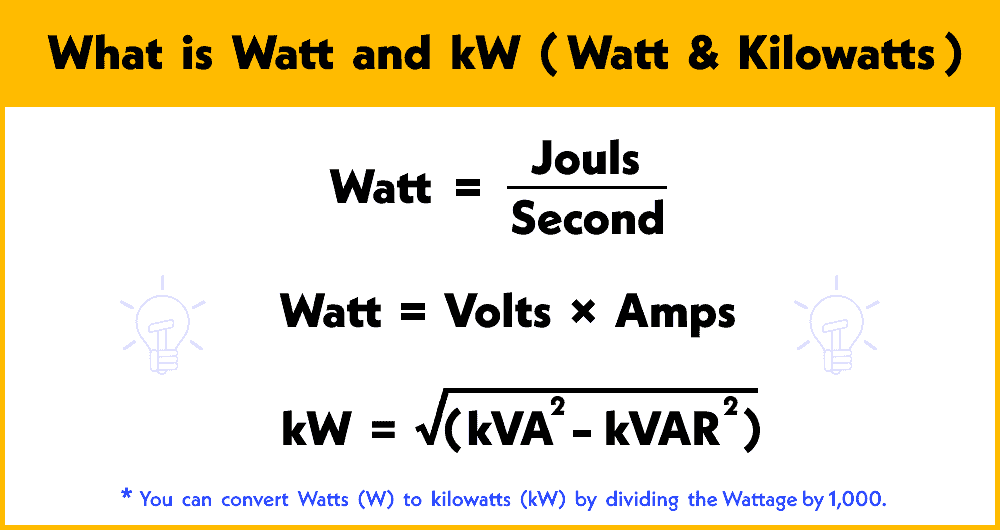
It’s that straightforward! We use kilowatts because dealing with thousands of watts for larger appliances or total home consumption would result in some pretty lengthy numbers. Imagine your entire house using 5,000 watts at a given moment – it’s just tidier to say 5 kilowatts.
Why Does This Conversion Matter to You?
Understanding the relationship between watts and kilowatts isn't just for electrical engineers or trivia night buffs. It empowers you to make smarter choices about your energy use and, yes, your wallet!

Your Electricity Bill: The Kilowatt-Hour
The most crucial place you'll see kilowatts in action is on your electricity bill. You don't pay for watts directly; you pay for kilowatt-hours (kWh). A kilowatt-hour represents using 1 kilowatt of power for one hour. It’s a measure of actual energy consumption over time. So, if your hairdryer uses 1.5 kW and you run it for an hour, that's 1.5 kWh of energy consumed.
Appliance Shopping & Energy Savvy
Next time you're shopping for a new appliance, notice the wattage listed. A higher wattage usually means more power, but also potentially more energy consumption (and a bigger dent in your wallet if it's used frequently).
For instance, an energy-efficient refrigerator might use fewer watts than an older model, even if they're both running 24/7. Swapping out old incandescent bulbs for modern LEDs is a classic example: a 60W bulb replaced by a 9W LED means you’re using less than one-sixth of the power for the same light!
Practical Tips for the Energy-Smart Home
- Read the Labels: Take a moment to check the wattage on your appliances. It's often on a small sticker or engraved on the back.
- Unplug "Phantom Loads": Many devices, like phone chargers or TVs, draw a small amount of power even when turned off but still plugged in. This is called "vampire power" or "phantom load," and while individually small (maybe just a few watts), it adds up!
- Think in kWh: When comparing appliances, consider not just the wattage, but how often you'll use it. A high-wattage appliance used rarely might consume less energy overall than a low-wattage device that's always on.
- Energy Monitors: Invest in a smart plug or a home energy monitor. These gadgets can show you exactly how many watts (or kilowatts) your devices are using in real-time, offering a fascinating glimpse into your home's energy footprint.
A Fun Fact to Power Your Day
Did you know that the total energy consumption of the entire world, at any given moment, can be measured in terawatts (TW)? One terawatt is a trillion watts, or a billion kilowatts! It just shows how useful these prefixes are for managing truly colossal numbers.
Connecting the Dots: Your Daily Power Play
So, Cuanto Es Un Kilowatt En Watts? It’s 1,000 watts. Simple, right? But understanding this isn't just about a number; it's about gaining a little bit of control and insight into the invisible force that powers our lives. From charging your phone to lighting your home, every little watt contributes. By understanding these units, you’re not just deciphering a bill; you're becoming a savvier, more mindful consumer, ready to make choices that benefit both your budget and the planet. Power to you!