
Cross Section Of A Jet Engine

Alright, buckle up, buttercup! Ever wondered what kind of crazy magic happens inside one of those massive jet engines that hurl us across continents? You know, the ones that look like giant metal cigars hanging off an airplane wing? Well, today we're going on a little adventure, virtually slicing one open like a fancy layer cake to peek inside. Don't worry, no actual engines were harmed in the making of this explanation!
Think of a jet engine as a super-hungry, fire-breathing metal beast. Its sole purpose? To suck in air, make it angry, set it on fire (in a very controlled way, promise!), and then blast it out the back to create thrust. And when we talk about a cross-section, we're basically looking at a slice right down the middle, like cutting a hot dog lengthwise to see all its delicious components. Only, you know, way more powerful than a hot dog.
The Grand Tour: From Front to Back!
Let's kick things off at the very front. This is where all the action begins:
Must Read
1. The Inlet: The Big Air Gobbler
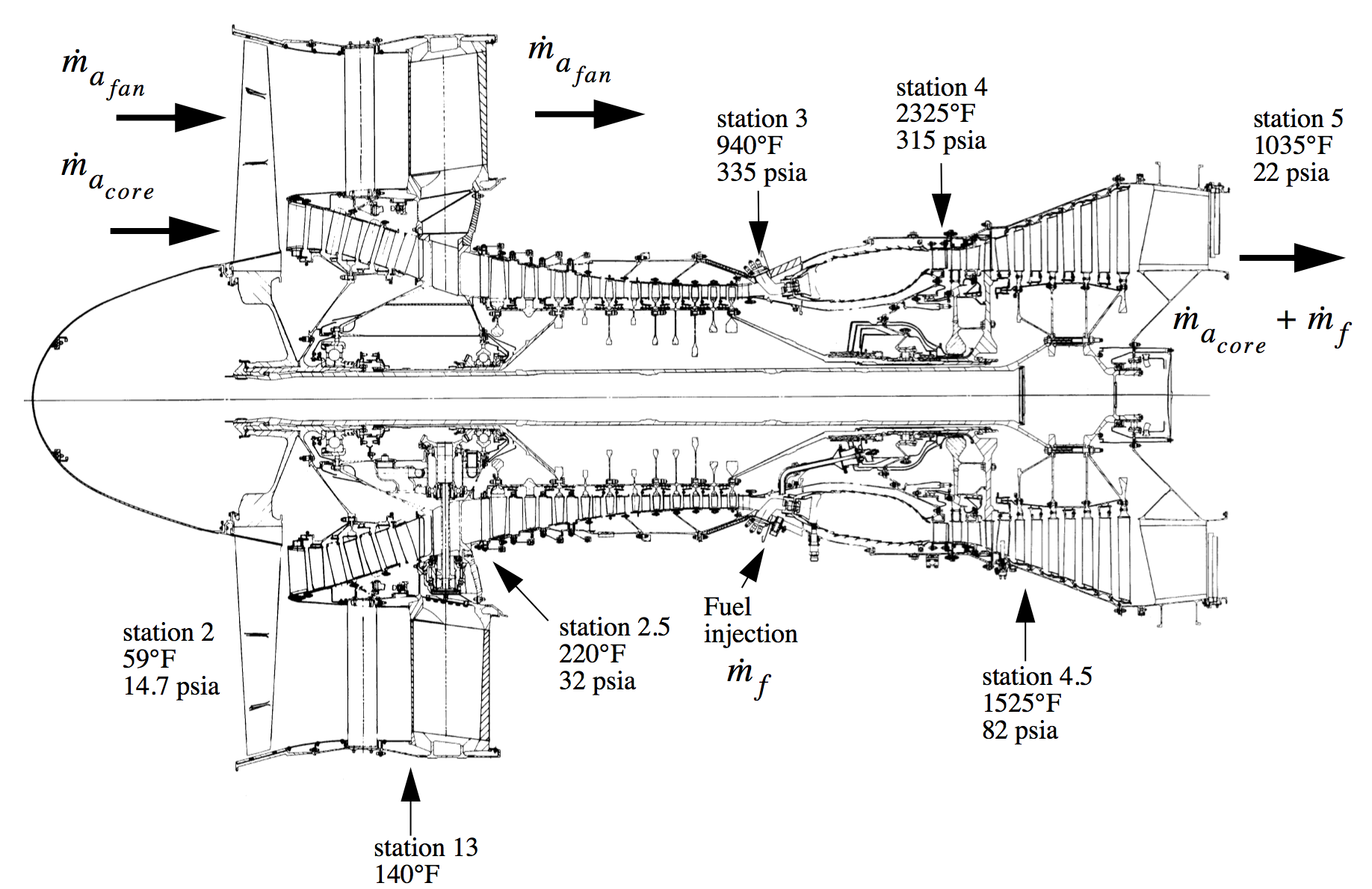
First up, we have the inlet. It's basically a giant funnel that scoops up air. Think of it as the engine's hungry mouth, constantly gulping down massive amounts of air. The faster the plane goes, the more air it shoves down its throat. Simple, right? But oh-so-crucial.
2. The Fan: The Mighty Mover
Right after the inlet, you hit the fan. This is that huge, often visible, spinning propeller-like thing at the very front. It's the engine's bouncer, pushing most of the air around the core of the engine (that's called bypass air – it gives most of the thrust!). A smaller portion of the air gets pushed into the core. It’s like a super-efficient bouncer, directing traffic with incredible force.
3. The Compressor: The Air's Personal Trainer

Now, for the air that goes into the core. It enters the compressor. This is a series of rotating blades and stationary vanes that act like a super-intense gym workout for the air. Each stage squeezes the air more and more, making it denser and increasing its pressure and temperature. By the time it leaves the compressor, that air is no longer a gentle breeze; it's a super-pressurized, hot, and very cranky stream, ready for some serious business!
4. The Combustion Chamber: Where the Magic (and Fire) Happens!
Behold, the party zone! This is the combustion chamber, often called the "burner." Here, fuel is sprayed into that super-pressurized, hot air from the compressor. Then, a spark plug (just like in your car, but way tougher) ignites the mixture. BOOM! (A very controlled, continuous boom, thankfully.) The air ignites, creating a massive explosion of super-hot, high-energy gas. This is where the engine really earns its "jet" title!

5. The Turbine: The Energy Harvester
Those ridiculously hot, high-pressure gases from the combustion chamber have nowhere to go but out. But before they blast out, they hit the turbine. This is another set of fan-like blades, but this time, the hot gases push against them, making them spin like crazy. This spinning turbine is connected by a shaft (a long rod) back to the compressor and the front fan. So, in a brilliant bit of engineering, the power generated here drives the compressor and the fan! It's like the engine is feeding itself a constant loop of energy – pretty smart, eh?
6. The Nozzle/Exhaust: The Mighty Exhale
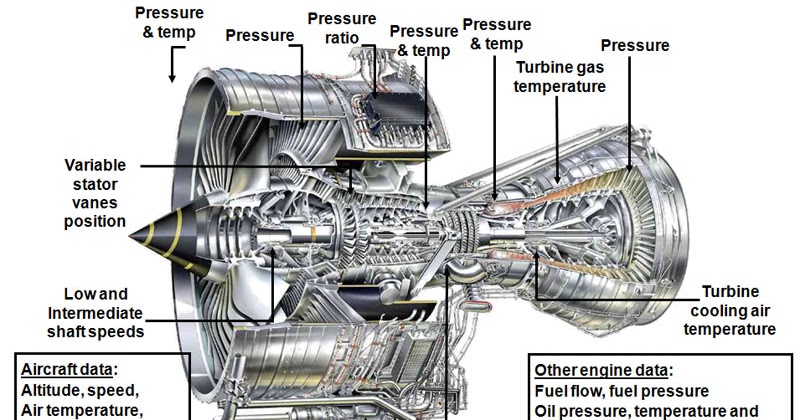
Finally, after all that hard work, the still-hot, high-velocity gases scream out through the nozzle (also known as the exhaust). This high-speed blast of air pushing backward is what generates the immense forward thrust that pushes the entire airplane through the sky. It's the engine's powerful "huff and puff" that moves mountains (or at least, airliners!).
A Symphony of Motion and Fire
So, there you have it! A jet engine, when cut open, reveals a truly magnificent dance of physics and engineering. It's not just a collection of metal parts; it's a perfectly choreographed ballet of air compression, fuel ignition, energy extraction, and powerful expulsion.
Next time you're soaring through the clouds, take a moment to appreciate the incredible, fiery heart of the aircraft. Those engines aren't just loud; they're a testament to human ingenuity, pushing the boundaries of what's possible, and quite literally, making our travel dreams take flight. It’s pretty awesome, wouldn't you agree? Keep looking up, and keep dreaming big!