
Cost To Run A Electric Heater

Picture this: it’s a chilly evening, maybe even a bit nippy inside your home. You just want that perfect spot of warmth, that cozy bubble where you can curl up with a book or binge your favorite show. So, you reach for that trusty electric heater, plug it in, and poof – instant snuggle zone. Ahhh, bliss!
But then a little thought might sneak into your head, whispering, "What's this costing me?" It’s a totally fair question! We all want to stay warm without accidentally heating the entire neighborhood's finances.
The Big Question: What's the Electric Heater Bill Like?
Let’s be honest, figuring out electricity costs can sometimes feel like trying to solve a riddle wrapped in an enigma. But for electric heaters, it’s actually pretty straightforward once you know a few key players. Think of it like a simple recipe.
Must Read
The main ingredients are:
- How much power your heater uses (measured in watts).
- How long you run it (in hours).
- How much your electricity company charges you (this is your rate per kilowatt-hour, or kWh).
See? Not too scary!
Breaking Down the Buzzwords: Watts and Kilowatt-Hours
Most electric heaters, especially the popular portable ones, range from around 750 watts to 1500 watts. Think of watts like the car engine's horsepower – it tells you how much "oomph" it's got. A 1500-watt heater is like a bigger engine, ready to pump out more heat.
Now, electricity companies don't charge you for watts directly. They charge you for kilowatt-hours (kWh). A kilowatt-hour is simply 1,000 watts running for one hour. It's like measuring how many miles you've driven (kWh) rather than just how powerful your car is (watts).
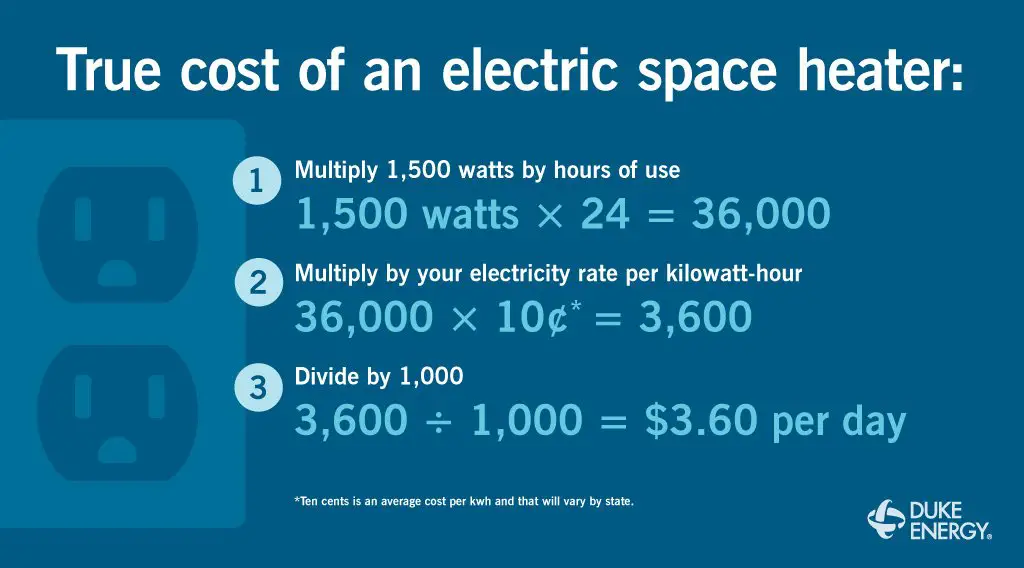
So, a 1500-watt heater, running for one hour, uses 1.5 kWh of electricity. Simple, right?
The Math (Don't Panic, It's Gentle!)
Let's do a quick, real-world example. Imagine you have a common 1500-watt electric heater.
First, convert those watts to kilowatts: 1500 W / 1000 = 1.5 kW.
Let's say your electricity rate is about 15 cents per kWh (this varies a lot by location, but it's a good average to think about).

Running that 1500W heater for one hour would cost: 1.5 kW * $0.15/kWh = $0.225 (or about 23 cents).
Not bad for an hour of instant warmth, is it?
If you run it for eight hours while you're asleep or working from home, that's roughly: 8 hours * $0.225/hour = $1.80.
Over a whole month (30 days) of running it for eight hours a day, you're looking at around $54. That’s like a few fancy coffees, or maybe half a tank of gas, depending on where you live.

Why That's Actually Kinda Cool (and Interesting!)
Here's where it gets fun. Electric heaters are 100% efficient at turning electricity into heat in your room. Every bit of energy they pull from the wall outlet gets turned into warmth right there. It’s like magic, but science!
Compared to other appliances, an electric heater uses a fair bit of juice. It's often on par with running a few hair dryers simultaneously, or boiling a kettle several times over. That's because heating takes a lot of energy!
But here's the kicker: are you heating your entire house with it, or just one room? This is where the cost-effectiveness comes in.
Zone Heating: Your Secret Weapon
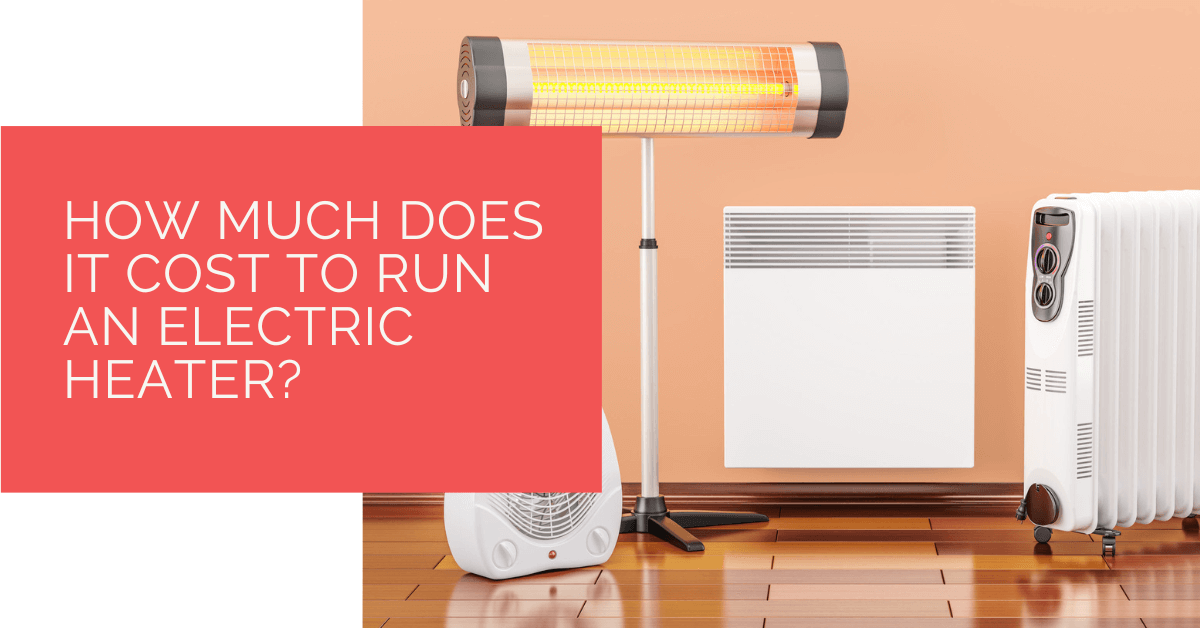
This is where electric heaters really shine. Instead of cranking up your whole-house furnace to heat that one chilly office or bedroom, you can just pop on a portable electric heater. This is called zone heating.
Think of it like this: would you turn on all the lights in your house just to read a book in one chair? Probably not! You'd use a reading lamp. Electric heaters are your reading lamps for warmth. They let you be smart about where you're spending your heating dollars.
Factors That Jiggle the Cost Numbers
Keep in mind a few things can change your personal cost:
- Your heater's actual wattage: Check the label!
- Your local electricity rates: These can vary wildly. Some places have much cheaper electricity, others much more expensive.
- How well-insulated your room is: If heat escapes easily, your heater has to work harder and longer.
- Your thermostat settings: A built-in thermostat can save you money by cycling on and off to maintain a temp, rather than just blasting heat constantly.
Tips for a Cozy Wallet (and Body!)
Want to keep that electric heater bill from being a shocker?
- Don't overdo it: Set it to a comfortable temperature, not tropical. Every degree counts!
- Use timers: Many heaters have them. Heat the room just before you wake up, or before you get home from work.
- Seal up drafts: A drafty window or door is like throwing money out the window.
- Layer up: Sometimes a nice sweater or a warm blanket is the cheapest heater of all!
The Takeaway: Stay Warm, Stay Smart
So, is running an electric heater super expensive? Well, it depends on how you use it. If you run a high-wattage heater 24/7 in a poorly insulated room, yes, it will add up. But as a targeted, convenient source of warmth, especially for zone heating, it's often a brilliant solution.
Understanding the simple math behind watts, hours, and your electricity rate takes away the mystery. Now you can plug in that heater, enjoy that lovely, localized warmth, and feel confident that you’re being smart about your comfort and your cash. Go on, get cozy!