
Compare And Contrast Nuclear Fusion And Fission
Okay, folks, let's talk atoms. Specifically, how we mess with them to make energy. We have two main contenders: nuclear fission and nuclear fusion. They sound similar, but they are actually quite different. Think of it as the difference between a grumpy divorce and a super happy marriage... involving atomic nuclei.
Fission: The Explosive Breakup
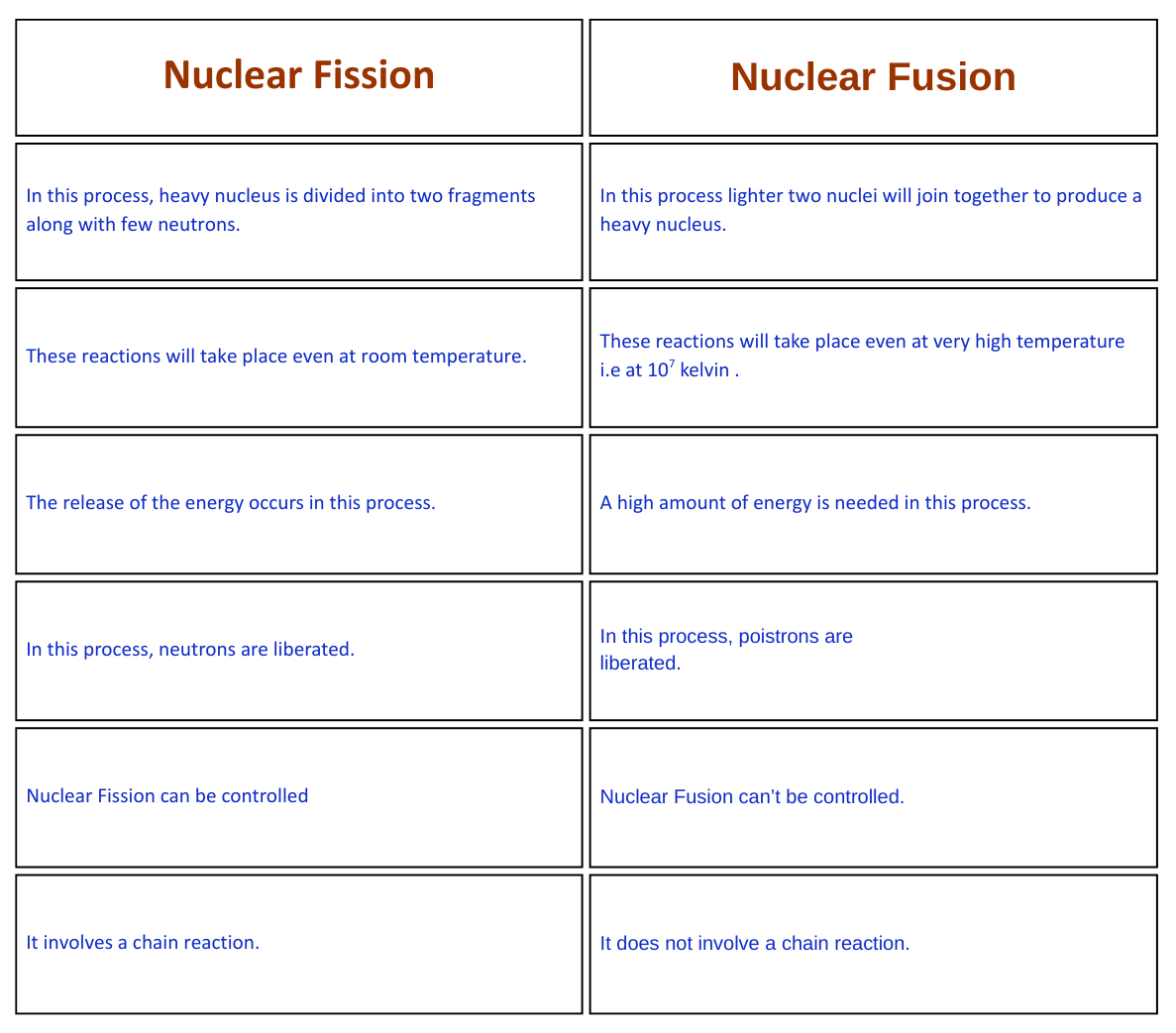
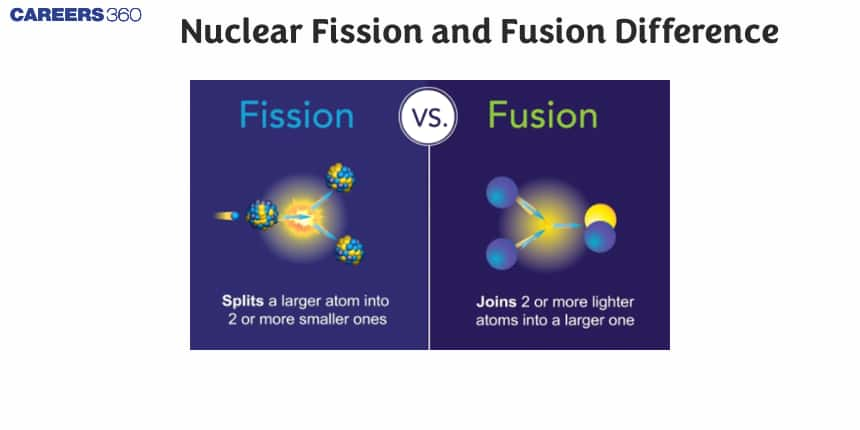
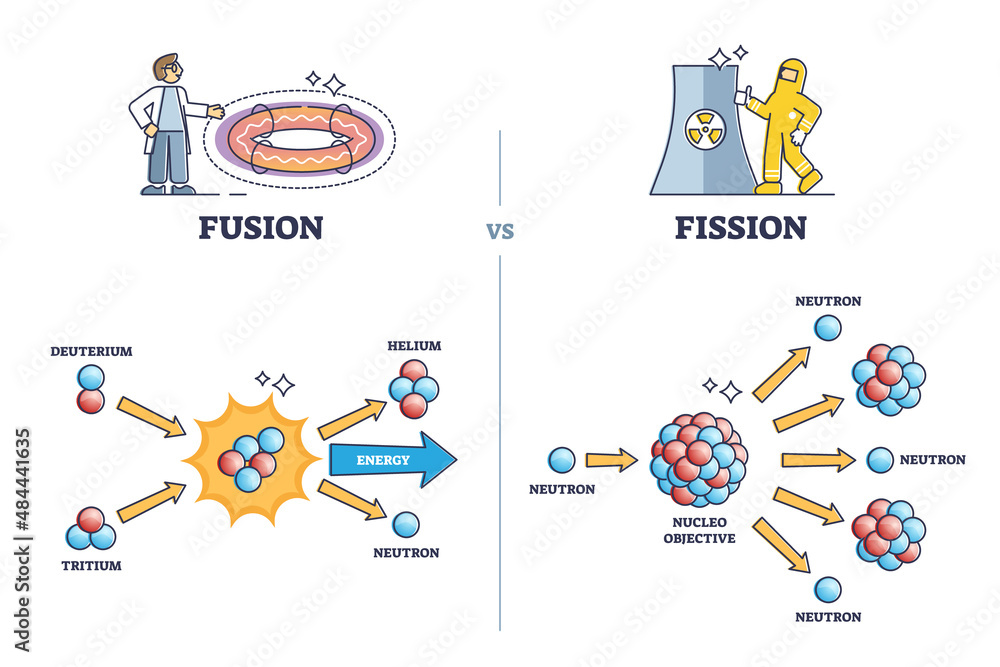
Nuclear fission is all about splitting. Imagine a big, unstable atom, like uranium. We hit it with a tiny neutron, and BAM! It breaks apart. It becomes smaller atoms, releases energy, and sprays out more neutrons. These neutrons then hit other uranium atoms, creating a chain reaction. Think of it like knocking over the first domino, and the whole thing just goes wild.
This uncontrolled chain reaction is what makes atomic bombs so... effective. Controlled fission, however, is what powers nuclear power plants. The energy released heats water, creates steam, and spins turbines to generate electricity. It’s essentially boiling water with atoms!
Must Read
Pros and Cons of Splitting
The good thing about fission? We already know how to do it! Nuclear power plants exist all over the world, giving us a decent amount of energy. The downside? Nuclear waste. Splitting those atoms leaves behind radioactive leftovers. We have to store that waste very, very carefully for a very, very long time.
Plus, there's the risk of accidents. Think Chernobyl or Fukushima. Accidents are rare, but when they happen, they are pretty scary.
Fusion: The Atomic Marriage
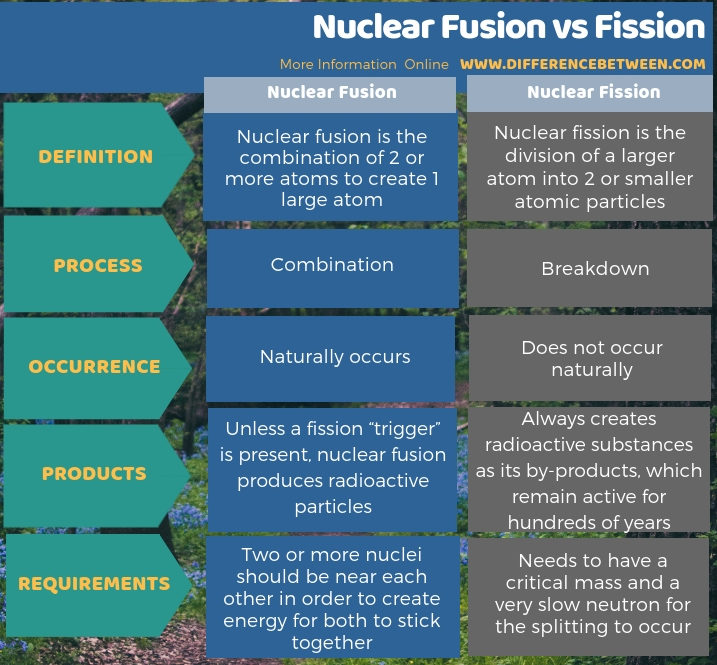
Nuclear fusion is the opposite of fission. Instead of splitting atoms, it's all about smashing them together. Specifically, very light atoms like hydrogen isotopes. When these atoms collide with enough force, they fuse together to form a heavier atom, like helium. And in this process, a HUGE amount of energy is released.
This is what powers the sun! The sun is basically a giant fusion reactor in the sky. It's constantly smashing hydrogen atoms together, releasing light and heat that reaches Earth. So, next time you're sunbathing, thank fusion!
The Dream of Fusion Power
So, why aren't we all using fusion power? Well, it's incredibly difficult to achieve. You need to create temperatures hotter than the sun to get those atoms to fuse. And you need to contain them in a tiny space. This requires incredibly powerful magnets and some very clever engineering.
But if we can crack it, the benefits are enormous. Fusion produces very little radioactive waste. The fuel, hydrogen isotopes, is abundant in seawater. It would be a clean, sustainable, and practically limitless source of energy. A dream come true!
Head-to-Head: Fusion vs. Fission
Let's break down the key differences. Fission: We know how to do it, but it creates radioactive waste and carries the risk of accidents. Fusion: Clean and abundant fuel, but incredibly difficult to achieve.
Fission is like an old, reliable car. It gets you where you need to go, but it's not the most efficient or environmentally friendly. Fusion is like a flying car. It's the future of transportation, but we're not quite there yet. We can only dream about it.
"Fission is like breaking up with someone and dividing the assets. Fusion is like finding your soulmate and building a life together... a very energetic life, that is." - Some Wise Person (Probably)
Fuel: Fission uses heavy elements like uranium. Fusion uses light elements like hydrogen. Availability of both is good. It depends on how you look at it.
Waste: Fission produces long-lived radioactive waste. Fusion produces very little waste. The waste that is produced only lasts for a few years.

Safety: Fission carries the risk of meltdowns and radiation leaks. Fusion is inherently safer. It will simply stop without elaborate safety systems.
Energy Output: Both processes release a lot of energy. Fusion has the potential to release even more.
My Unpopular Opinion: Fusion is Overhyped (For Now)
Okay, here's where I might lose some of you. Everyone's always talking about fusion like it's just around the corner. But I'm not so sure. Scientists have been working on fusion for decades, and we're still not there. We have a better chance colonizing Mars than getting a fusion power plant. The progress is slow, and the challenges are immense.
I think we need to focus more on improving fission. Develop better ways to recycle nuclear waste. Design safer reactors. It's like fixing up that old, reliable car instead of waiting for the flying car that may never arrive. It may not be as glamorous as fusion, but it is a solution we can implement today. Of course, keep working on fusion, but don't put all your eggs in that (very hot) basket.
Perhaps fusion power becomes a reality someday. Maybe our children will be driving electric cars powered by miniature suns. But until then, let's not forget about the energy source we already have.
The Bottom Line
Both fission and fusion have their pros and cons. Fission is the established technology, while fusion is the promising future. Which one is better? That depends on your priorities. Do you want a solution now, or are you willing to wait for the dream?
Ultimately, we need a diverse energy portfolio. Wind, solar, geothermal, and maybe even (dare I say it) fossil fuels. Every energy source has its place in the mix.
So, the next time you hear someone talking about nuclear energy, remember the difference between the atomic divorce and the atomic marriage. And maybe, just maybe, you'll have a slightly better understanding of the complex world of atomic power.