
Coal Energy How Does It Work
Hey there, curious friend! Ever wonder how flipping a light switch instantly brings a room to life? Or how your phone magically charges overnight? Well, a big chunk of that everyday magic, historically speaking, comes from something incredibly old and, dare I say, a little dusty: coal!
Now, I know what you might be thinking: "Coal? Isn't that like, from the Stone Age?" And you wouldn't be entirely wrong! Coal is ancient history, literally compressed plants from millions of years ago. But before it became the star of our electrical show, it was just… well, dirt and rocks. Let's peel back the layers and see how this unassuming lump of carbon still manages to keep our gadgets humming.
What's the Big Idea?
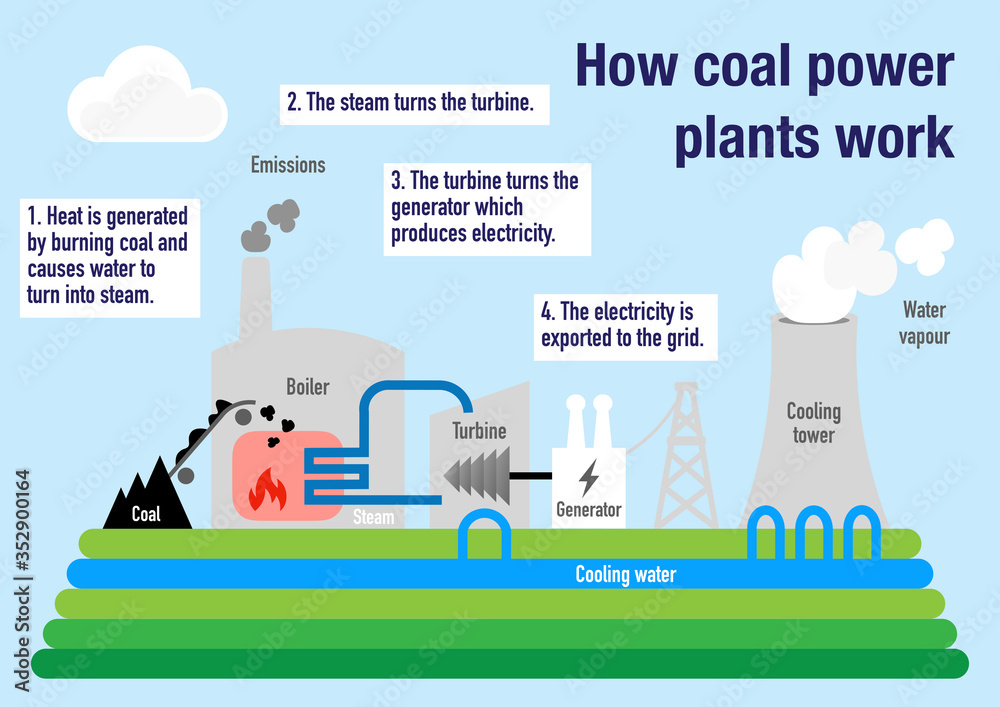
At its heart, using coal for electricity is surprisingly simple, like a really, really big tea kettle. You take coal, you burn it, that heat boils water, the steam spins something, and that spinning something makes electricity. Ta-da! See? Easy peasy. But let's get into the nitty-gritty, shall we?
Must Read
Step 1: Getting the Coal Out of Bed (aka Mining & Transport)
First things first, we need to get our hands on some coal. This means mining it from deep underground or from surface mines. Once extracted, it's usually transported by trains or barges – imagine mile-long trains just chugging along, packed with black gold! It’s a bit of a journey to get it from its comfy underground snooze to the bustling power plant.
When it arrives, the coal is often crushed into a fine powder. Think of it like grinding coffee beans, but for power! This makes it burn more efficiently, like kindling catching fire faster than a big log.

Step 2: The Super Sauna (aka The Boiler)
This is where the real action starts. That powdered coal is blown into a massive furnace, known as a boiler. Here, it ignites and burns at incredibly high temperatures. It's like the world's most intense bonfire, but super controlled!
Surrounding this fiery inferno are pipes filled with water. The intense heat from the burning coal turns that water into superheated, high-pressure steam. We’re talking way hotter and more powerful than your shower steam – strong enough to power, well, everything!
Step 3: The Whirly-Gig (aka The Turbine)
Now, that powerful steam has a job to do. It's directed through a series of nozzles onto the blades of a giant rotating machine called a turbine. Picture a massive, super-sophisticated pinwheel, but instead of wind, it's spun by incredibly forceful steam.
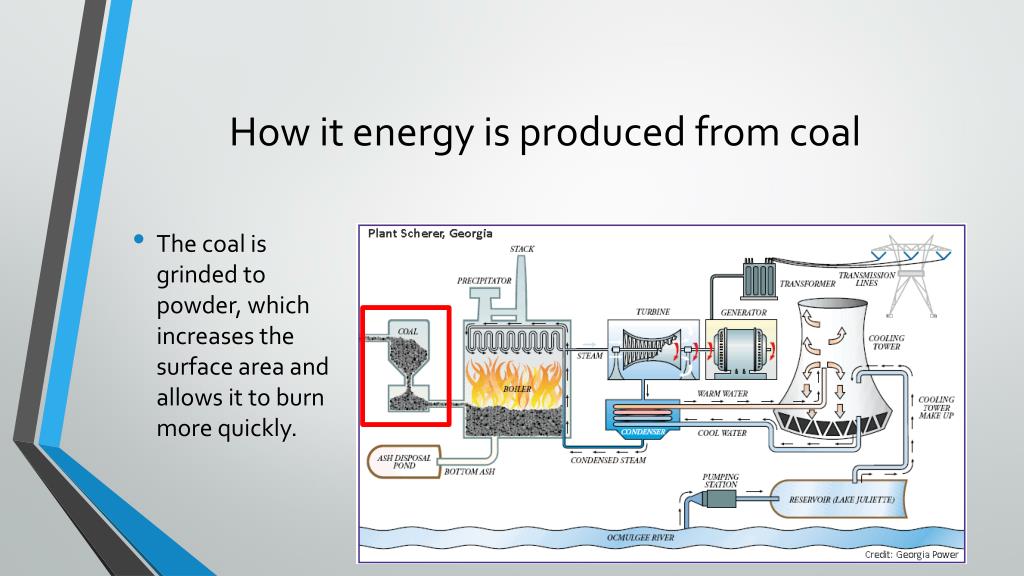
As the steam pushes against the blades, the turbine starts to spin. And it spins fast! This is where we convert the thermal energy (heat) of the steam into mechanical energy (spinning motion). We're getting closer to that light switch magic!
Step 4: The Spark Maker (aka The Generator)
Connected to the spinning turbine is another crucial piece of equipment: the generator. This is truly where the magic happens! Inside the generator, there are massive magnets spinning around coils of copper wire (or vice versa).
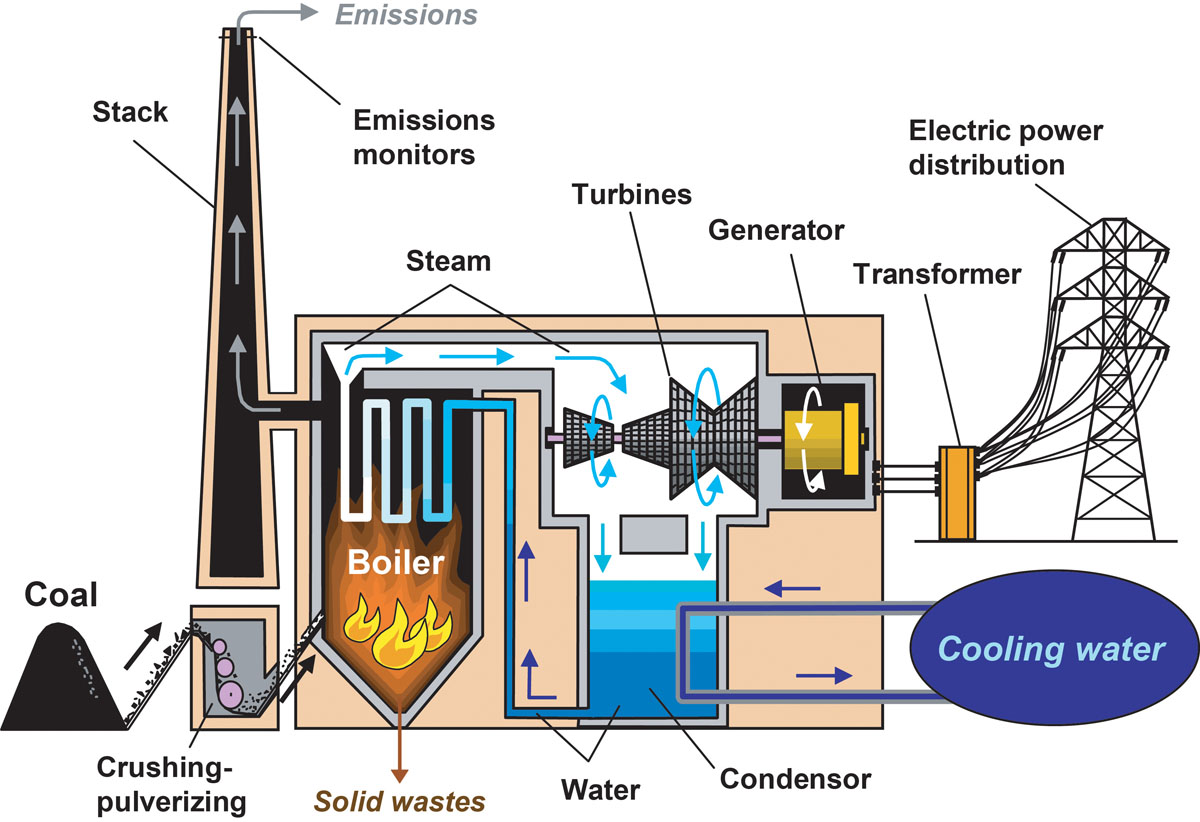
When magnets move past copper wires, something incredible happens: they create an electric current. It’s a fundamental principle of physics, and it’s how all those whirring turbines translate into the electricity that powers our lives. Think of it as a huge bicycle dynamo, but on an industrial scale!
Step 5: Off to See the World (aka Transmission)
Voila! We have electricity! But it’s not doing much good just sitting there in the power plant. So, the newly generated electricity is sent through transformers to boost its voltage, making it easier to travel long distances.
Then, it's sent out through those familiar high-voltage power lines – you know, the ones strung on tall towers – to substations, and eventually, right to your home, school, or favorite coffee shop. Phew, quite a journey for a tiny electron!
So, What Happens After the Spark? (The Byproducts)
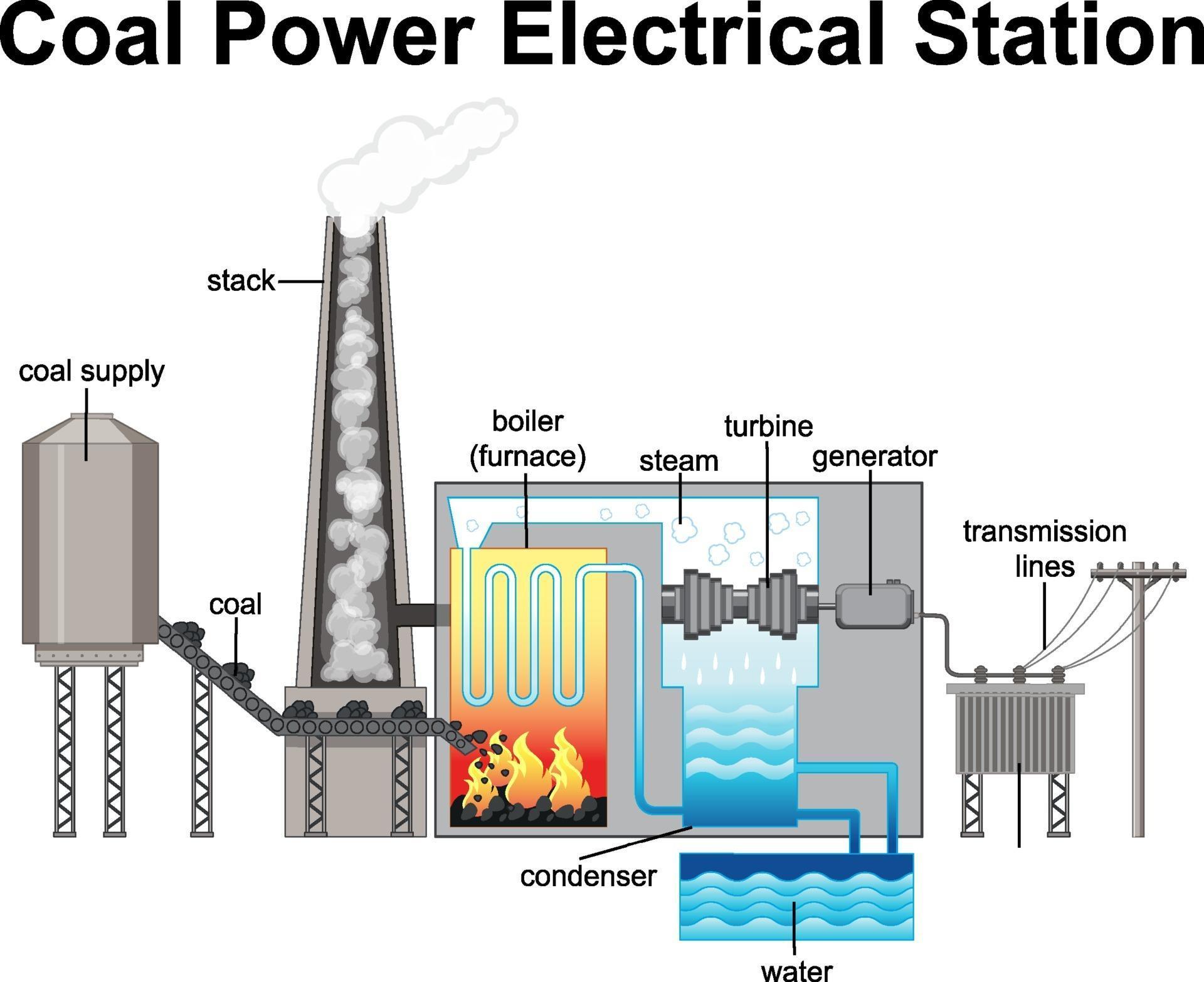
Of course, burning coal isn't a completely tidy affair. After the coal burns, there's leftover ash, which is typically collected and disposed of safely, sometimes even repurposed for things like concrete! And yes, there are emissions, like carbon dioxide and other gases. Modern power plants use all sorts of clever technology, like "scrubbers" and filters, to capture many of these pollutants before they leave the smokestack, making the process much cleaner than it used to be.
A Quick Recap!
So, to sum it up: coal burns, water boils into steam, steam spins a turbine, the turbine spins a generator, and out pops electricity! It's a chain reaction, a perfectly choreographed dance of ancient energy bringing modern conveniences to our fingertips.
It's pretty amazing, isn't it? From prehistoric ferns to powering your Netflix binge, coal has played a truly significant role in shaping our modern world. While we're constantly looking for new, even better ways to power our lives, it's cool to appreciate the ingenious journey of this humble rock. So, next time you flip a switch, give a little nod to that tiny piece of history doing the heavy lifting. Stay curious, and keep those good vibes (and the lights!) on!