
Clockwise Or Counterclockwise For Ceiling Fan

Okay, let's talk about ceiling fans. Not exactly the stuff of thrilling novels, is it? But admit it, we've all been there. Staring up at that swirling vortex of blades, wondering if it's actually doing its job or just mocking us with a gentle breeze.
And the real question, the one that keeps us up at night (okay, maybe not keeps us up, but definitely crosses our minds while we're Netflixing): clockwise or counterclockwise? It's like a secret code, a ninja trick to mastering the art of indoor climate control.
Think of it like this: your ceiling fan is basically a super-powered spoon. You can use it to stir a giant pot of air. The only problem is, sometimes you want to cool the air, and sometimes you want to warm it. And you need to know which way to stir!
Must Read
Summer Lovin', Clockwise Confusion
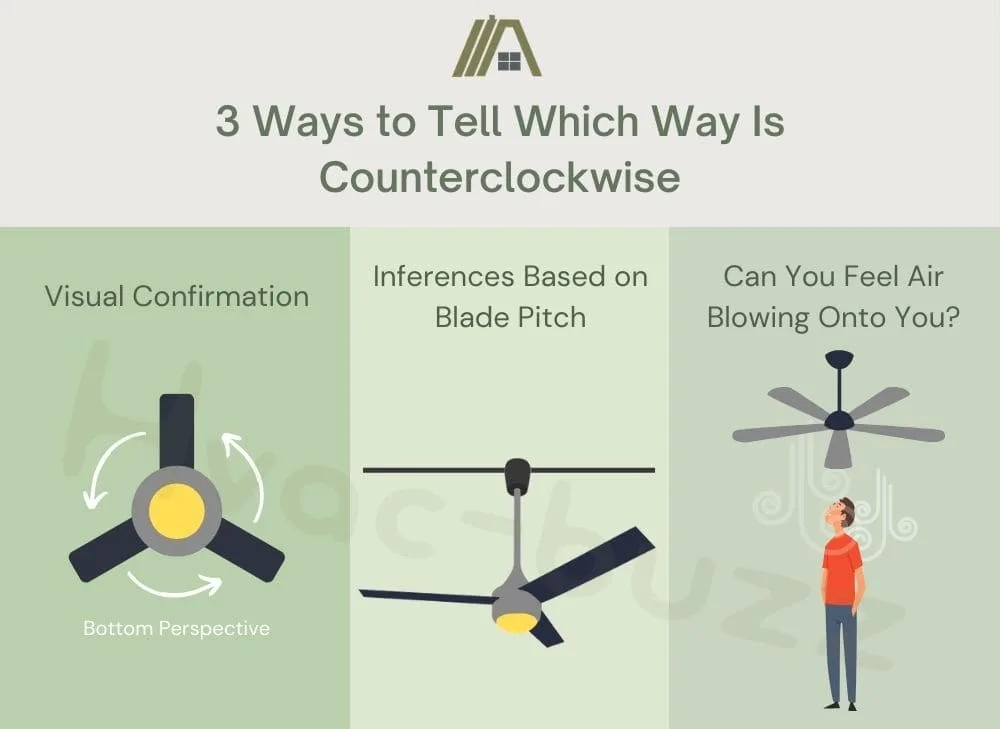
In the summertime, when the sun is beating down like a scorned lover, you want that fan to spin counterclockwise. Picture this: you're sweating like a marathon runner who accidentally signed up for two marathons, back-to-back. Your clothes are clinging to you like a needy ex.
Then, BAM! You flip that switch (or pull that chain, if you're feeling old-school). The fan starts spinning counterclockwise. It's like a mini-tornado of relief, pushing that cool air down and giving you the sweet, sweet feeling of not being a human swamp.

Why counterclockwise? Because it creates a downdraft, forcing the air down and creating a cooling breeze. It's like the fan is giving you a high-five, a "Hey, buddy, I got you. You're not gonna melt today."
I remember one summer, I was convinced my air conditioner was broken. I was roasting alive. Turns out, the ceiling fan in my bedroom was spinning clockwise! It was like it was actively trying to make me suffer. Flipping that direction was a game-changer. Suddenly, I could actually sleep without feeling like I was being slow-roasted.
Winter Woes, Clockwise Flows
Now, let's fast forward to winter. The sun is a distant memory, and you're huddled under a blanket, questioning all your life choices. Your heating bill is skyrocketing, and you're starting to think about moving to a tropical island where the only climate control you need is a strategically placed palm tree.
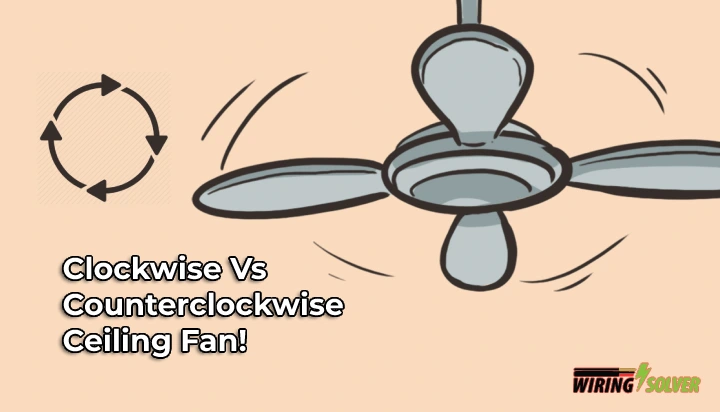
This is where the clockwise direction comes into play. See, warm air rises (think hot air balloons, or your dad's temper when you accidentally dented his car). The ceiling fan, spinning clockwise, gently pushes that warm air back down from the ceiling.
It's not going to create a noticeable breeze like in the summer, but it will help distribute the heat more evenly throughout the room. It's like the fan is giving the warm air a nudge, saying, "Hey, get down there! Everyone deserves a little warmth."
Think of it this way: imagine you're trying to mix a batch of cookie dough. You need to scrape down the sides of the bowl to make sure everything is evenly distributed. The clockwise fan is doing the same thing with the warm air in your room.
My grandma used to swear by this. She’d always say, “That fan is workin’ harder than a one-legged man in a butt-kicking contest!” Okay, maybe that’s a bit much, but you get the idea. It helps, and it can save you money on your heating bill.
![Ceiling Fan Directions for Summer vs Winter [Infographic]](https://airflowacademy.com/wp-content/uploads/2021/06/Ceiling-fan-direction.jpg)
The Chain of Truth
So, there you have it. Counterclockwise for summer cooling, clockwise for winter warming. Now, the only challenge is remembering which chain controls the direction and which one controls the speed. That, my friends, is a whole other story for another day.
Just remember, a little experimentation can go a long way. Don't be afraid to play around with the settings until you find what works best for you. After all, the goal is to be comfortable, not to win a ceiling fan trivia contest.
And if all else fails, just blame the fan. It’s probably its fault anyway.