
Classify Each Element As A Metal Or Nonmetal
Ever wondered what makes a fork shiny and a balloon…well, not? Or why your phone battery can hold a charge, but your rubber ducky just floats? The secret lies in the fundamental building blocks of everything around us: the elements! And understanding whether an element is a metal or a nonmetal is like unlocking a superpower of observation. It's not just some boring chemistry lesson; it's about understanding the very stuff that makes up your world!
So, why should you care about metals and nonmetals? Well, classifying elements isn't just a fun fact for your next trivia night. It's incredibly useful. Knowing whether an element is a metal or nonmetal instantly gives you a heads-up on its properties. For example, metals are typically good conductors of electricity, which is why they're used in wiring. Nonmetals, on the other hand, are often insulators, preventing the flow of electricity – think of the plastic coating on those wires! This knowledge helps us predict how materials will behave and how we can best use them.
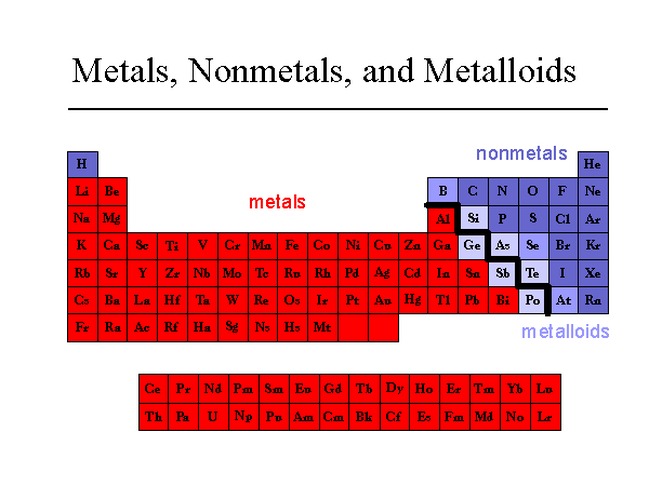
Think of the Periodic Table, that colorful chart hanging in every science classroom, as your cheat sheet! Most of the elements on the left and in the center are metals. Generally, metals have a few key characteristics: they're shiny (we call that luster), they're malleable (meaning you can hammer them into thin sheets), and they're ductile (meaning you can draw them into wires). They're also good conductors of heat and electricity, as we discussed. Think of familiar metals like iron, copper, gold, and aluminum. They all fit this description.
Must Read
On the right side of the Periodic Table, you'll find the nonmetals. These guys are the opposite of metals in many ways. They're generally dull, brittle (easily broken), and poor conductors of heat and electricity. Common nonmetals include oxygen, nitrogen, sulfur, and carbon. They come in various forms – gases, liquids, and solids – adding to their diversity.
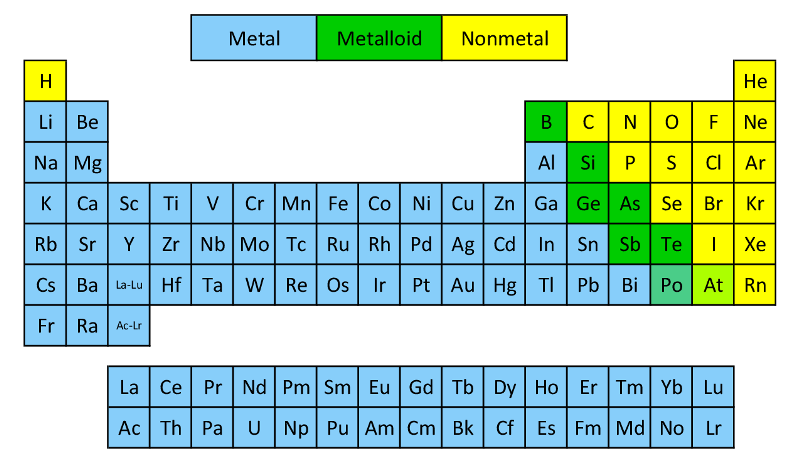
Now, it's not always a black-and-white distinction. There are some elements that are called metalloids or semi-metals. These elements, like silicon and germanium, have properties of both metals and nonmetals. They're like the "tweens" of the element world! They are particularly important in the world of electronics because they can be manipulated to conduct electricity under certain conditions, making them the heart of computer chips.
In short, being able to classify an element as a metal or nonmetal is more than just a science lesson; it's a practical skill that helps you understand the world around you. From the gadgets you use every day to the structures you live and work in, the properties of metals and nonmetals are crucial. So next time you pick up a piece of metal or see a nonmetallic object, take a moment to appreciate the amazing diversity of elements and how their unique properties shape our lives.


