
Christmas Lights How Many Can I String Together
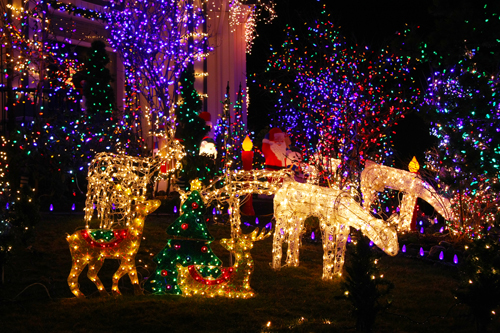
Christmas lights. They’re magical, right? Twinkling, colorful…stressful?
Let's talk about the elephant in the room. That tangled mess in the attic. You know the one.
And then there's the question that plagues us all: How many of these things can I actually string together before my house burns down?
Must Read
The Great Christmas Light Conspiracy
Okay, "conspiracy" might be a strong word. But hear me out.
Have you ever actually read the tiny print on those light boxes? It's like they’re daring you to squint harder.
It usually says something cryptic like, "Do not exceed 210 watts total." What even is a watt, anyway?
My unpopular opinion? I think they make it confusing on purpose.
The "Safe" Answer
The official recommendation? Read the box! It's boring, I know. But supposedly important.
They’ll tell you about amps, volts, and something called a “duty cycle.” My brain just shuts down.
Most experts (who probably don't decorate their own houses) say stick to the manufacturer's guidelines.
My "Slightly Less Safe, But Way More Fun" Answer
Now, here's where I get a little rebellious. Don't tell my insurance company.
I've strung together… well, let’s just say “more than the box recommended.”
And guess what? The house is still standing. Knock on wood.
I'm not advocating for electrical fires. But a little twinkle never hurt anyone, right?
Incandescent vs. LED: A Battle for the Ages
This is where things get technical… sort of.
Those old-school, heat-generating, incandescent bulbs? Beautiful, but power-hungry little monsters.
They're like that friend who orders the most expensive thing on the menu and expects you to split the bill evenly.
LEDs, on the other hand, are the responsible adults of the Christmas light world. They sip power like a dainty tea.
You can string together way more LEDs than incandescents. That’s a fact.
In fact, you can string so many LEDs together that your house might start to resemble a landing strip.
The LED Advantage
Think of it this way: incandescent lights are like a gas-guzzling SUV. LEDs are like a Prius.
One drains your resources and emits lots of heat. The other is efficient and eco-friendly (sort of).
Plus, LEDs last longer. So, less replacing bulbs mid-December in freezing temperatures.
The Extension Cord Conundrum
Ah, extension cords. The unsung heroes (or villains) of Christmas lighting.
Using the wrong extension cord is like putting the wrong kind of fuel in your car. Disaster waiting to happen.

Make sure your extension cord is rated for outdoor use. And that it can handle the wattage of your lights.
A flimsy extension cord is a fire hazard. Seriously. Don't skimp on this.
Heavy-Duty is Your Friend
Think thick, weatherproof, and specifically designed for outdoor use.
Those skinny, indoor-only extension cords? Leave them inside for your lamp.
Investing in good extension cords is like buying a good winter coat. You'll thank yourself later.
My (Probably Terrible) Stringing Strategy
Okay, here's my highly unscientific, potentially dangerous, but consistently employed strategy.
I start with LEDs. Always. They're my safety net.
Then, I strategically place a few strings of incandescent lights for that warm, nostalgic glow.
I keep a close eye on the extension cords. Feeling for heat. Listening for crackling sounds. You know, the usual.
And if anything feels even slightly sketchy, I unplug it. Immediately.
Safety first, my friends. Except when it comes to excessive Christmas lights. Then, maybe safety second?

The "If It Feels Hot, Stop" Rule
This is my golden rule. If an extension cord feels warm to the touch, you’re pushing it.
Unplug some lights. Or get a higher-gauge extension cord.
A little warmth is probably okay. But anything more than that is a red flag.
The Art of Creative Light Placement
Stringing lights isn't just about quantity; it's about quality placement.
Drape them artfully along your roofline. Twirl them around trees. Create a winter wonderland.
Don't just haphazardly throw them up there like a tangled fishing net. That's just lazy.
Think about focal points. Highlight architectural features. Create a sense of magic.
More is More (But Not Too Much More)
There's a fine line between festive and gaudy. Find that line. Straddle it carefully.
A little bit of restraint can go a long way. But let's be honest, who am I kidding? Go all out.
Just don't blame me when your neighbors start complaining about the light pollution.
The Ultimate Christmas Light Hack
Ready for the secret to Christmas light success? Here it is:

Don't be afraid to experiment.
Do be mindful of safety.
And most importantly, have fun!
Embrace the Twinkle
Christmas lights are about more than just illumination. They're about creating a feeling.
A feeling of warmth, joy, and a little bit of holiday madness.
So, go forth and string those lights! Just don't electrocute yourself in the process.
Final Thoughts (and a Disclaimer)
I am not an electrician. I am just a Christmas light enthusiast with a questionable approach to electrical safety.
Please, for the love of tinsel, be careful.
Read the instructions. Use common sense. And don't blame me if your house ends up looking like a disco ball.
And remember, the most important thing is to spread some holiday cheer. Even if it's powered by a slightly overloaded circuit.
Happy lighting!
P.S. My actual advice? Hire an electrician. But where's the fun in that?