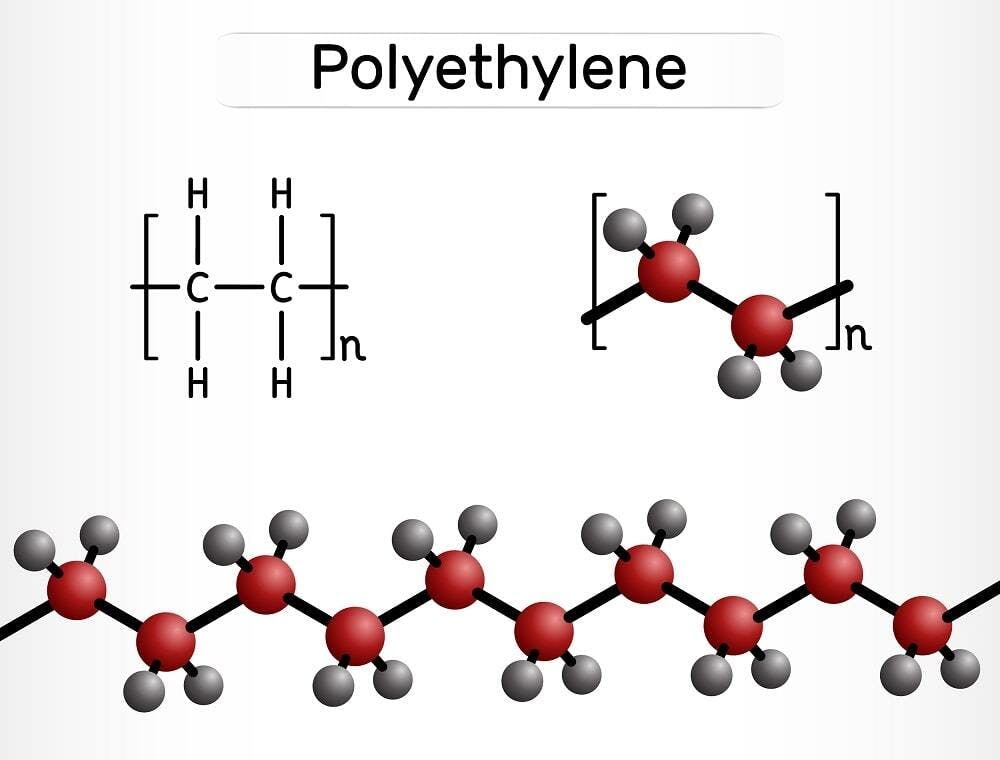
Chemical Structure Of Low Density Polyethylene
Ever wondered what that flimsy plastic bag holding your groceries together is actually made of? Or that squeezable bottle of ketchup waiting patiently in your fridge? Chances are, it's probably LDPE, or Low-Density Polyethylene. And trust me, the chemistry behind this everyday superhero is way more interesting than you might think!
The Building Blocks: Imagine Legos!
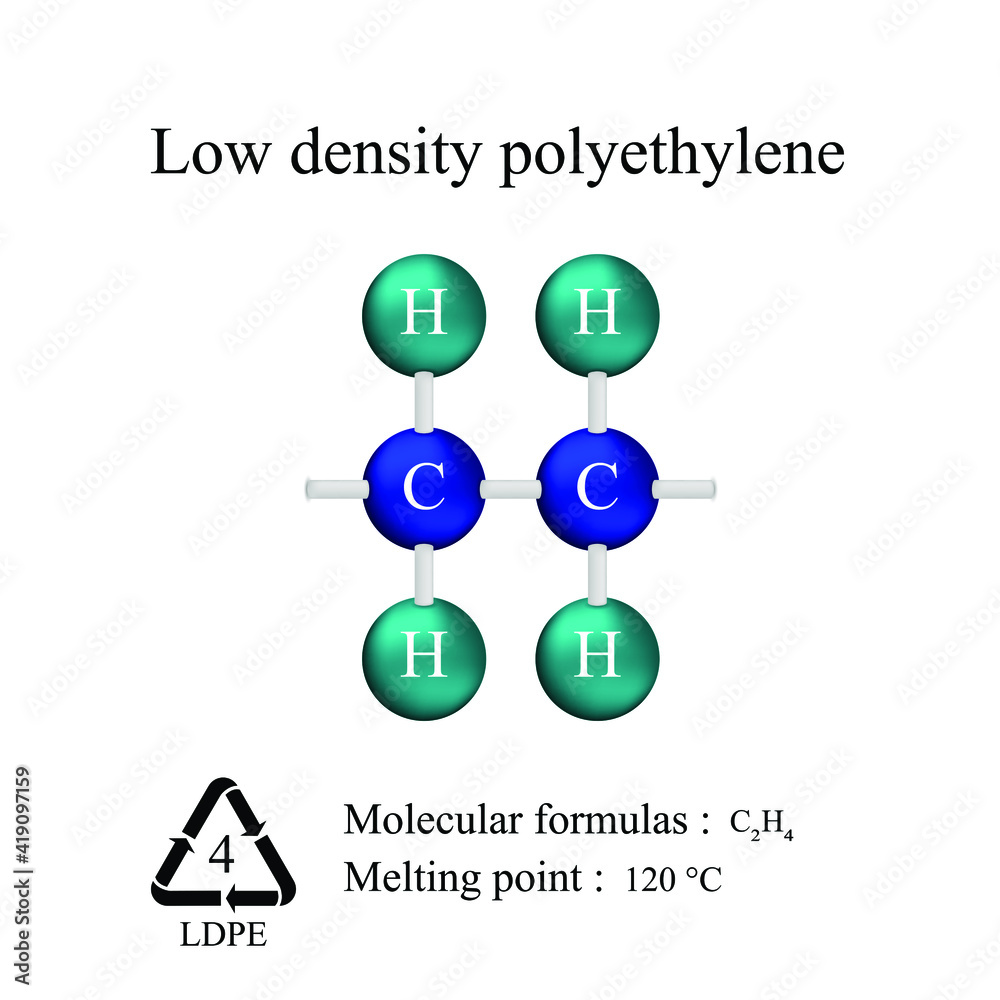
Think of LDPE like a massive structure built from tiny, identical Lego bricks. Each brick, in this case, is a molecule of ethylene (also known as ethene). Ethylene is super simple: just two carbon atoms joined together by a double bond, with a couple of hydrogen atoms tagging along for the ride. It’s like the Adam and Eve of the plastic world!
Now, these ethylene molecules are eager beavers, just itching to link up and form a long, long chain. This process is called polymerization. Imagine thousands upon thousands of these ethylene “Legos” clicking together, end-to-end, forming a super-long snake. That's essentially a polyethylene molecule! It's like the world's longest conga line, but with molecules!
Must Read
Low Density: It's All About the Branches!
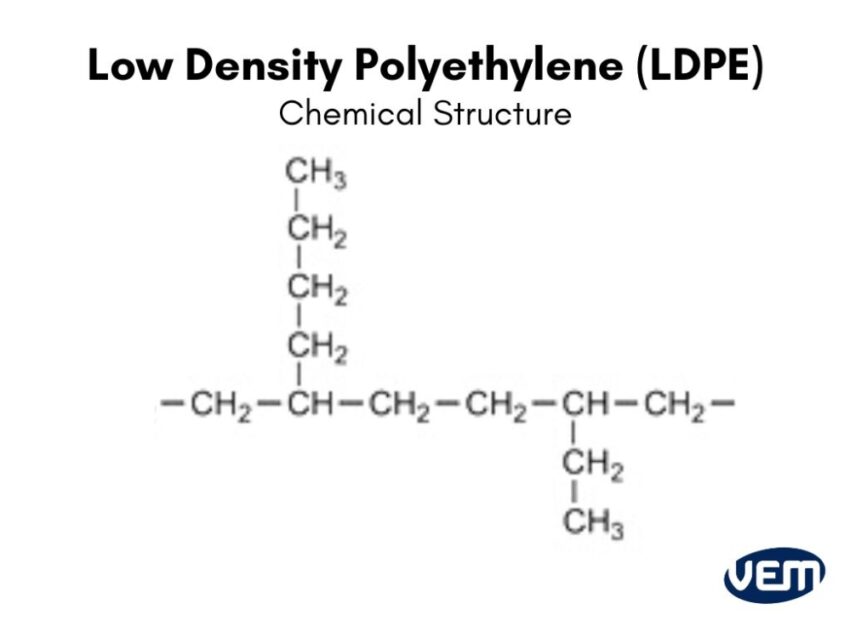
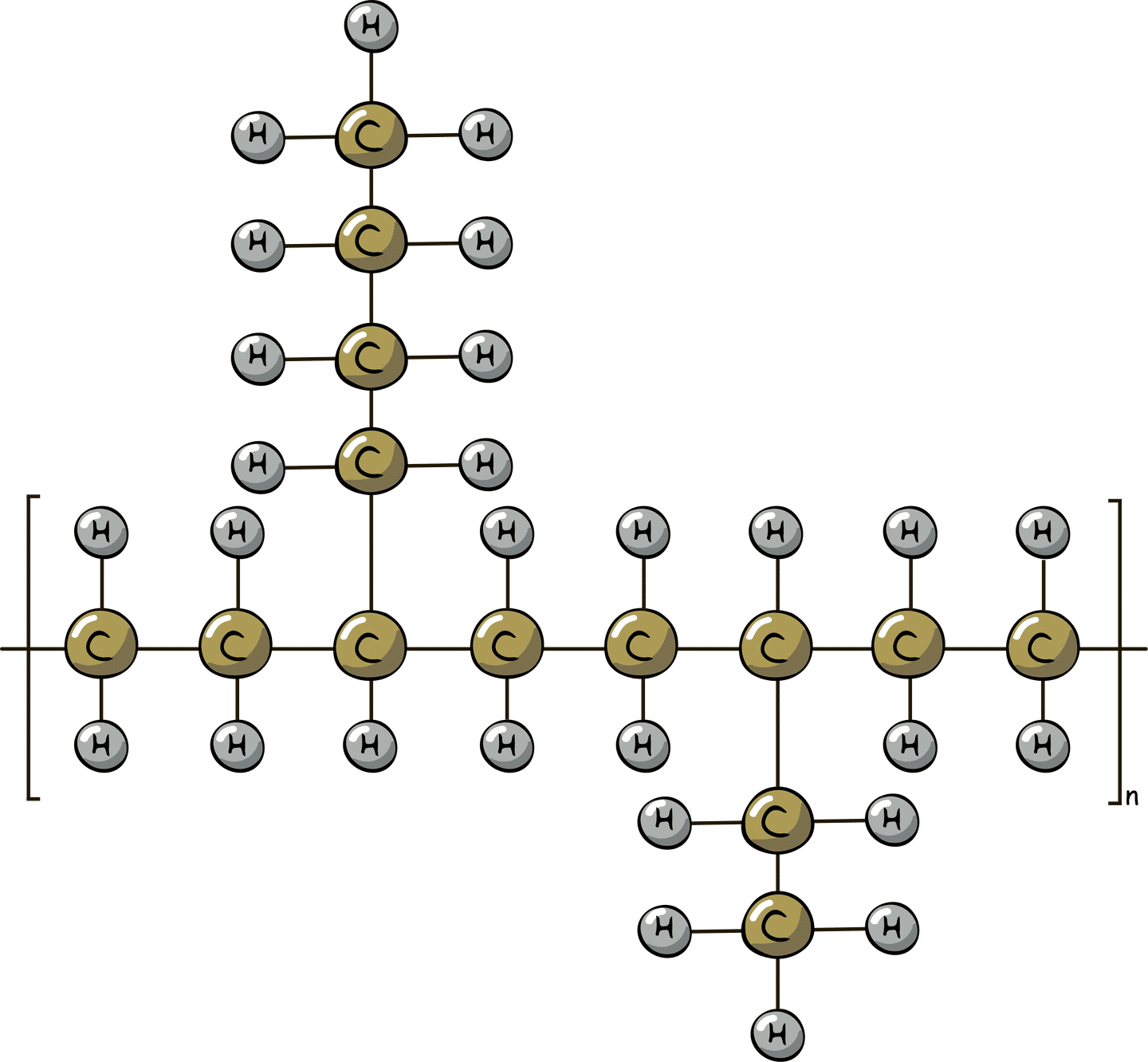
Here’s where the “low-density” part comes in. While those ethylene molecules are forming the main chain, things don’t always go perfectly smoothly. Sometimes, during polymerization, an ethylene molecule decides to branch off the main chain. It's like a conga line participant suddenly deciding to start their own mini conga line off to the side!
These branches are usually short, made of a few carbon and hydrogen atoms. They jut out from the main chain like little arms. Now, here’s the kicker: these branches prevent the polyethylene chains from packing together very tightly. Imagine trying to neatly stack a pile of clothes with lots of buttons and frills – it’s going to be a bit messy, right? The same principle applies here.
Because the chains can’t pack tightly, there’s more space between them. More space means less mass in a given volume, hence, low density! Think of it like this: a tightly packed suitcase versus a loosely packed one. The tightly packed one will feel heavier, even if they contain the same clothes, because it's more dense.
The "Kinks" and "Knots": Imperfection is Key
These branches create “kinks” and “knots” in the overall structure. It’s like a plate of spaghetti – the strands are all tangled and intertwined. This tangled arrangement gives LDPE its unique properties. It's flexible, lightweight, and relatively weak. Think of a garbage bag – you want it to be pliable, but you wouldn't trust it to hold a bowling ball (probably!).
LDPE in Action: The Plastic Bag’s Secret
So, how does all this chemical mumbo-jumbo translate to the real world? Well, the branched structure of LDPE makes it easy to melt and mold. This is why it’s perfect for making films like plastic bags, squeeze bottles, and even the lining inside milk cartons. It's the reason you can squish that ketchup bottle to get the last bit out!
LDPE is also relatively inexpensive to produce, which is why it’s so widely used. It's the affordable, reliable workhorse of the plastic world.
Because the chains aren’t tightly packed, LDPE is also more permeable to gases and liquids than other types of plastic, like HDPE (High-Density Polyethylene). This is why your groceries in that LDPE bag might not stay perfectly fresh forever – a little air can still get through.
Not a Superhero, but a Trusty Sidekick
So, there you have it! The next time you’re using an LDPE plastic bag, take a moment to appreciate the amazing chemistry at play. It might not be the strongest or most durable material, but LDPE is a versatile and incredibly useful polymer that makes our lives a little bit easier every day. It’s the unsung hero of the grocery store, the champion of the squeeze bottle, and the master of the garbage bag. Give it up for LDPE!