
Ceiling Fans Rotate Clockwise Or Counterclockwise
Alright, let's dive into the wild and wonderful world of ceiling fans! We're tackling the age-old question: clockwise or counterclockwise? Get ready, because things are about to get breezy!
Summer Lovin', Happens So Fast (and Counterclockwise!)
Think of summer. Picture it. Sun's blazing, lemonade's flowing, and you're melting faster than an ice cream cone on a hot sidewalk. That's when your ceiling fan becomes your best friend.
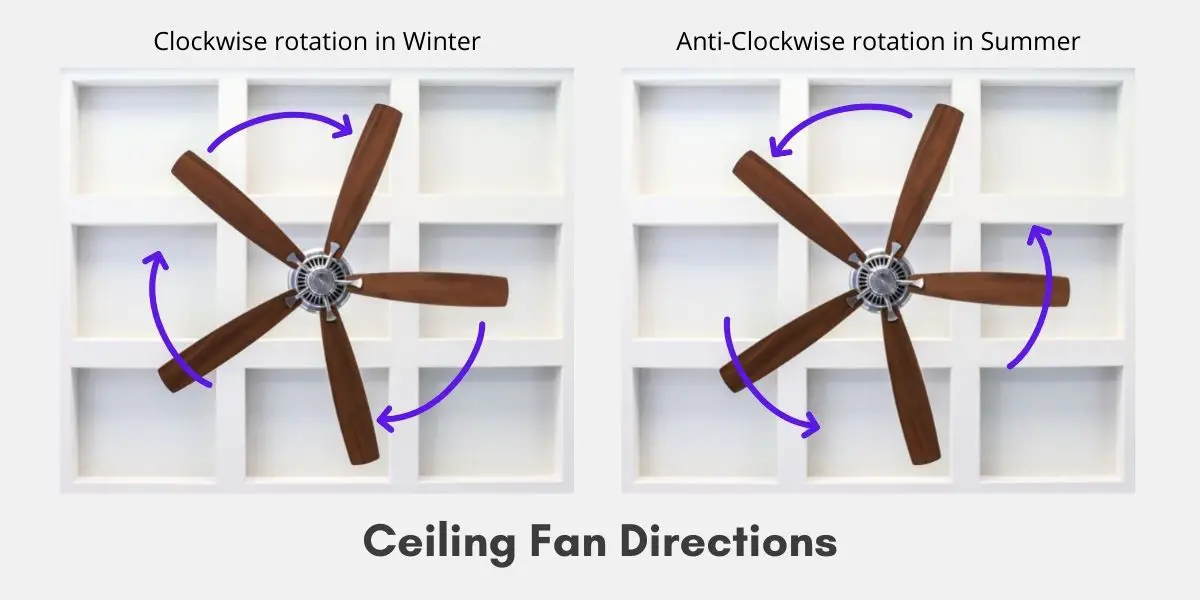
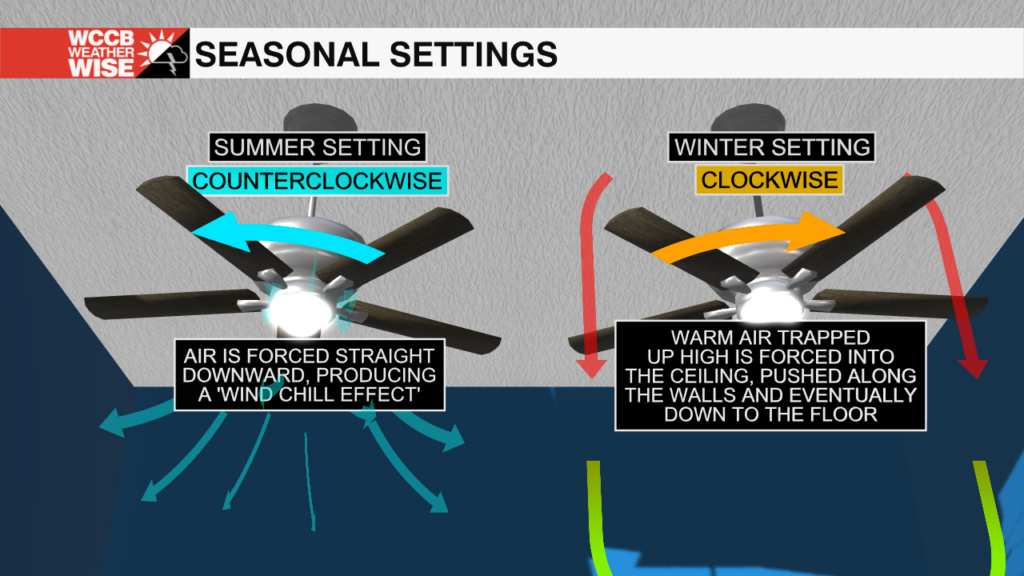
During those scorching months, you want your fan spinning counterclockwise. Imagine the blades cutting through the air like a ninja slicing through a swarm of pesky mosquitoes.
Must Read
That downward breeze is like a gentle, refreshing hug. It pushes the cool air down, creating a wind-chill effect that'll make you feel like you're lounging on a tropical beach. Okay, maybe not quite like that, but definitely cooler!
Think of it like this: the fan is high-fiving the air and sending that cool energy directly to you. It’s a celebration of summer, and a declaration of war against sweat.
The Science-y (But Still Fun) Part
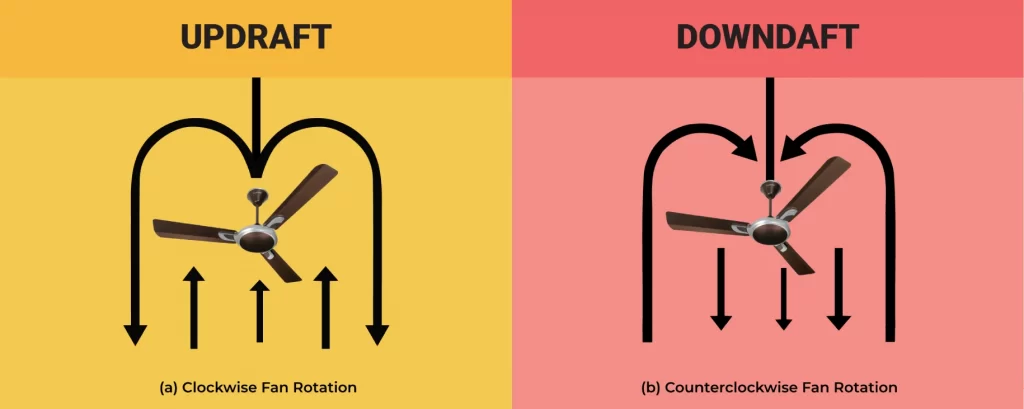
Okay, let's get a little bit technical, but don't worry, we'll keep it light. When your fan spins counterclockwise, it creates a downdraft.
This downdraft displaces the warmer air that naturally rises to the ceiling. It's like the fan is saying, "Hey, warm air, get outta here! Cool air party's down below!"
The result? A room that feels significantly cooler, even without cranking up the AC to arctic levels. You'll save money, feel comfortable, and maybe even high-five your fan in gratitude.

Winter's Whisper: Clockwise is the Way to Go!
Now, let's fast forward to winter. The days are shorter, the nights are colder, and you're probably wrapped in a blanket thicker than a polar bear's fur.
That's when you need to switch gears and make your ceiling fan spin clockwise. Yes, you heard that right! It's time for a directional change.
In the winter, you want to gently circulate the warm air that rises to the ceiling. Think of the fan as a benevolent air masseuse, coaxing the warmth back down to where you need it most.
It's not about creating a direct breeze, but rather a subtle movement of air that evens out the temperature in the room. No one likes cold feet and a toasty head!
Clockwise rotation helps distribute the heat without creating a chilly draft. It’s like a warm hug that extends from your head to your toes.
The Slightly More Science-y (But Still Enjoyable) Part
When your fan spins clockwise, it creates an updraft. This pulls the cooler air up towards the ceiling, gently pushing the warmer air back down.
It's a slower, more subtle process than the cooling effect of a counterclockwise fan. Think of it as a gentle waltz, rather than a high-energy dance-off.
The goal is to create a more even temperature distribution in the room, preventing that annoying situation where your feet are freezing while your head is sweating. It’s all about thermal equilibrium, my friends!
Finding the Sweet Spot: How to Tell Which Way Your Fan is Spinning
Okay, so now you know which direction your fan should be spinning, but how do you actually tell which way it's going? Don't worry, it's not rocket science. Unless you're using your ceiling fan to power a rocket, in which case, hats off to you!
Stand underneath your fan and look up. Watch the blades. Are they moving to the right (clockwise) or to the left (counterclockwise)? It's pretty straightforward.
If you're still not sure, try using a handy-dandy mnemonic device. Remember "C" for Cool (counterclockwise) and "W" for Warm (clockwise). Or just shout "Righty tighty, lefty loosey!" at the fan until it complies.
The Almighty Switch: Your Key to Directional Domination
Most ceiling fans have a little switch located on the motor housing. This is your magical portal to directional control. It's often a small slider switch, sometimes labeled with arrows or icons.
Flip that switch, and watch your fan transform! It's like giving it a personality transplant. Just make sure the fan is completely stopped before you flip the switch, unless you want to witness some potentially alarming wobbling.
If you can't find the switch, consult your fan's instruction manual. Or, if you're feeling adventurous, try yelling at it really loudly. (Just kidding...mostly.)
Speed Matters Too! (But Direction is King)
While we're on the topic of ceiling fans, let's talk briefly about speed. The speed at which your fan spins can also affect how comfortable you feel.
In the summer, you'll generally want your fan on a higher speed to maximize the cooling effect. Think of it as turbo-charging your personal breeze machine.
In the winter, a lower speed is usually preferable. You want to gently circulate the warm air without creating a noticeable draft. Gentle waltz, remember?
Experiment with different speeds to find the sweet spot that works best for you. Every room is different, and every person has their own comfort preferences.
Beyond the Basics: Fan Facts That Will Blow Your Mind (and Maybe Your Hair)
Did you know that ceiling fans were originally powered by water? That's right! Before the age of electricity, resourceful folks used water wheels to turn the blades.
Some ceiling fans come with remote controls. Imagine controlling your fan from the comfort of your couch! It's the ultimate in lazy luxury.
And finally, a well-maintained ceiling fan can last for decades. That's a whole lot of clockwise and counterclockwise rotations! Treat your fan with respect, and it will reward you with years of comfortable air circulation.
The Grand Finale: Spin Your Way to Comfort!
So there you have it! The definitive guide to clockwise and counterclockwise ceiling fan rotations. Armed with this knowledge, you can now conquer any temperature challenge that comes your way.
Remember, counterclockwise for cool summer breezes, clockwise for gentle winter warmth. Flip that switch, adjust that speed, and enjoy the blissful comfort of a perfectly optimized ceiling fan.
Now go forth and spin! Your comfort awaits! Just don't blame me if you spend all day staring at your ceiling fan. It's a mesmerizing sight, I know. Enjoy!