
Ceiling Fan Size And Room Size

Ah, the humble ceiling fan. It’s a silent hero on a sweltering day, a gentle hum of comfort when the air stands still. We often take them for granted, swirling quietly above our heads. But then comes the moment you need a new one. Or you're just looking around your own space, wondering if things could be… breezier.
And that’s when the dreaded question pops up: What size fan do I need?
Suddenly, you're looking at charts. Manufacturers offer intricate tables. They list room dimensions and suggest a perfectly corresponding fan diameter. It's all very scientific. Very precise. Very… unexciting, if you ask me. And frankly, I think it's often a bit off the mark.
Must Read
The Case Against "Just Right"
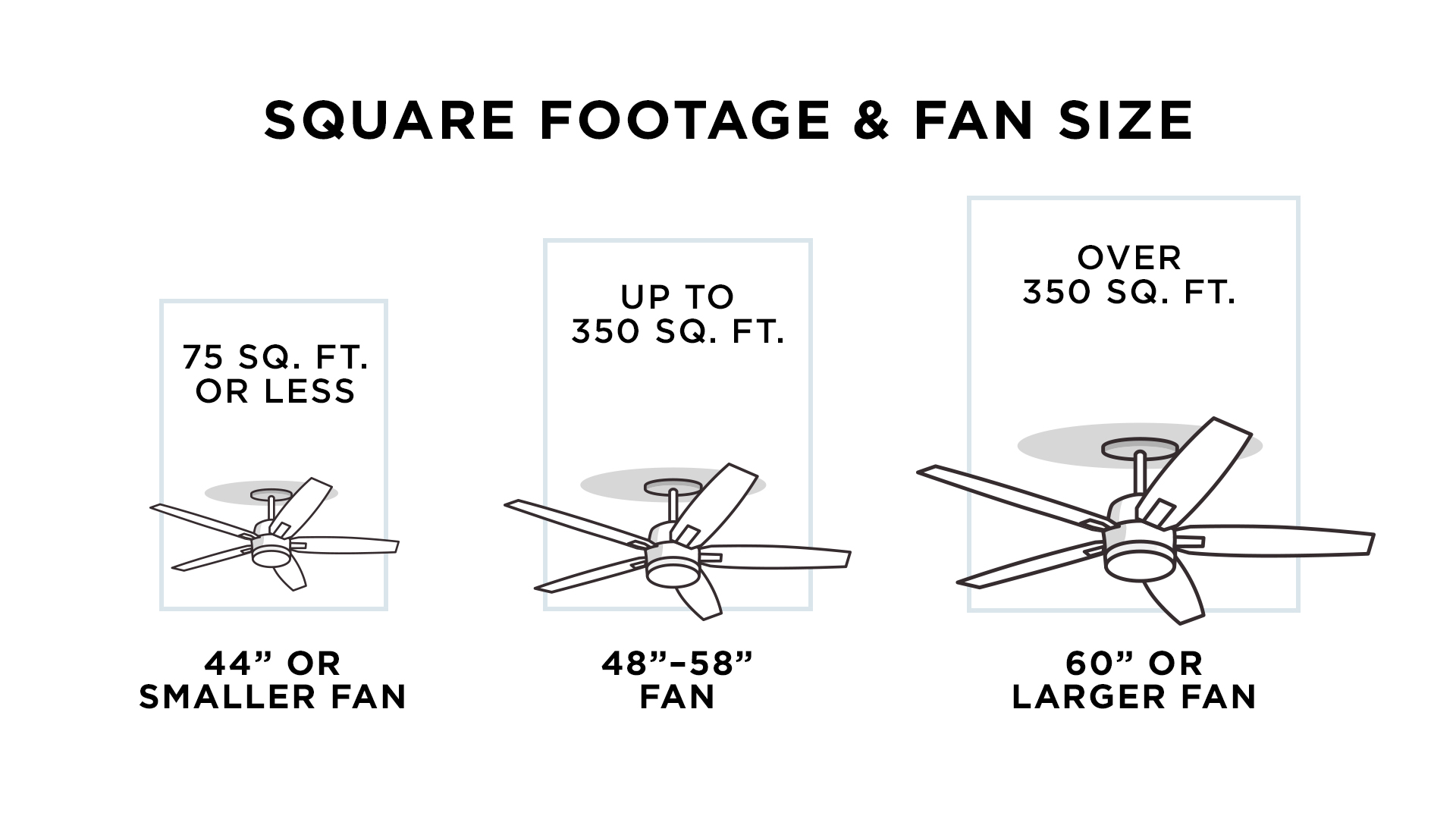
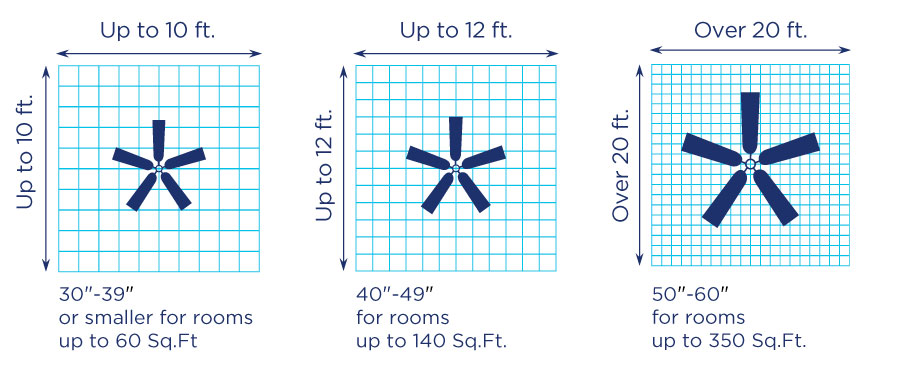
Let's talk about the common advice. You have a small room, say 8x10 feet. The chart says, "Oh, you need a 36-inch fan!" For a medium room, maybe 12x12, they'll suggest a 42-inch or 48-inch fan. And for your grand living space, perhaps a 52-inch or 60-inch model.
Sounds logical, right? Neatly organized, easy to follow. But here’s my slightly unpopular opinion: most of these guidelines are too conservative. They aim for "adequate." I, my friends, aim for glorious air movement.

"A fan should move just enough air to be noticed, but not so much as to be disruptive." – Said no one who truly loves a good breeze, ever.
Think about it. Have you ever walked into a large room with a fan that looks, well, a little… pathetic? It's spinning valiantly, sure. But the air it moves barely ripples your hair unless you stand directly underneath it. It's like bringing a small spoon to a soup convention. It's doing its best, but it's clearly outmatched. You end up fanning yourself with a magazine, defeated.
Embrace the "Overkill" (It’s Not Overkill)
Now, let’s flip the script. Imagine a bedroom that’s, by the book, meant for a 42-inch fan. But you, in your wisdom, decided to go for a 52-inch beauty. The horror! The audacity! Will it create a hurricane in your sleep? Will your curtains fly out the window? Will small pets be gently lifted from the floor?
Spoiler alert: No. Absolutely not. What you’ll get is a wonderfully consistent, comfortable breeze. You’ll have options. You can run it on a lower setting and still feel it across the whole room. No more hot spots. No more feeling like you’re just circulating stagnant air.
This isn't just about functionality; it's about comfort. It’s about not having to crank the fan to its highest, noisiest setting just to feel something. A slightly larger fan, running at a gentler speed, can often deliver more comfort with less noise. It’s like having a V8 engine when you only need a four-cylinder – you have power to spare, and it runs smoother when it's not straining.
The Aesthetics of Abundance
And let's not forget how it looks. A fan that's a touch larger than the official recommendation can actually look more substantial and fitting for the room. A tiny fan in a big room can look lost, a bit silly even. Like a hat that's two sizes too small. But a generously sized fan? It looks purposeful. It looks like it means business. It commands the space, in the best possible way.
Are you really going to tell me that extra 6 or 10 inches of blade span is going to make your room feel cramped? Unlikely. What it will do is make your room feel cooler. And isn't that the whole point?
So, the next time you're facing that perplexing fan chart, take a deep breath. Nod politely. And then, perhaps, consider defying it just a little. If they recommend 42 inches, maybe peek at the 52-inch models. If they say 52 inches, cast a longing glance at the 60-inch giants.
Trust your gut. Trust the glorious feeling of a proper breeze. Because when it comes to ceiling fans, sometimes a little bit of "too much" is actually just right. Go forth and fan gloriously!