Ceiling Fan Rotation Direction Summer Winter
Let's be honest, ceiling fans. They're not exactly the rock stars of home appliances. But did you know that little switch on the side, the one that rarely gets touched, could be the key to saving you money and making your home more comfortable year-round? It's true! We're diving into the surprisingly fascinating world of ceiling fan rotation direction – summer versus winter. Trust us, it's more exciting than it sounds!
The magic lies in understanding that a ceiling fan isn't just about blowing air around. It's about creating airflow that impacts how you feel the temperature. The primary purpose of adjusting your fan's direction is to either cool you down in the summer or help distribute warm air in the winter, making your HVAC system more efficient.
Summer Mode: Counterclockwise is the Key!
Must Read
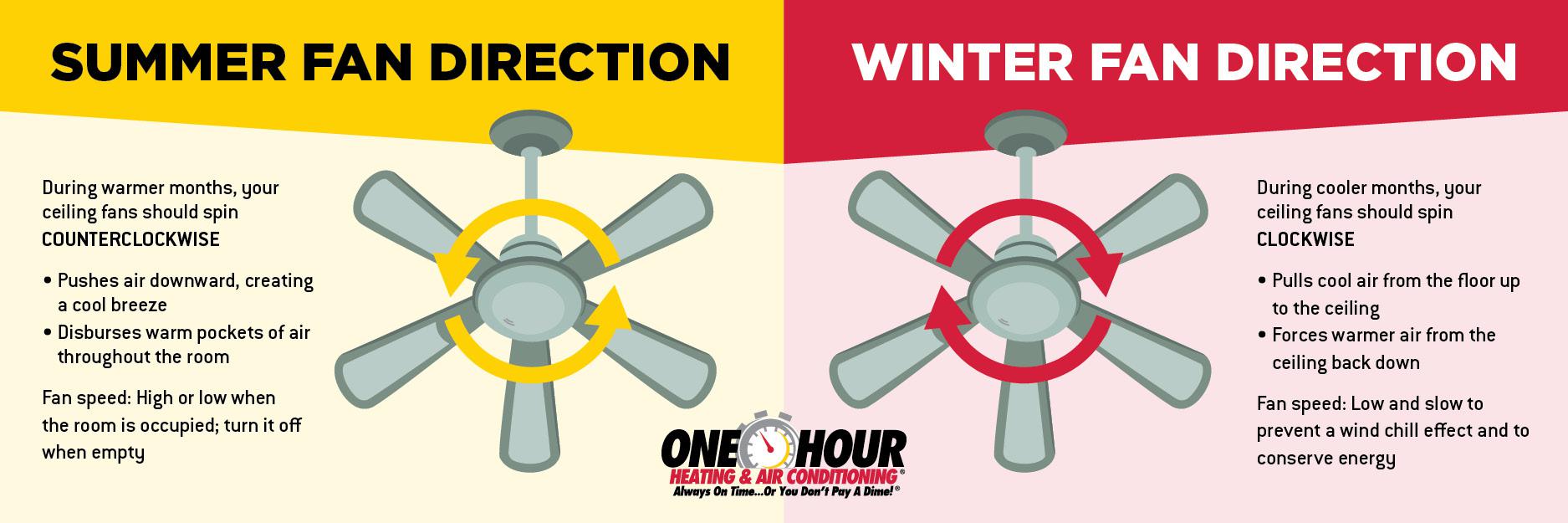
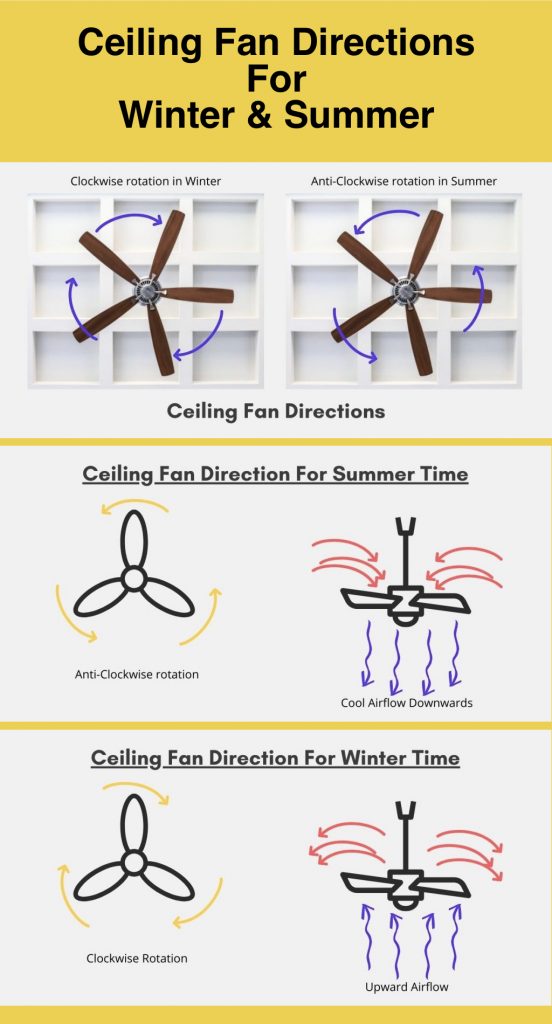
When the weather heats up, you want that sweet, sweet relief. This is where the counterclockwise rotation comes in. When your fan spins counterclockwise, it pushes air straight down, creating a refreshing breeze directly on your skin. This breeze helps to evaporate perspiration, which is your body's natural cooling mechanism. Think of it as an artificial wind that makes you feel several degrees cooler. The benefit here is clear: you can set your thermostat a few degrees higher without sacrificing comfort, potentially saving you money on your electricity bill. So, look up! If your fan is blowing air down when you stand beneath it, you're good to go.
Winter Mode: Clockwise for Cozy Warmth!

As the temperatures drop, the goal shifts from cooling to warming. Hot air rises, meaning all that lovely, expensive heat from your furnace is congregating near the ceiling. This is where the clockwise rotation comes to the rescue. By switching your fan to spin clockwise (usually at a lower speed), you're gently pulling that warm air down from the ceiling and circulating it throughout the room. This helps to even out the temperature and eliminate those cold spots near the floor. Remember to use a low speed setting for this; you don't want to create a wind chill effect. The advantage? Your heating system doesn't have to work as hard to maintain a comfortable temperature, leading to potential savings on your heating bill.
Finding the Switch and Testing It Out
![Ceiling Fan Directions for Summer vs Winter [Infographic]](https://airflowacademy.com/wp-content/uploads/2021/06/Ceiling-fan-direction-1024x512.jpg)
Locating the direction switch is usually pretty straightforward. It's typically found on the motor housing of the fan. It might be a small slide switch or a button. Once you've flipped the switch, observe the fan's rotation. Stand directly underneath the fan to feel the airflow. In summer mode (counterclockwise), you should feel a noticeable breeze. In winter mode (clockwise), you might not feel as much of a breeze, but you should notice a subtle movement of air.
So, there you have it! A simple adjustment to your ceiling fan can make a noticeable difference in your comfort and your energy bill. It's a small thing, but it's a smart thing. Now, go forth and conquer the seasons with your newly acquired ceiling fan knowledge!