
Ceiling Fan Button Up Or Down

You know that feeling, right? It’s a blistering summer afternoon, the kind where even your iced coffee is sweating. You’re sprawled on the couch, or maybe hunched over your laptop, desperately trying to focus. Above you, your trusty ceiling fan is whirring away, a blur of motion. You can feel some air, sure, but it’s more like a gentle suggestion of a breeze than a full-on chill-out session. You might even find yourself thinking, "Is this thing actually doing anything, or is it just… stirring the hot air?"
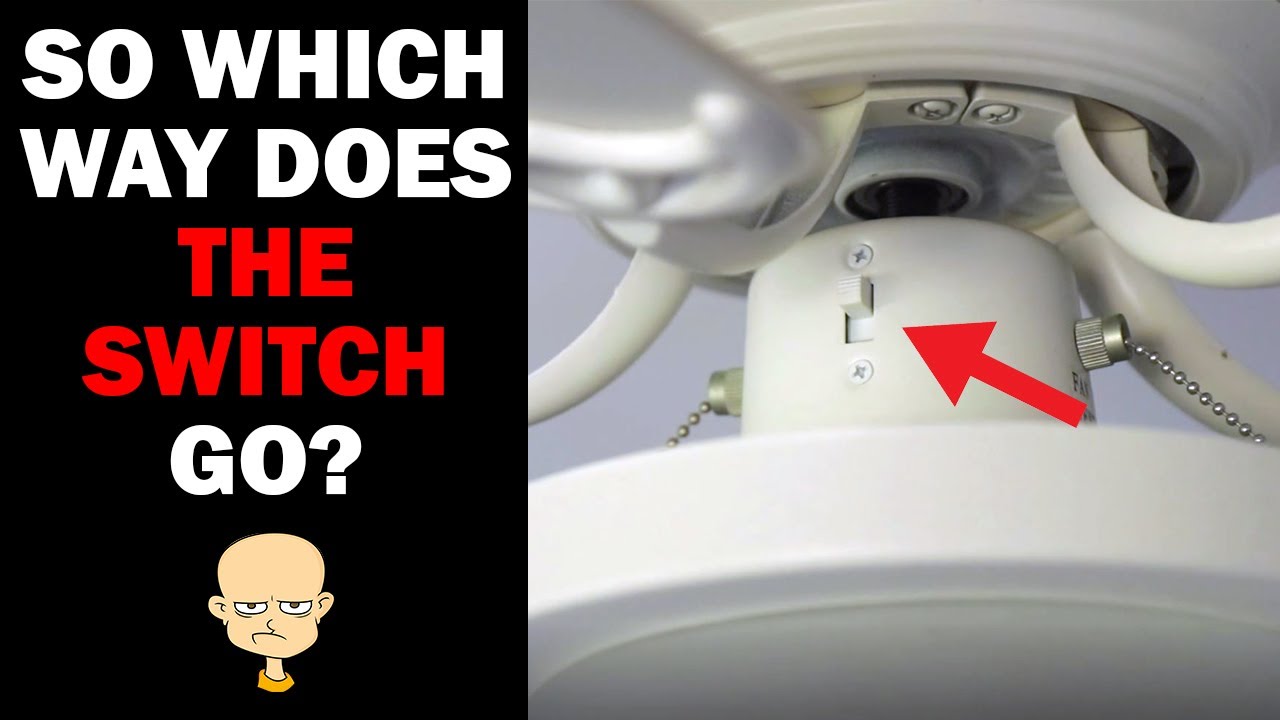
And then, your eyes drift to the fan's motor housing, and there it is. That tiny, unassuming little switch. The one you’ve probably ignored for years. The one that, to the uninitiated, looks like a random, almost decorative button. But oh, my friend, that little lever holds the key to a whole new world of home comfort. It’s the infamous ceiling fan direction switch, and it’s about to change your life (or at least your electricity bill).
The Great Spin Debate: Up or Down?
So, what’s the big deal with this little button, you ask? Well, it controls which way your fan blades spin. And while that might sound like a trivial detail, it’s actually a genius piece of engineering designed to optimize your comfort and, more importantly, save you some serious cash on heating and cooling throughout the year. It’s all about physics, baby!
Must Read
Most fans will have this switch, often a small, slide-style button, tucked away on the motor housing. It usually has two positions: one for "up" (or maybe left) and one for "down" (or right). Let's decode this mystery.
Summer Mode: Pushing Air DOWN (Counter-Clockwise)

When you want to feel cool, you want that beautiful breeze directly on your skin. This is your fan’s summer setting. For this, you’ll typically want the switch to be in the "down" position. When looking up at the fan, the blades should be spinning in a counter-clockwise direction. Think of it like a helicopter rotor pushing air straight down onto you.
This creates a delightful wind-chill effect, making you feel cooler even if the actual room temperature hasn’t changed. It means you can often bump your thermostat up a few degrees, because that fan makes 78 degrees feel like 75. And trust me, those few degrees make a big difference to your AC unit's workload (and your wallet).

Winter Mode: Pulling Air UP (Clockwise)
Now, this is where it gets a little less intuitive, but no less brilliant. When it’s chilly outside and your heater is working hard, heat tends to rise and get trapped at the ceiling. That’s called stratification (fancy word for hot air chilling out up top, away from where you are).
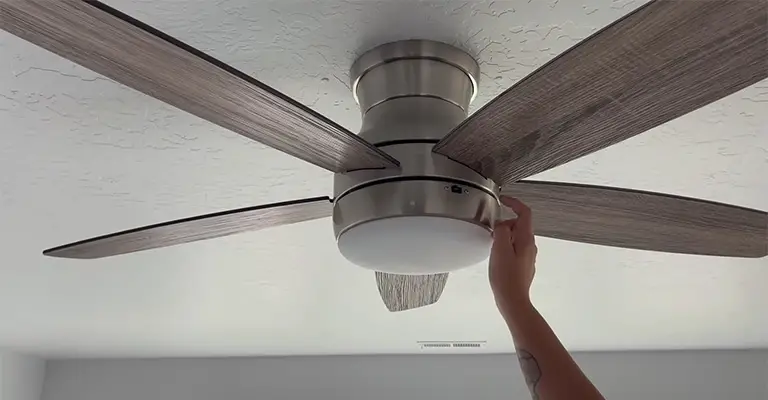
For the winter setting, you’ll want to flip that switch to the "up" position. This makes the blades spin in a clockwise direction (again, when looking up at the fan). Instead of pushing air down directly, this motion creates an updraft, gently pulling the cool air from below up towards the ceiling. This then pushes the warm air that’s been pooling up there down along the walls and back into the living space.
The beauty of this is that it recirculates the warm air without creating a chilly breeze. You won’t feel a direct draft, but you will notice the room feels more evenly heated. This means your heater won't have to work quite as hard to keep you toasty, allowing you to lower your thermostat a degree or two and still feel comfortable. More money in your pocket, less strain on your heater – win-win!
Finding Your Fan's Sweet Spot
So, what’s the take-home message here? That little button isn't just a quirk; it's a powerful tool for energy efficiency and year-round comfort. Most experts suggest checking your fan’s direction twice a year – once at the beginning of summer and again when winter rolls around.
If you're unsure which way your fan is spinning, simply stand directly under it and watch the blades. Are they moving left-to-right on the closest part of the blade (counter-clockwise)? Or right-to-left (clockwise)? A quick visual check is all it takes.
Next time you're feeling too hot or too cold, or just want to be a savvy energy user, take a moment to look up. Locate that often-overlooked little switch. Give it a flip. You might be surprised by the subtle yet significant difference it makes. It’s a small adjustment for your fan, but a giant leap for your home’s comfort and your electricity bill. Go on, embrace the power of the spin!