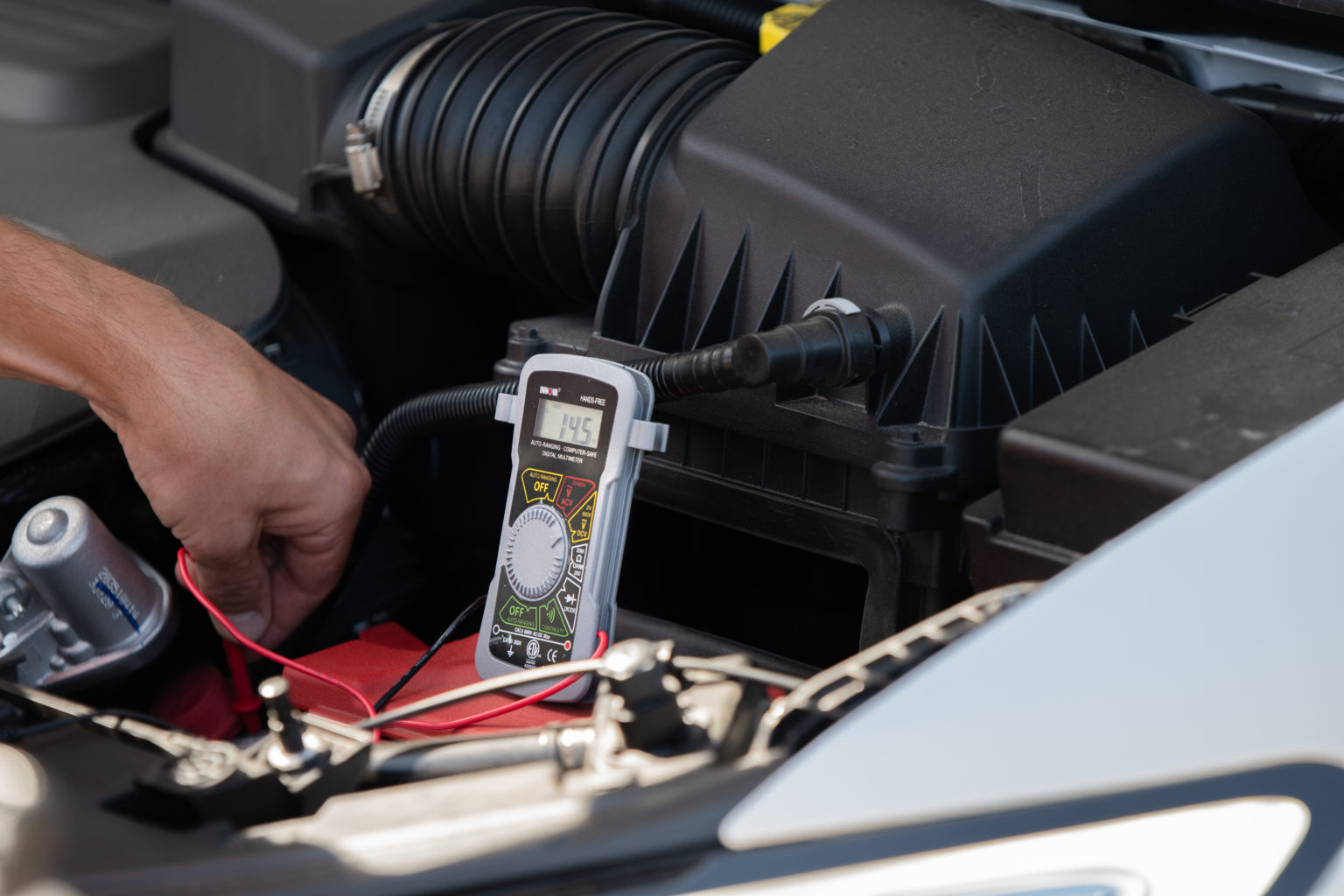
Can You Use A Multimeter To Test A Car Battery
Okay, so your car is acting up. You turn the key, and instead of that satisfying "vroom," you get… nothing. Or maybe a pathetic, drawn-out whirr that sounds like a dying robot. Sound familiar? We've all been there. It's like your car is giving you the silent treatment, and you're left wondering if it's something serious, or just a grumpy battery having a bad day.
Nine times out of ten, it's the battery. And while you could call a mechanic (and pay a small fortune for them to tell you what you already suspect), there's a simple, surprisingly empowering way to diagnose the problem yourself: using a multimeter. Don't let the name scare you. It's not some mystical device from a sci-fi movie. Think of it as a super-powered thermometer for electricity.
What's a Multimeter, Anyway?
Imagine your kitchen has only one utensil: a spork. It can sort of do everything, but it's not ideal for soup and definitely not good for steak. A multimeter is the "spork" of electrical testing. It can measure voltage (like the pressure of water in a pipe), current (how much water is flowing), and resistance (how much the pipe is clogged). For our battery test, we're mainly interested in voltage.
Must Read
Is Your Battery Playing Hooky?
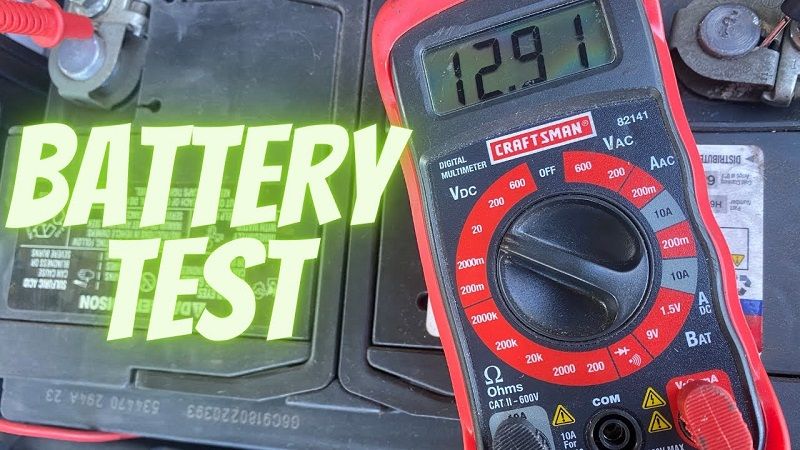
Think of your car battery as the student who brings the party to the classroom. If the battery voltage is low, it means it has been working too hard and needs a break. Ideally, your car battery should be putting out between 12.4 and 12.7 volts when the car is turned off. Anything less than 12.4, and you are looking at a tired battery. Below 12 volts? Your battery is probably playing hooky.
A healthy battery has a 12.6 volts reading. It's charged, ready to go, and eager to power your road trips. An okay battery will register 12.3-12.4 volts. It's drivable but needs some attention. It should be tested. An unhealthy battery will register 12.0 or less volts. It might jump start, but it's near the end of its life and needs to be replaced.

Testing Your Car Battery is Easier Than Making Toast
Seriously, it is. Here's the ridiculously simple version:
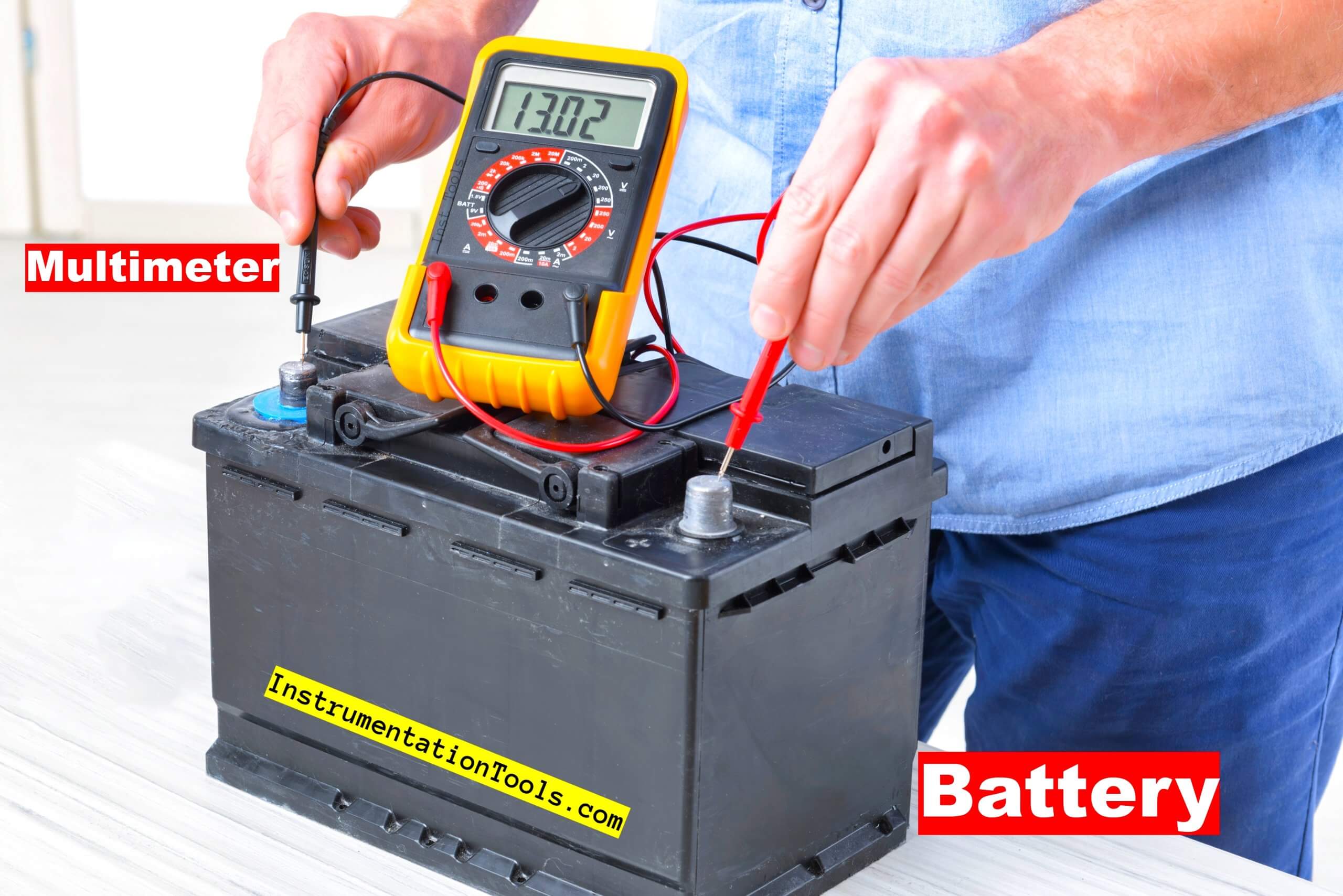
- Safety First! Pop the hood. Make sure your car is off. Seriously, off! Think of electricity as a grumpy cat. You don't want to poke it while it's awake.
- Find the Battery. It's usually a big, rectangular box with plus (+) and minus (-) signs.
- Set Up the Multimeter. Turn it to the "DC Voltage" setting (usually marked with a "V" and a straight line, sometimes with a dotted line underneath). Make sure the setting is around 20V or higher.
- Attach the Leads. The red lead goes to the positive (+) terminal, and the black lead goes to the negative (-) terminal. Think "red for right" (positive is on the right). Don't worry if you accidentally reverse them; most modern multimeters just show a negative sign in front of the reading.
- Read the Voltage. The number displayed is your battery's voltage. Write it down!
What Does It All Mean?
So, you've got a number. Now what? Here's the cheat sheet:
- 12.6V or higher: Your battery is in good shape! Go forth and conquer the road.
- 12.4V - 12.6V: Still good, but keep an eye on it. Maybe your battery is just recovering from leaving the lights on. We've all done it.
- 12.0V - 12.4V: Getting a little weak. It might start your car now, but it's on borrowed time. Consider getting it checked by a professional.
- Below 12.0V: Uh oh. This is where you start muttering about jumper cables and suspiciously eyeing your neighbor's car. Your battery is likely on its last legs.
If your battery is low, try charging it with a battery charger. Sometimes, a good charge can bring it back to life. But if it consistently reads low, even after charging, it's time for a new battery. Think of it as giving your car a much-needed spa day, complete with a vital organ transplant.
You Did It!
Congratulations! You've successfully used a multimeter to test your car battery. You're practically an auto mechanic now! (Okay, maybe not. But you're one step closer to understanding your car and saving yourself some money. And that's something to be proud of.)
Remember to always prioritize safety when working with electricity. And if you're ever unsure, it's always best to consult a professional. But knowing how to use a multimeter to test your battery is a valuable skill that can save you time, money, and a whole lot of frustration. Now go forth and diagnose!