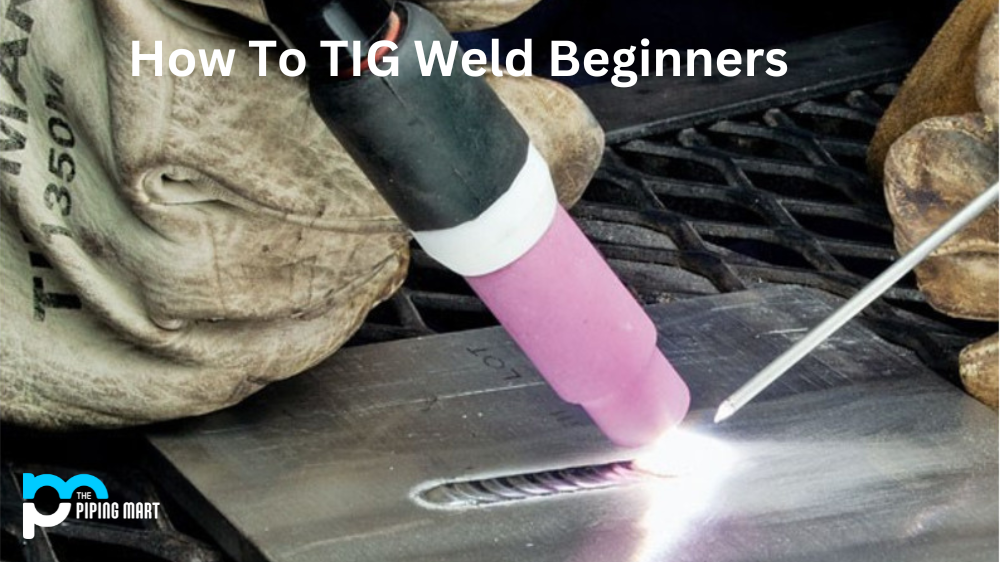
Can You Tig Weld Without Gas

Picture this: you've got your fancy TIG welding setup, all sleek and precise. You've heard tales of its beautiful, surgical welds, the kind that look like tiny stacks of perfectly arranged dimes. But there's a secret ingredient, a silent guardian that makes all that magic happen: shielding gas. It's usually argon, an invisible blanket that protects the molten metal from the nasty oxygen and nitrogen in the air. Without it, well, things get interesting.
Most folks in the know will tell you, straight-faced, that TIG welding without gas is like trying to bake a cake without flour. You just don't do it. It's fundamental. Essential. Non-negotiable. But what if you're a curious soul, a true explorer of the "what if" scenarios? What if you're deep into a project on a Saturday night, the shops are closed, and your argon tank runs empty with just one tiny tack weld left? The siren song of experimentation can be surprisingly strong.
The Great Gas-Less Experiment
So, you shrug, give a little sigh, and decide to go rogue. You fire up the machine, crank the amperage, and touch the tungsten to the metal. You expect a glorious, bright arc, a neat little weld puddle forming. What you get instead is… well, it’s a bit of a show, but not the good kind. Sparks fly everywhere, like a particularly angry Fourth of July sparkler. The metal hisses and spits, looking less like molten silver and more like burnt toast. It’s an immediate, chaotic mess, a smoky testament to the air's unyielding desire to interfere.
Must Read
Instead of a clean, shimmering pool of metal, you get what welders affectionately (or perhaps despairingly) call "sugaring." It’s black, porous, and looks like someone sprinkled a gritty, burnt sugar coating on your attempted join. The once-bright metal instantly oxidizes, turning crusty and brittle. If you were hoping for strength, you'd be sorely disappointed. This "weld" wouldn't hold a feather in a light breeze, let alone a structural component. It’s a vivid, dramatic demonstration of what happens when ambient air contaminates your precious weld puddle.
"Trying to TIG without gas is like trying to swim without water. You can flail all you want, but you're not going anywhere, and you'll probably just make a mess." - A Wise (and Possibly Exasperated) Welder.
But here's the surprising bit: while you absolutely cannot produce a functional, beautiful TIG weld without shielding gas, the attempt itself can be quite illuminating. It's a hands-on, highly visual lesson in metallurgy and atmospheric interference. You instantly grasp why that invisible blanket of argon is so crucial. You appreciate the science behind the seemingly simple act of melting metal. It turns the theoretical knowledge of "gas protects the weld" into a visceral, smoky reality. It's like failing spectacularly in the most educational way possible.
Beyond the Failed Bead: A Lesson in Resilience (and Laughter)
For the true hobbyist, the curious DIYer, or even the professional who just had to see what would happen, the experience is often met with a mix of frustration and humorous self-deprecation. "Well, that was certainly an attempt!" they might exclaim, wiping soot from their brow. It's a reminder that even in precise crafts, there's always room for a little bit of playful experimentation, even if it leads to absolute failure in the technical sense. It builds character, fosters a deeper respect for the tools, and often, provides a good laugh for anyone watching.

Think of it as a detour on the road to mastery. You might not create a masterpiece, but you gain an invaluable understanding of what not to do. This kind of spontaneous experiment, born of curiosity or desperation, is part of the charm of working with your hands. It reminds us that every masterful weld begins with understanding the basics, and sometimes, learning what happens when you stray from them can be the most memorable lesson of all. So, while you'll never achieve that signature shiny TIG weld without a steady flow of gas, the journey of trying can be a surprising, if messy, adventure.
Ultimately, for serious fabrication, for beauty, and for strength, the gas is non-negotiable. But next time you see a perfect TIG weld, remember the unseen guardian protecting it, and perhaps spare a thought for those brave souls who, in a moment of pure curiosity, dared to ask: "Can I TIG weld without gas?" They learned, we learned, and sometimes, that's almost as good as a perfect bead.