
Can The World Run Out Of Oil
You know that feeling, right? You're in the middle of making a killer pasta sauce, reach for the salt, and poof – empty. Or worse, it's 6 AM, you're practically a zombie, and the coffee grounds canister is staring back at you with a mocking, hollow echo. Instant panic. How could you run out of something so essential?
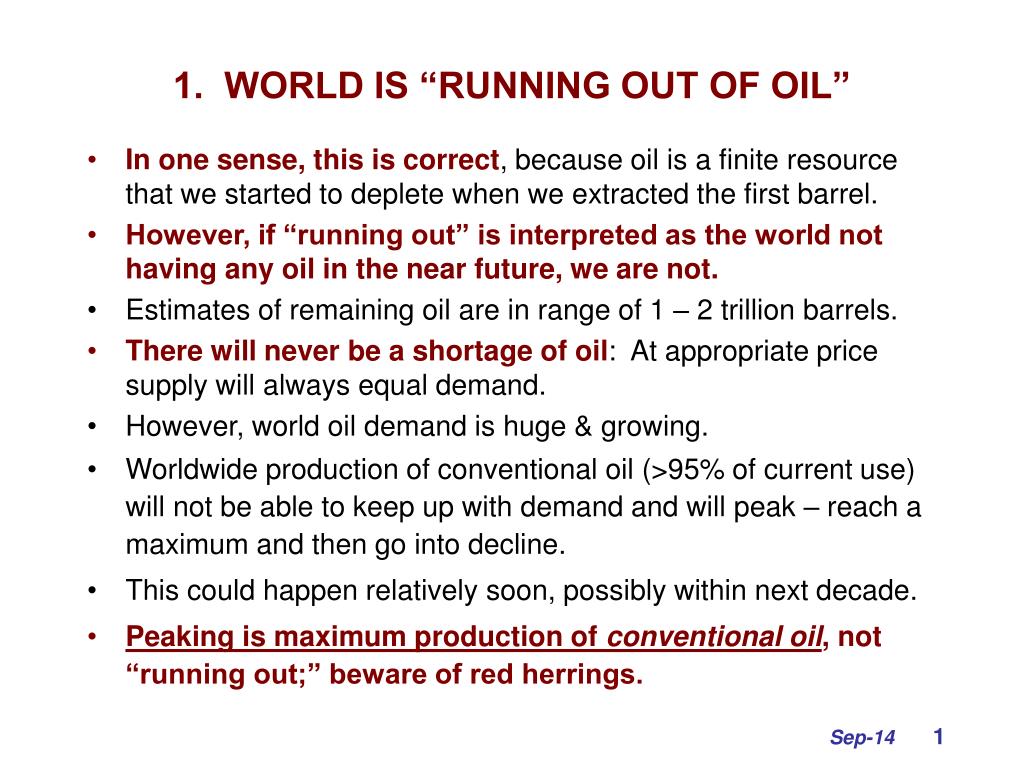
That little jolt of scarcity, that sudden realization of an ending, is pretty universal. Now, imagine that feeling, but scaled up by about a bazillion percent. We're talking about the fuel that keeps our cars running, our planes flying, our goods moving, and our lights on. We're talking about oil. And the question that’s been hovering over us for decades is: Can the world actually run out of it?
The Peak Oil Prophecy
For a long time, the dominant narrative was pretty straightforward, and frankly, a bit terrifying. It was called Peak Oil. The idea, popularized by a geologist named M. King Hubbert in the 1950s, was that for any given oil field, production would follow a bell curve. It would ramp up, hit a peak, and then inevitably decline until it ran dry. Apply that to the entire planet, and you get the picture: an ultimate, global peak, followed by a downhill slide into energy oblivion.
Must Read
It made sense, right? Oil is a finite resource. It takes millions of years to form, and we're sucking it out of the ground at an incredible rate. Surely, there's only so much to go around. People imagined a dystopian future where gas stations were relics, cars were museum pieces, and our modern, industrialized world ground to a halt. Pretty dramatic stuff, eh?
But Wait, There's More!
Here’s where it gets interesting, folks. While the logic of Peak Oil was compelling, reality, as it often does, threw a few curveballs. Remember how everyone thought we’d run out by the 80s? Then the 2000s? Yet, here we are, still pumping. Why? Because the world of oil is far more complex than just a simple glass of water slowly emptying.
One massive factor has been technology. Advances like hydraulic fracturing (fracking) and horizontal drilling suddenly made previously inaccessible oil and gas reserves economically viable. We’re talking about squeezing oil out of shale rock that was once considered too difficult and expensive to bother with. It's like finding a secret, massive compartment in your fridge that’s been there all along!
Then there's deep-sea drilling, unlocking vast reserves under the ocean floor. And don't forget the Arctic, though that comes with its own environmental debates, which we’ll get to. These innovations basically pushed the "peak" further and further into the future, making the concept of a sudden, dramatic end seem less likely.

Also, the definition of "reserves" isn't set in stone. It changes with prices, technology, and political will. What's considered an "economic reserve" today might not have been yesterday, and vice-versa. It’s a bit of a moving target, not a fixed number on a ledger.
Economic Exhaustion vs. Geological Exhaustion
So, could we theoretically drain every last drop? Maybe, eventually, millions of years from now. But the more practical question is: will we ever reach a point where it's simply too expensive to extract? Imagine trying to get the last few drops of toothpaste out of a nearly empty tube. You can do it, but is it worth the effort?
Drilling in extremely remote locations, at incredible depths, or processing highly contaminated crude becomes increasingly costly. At some point, the price of getting that barrel of oil out of the ground might exceed the price people are willing to pay for it. So, while there might still be oil down there, it could become economically "unburnable" long before it's geologically gone. Food for thought, right?

The Green Elephant in the Room
And this brings us to perhaps the most significant twist in the "running out of oil" saga: climate change and the rise of renewable energy. Even if we discover vast new reserves, the global push towards decarbonization means we might simply choose to leave much of it in the ground.
The conversation has shifted dramatically. It’s no longer just about whether we'll run out, but whether we should continue burning what we have. Electric vehicles are becoming mainstream, solar and wind power are increasingly competitive, and countries are setting ambitious net-zero targets. We're actively trying to wean ourselves off fossil fuels, not just because they might run out, but because of their impact on our planet.
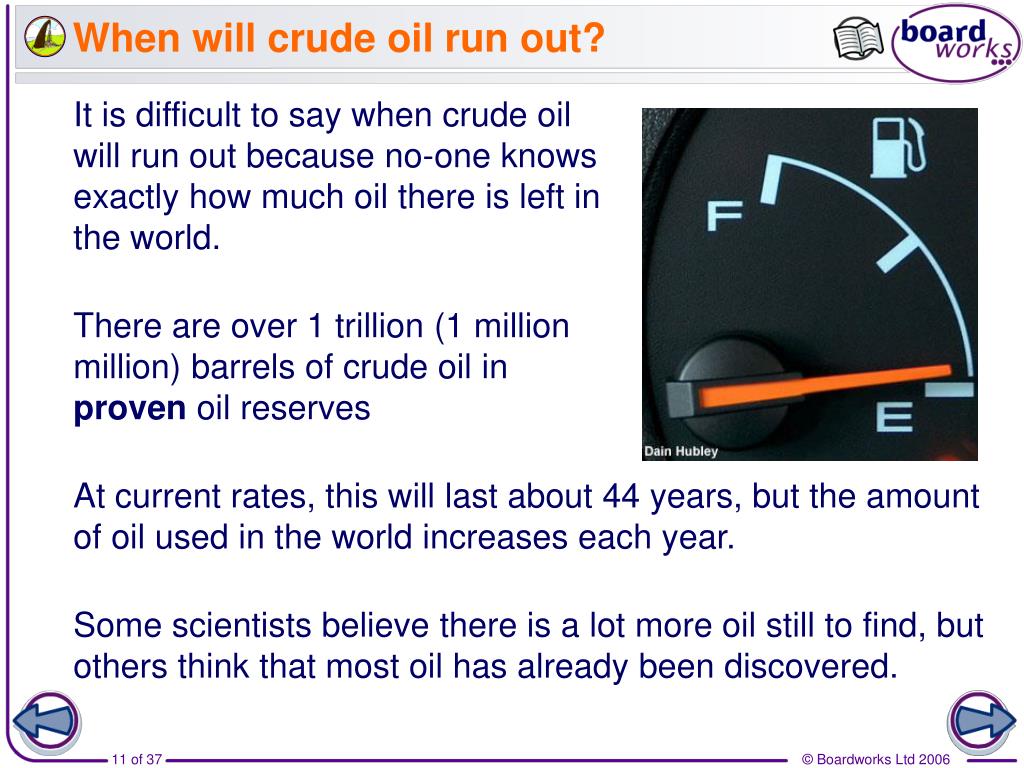
So, the end of the "oil age" might not be a dramatic, sudden depletion, but a more gradual transition. It could be that demand simply shrinks, making oil less relevant, rather than absolutely scarce. We might end up with "stranded assets"—massive oil reserves that are simply no longer needed or wanted. Talk about ironic, eh?
So, can the world run out of oil? Geologically, eventually, perhaps. But practically speaking, the answer is a lot more nuanced. It seems far more likely that we will either find it too costly to extract, or, more optimistically, we will simply evolve beyond our reliance on it before we ever drain the last drop.
It's a pretty wild journey, isn't it? From peak oil panic to the possibility of oil becoming obsolete. What do you think? Are we destined to keep pumping, or is the future truly electric and green? Let me know in the comments!