
Can Steel Be Welded To Aluminum
Alright, settle in, grab your imaginary coffee, because we're about to dive into one of those questions that makes seasoned welders either snort with laughter or sigh dramatically: Can you weld steel to aluminum? It sounds like a premise for a bad science fiction movie, right? Like trying to convince a cat and a dog to share a single kibble bowl. Or getting me to wake up before 7 AM on a Sunday. Usually, you'd expect a resounding, "Are you nuts?!" But like many things in life, the answer is a little more… complicated. And honestly, way cooler than you think.
For the longest time, if you even whispered the idea of welding steel to aluminum in a fabrication shop, you'd likely be met with a confused stare, followed by someone checking if you'd accidentally huffed too much argon. On the surface, it seems like a marriage made in engineering hell. Steel, tough, rusty, old-school reliable. Aluminum, light, shiny, a bit of a diva. They're like chalk and cheese, sunshine and a leaky umbrella, my diet plans and a large pizza.
The Hilarious Problem: Why Your Welder's Crying
Let's get down to brass tacks, or rather, steel and aluminum tacks. When you try to join these two directly with conventional fusion welding (you know, melting stuff together), it's like asking two people with wildly different personalities to perfectly fuse into one harmonious being. It just doesn't happen. And here's why, in layman's terms:
Must Read
First off, their melting points are about as different as my patience levels on a Monday morning versus a Friday evening. Steel laughs in the face of heat until around 2,500-2,800°F (1,370-1,540°C), while aluminum is already a molten puddle of regret at a comparatively measly 1,220°F (660°C). By the time your steel is even thinking about getting gooey, your aluminum has long since turned into liquid metal soup, probably splashing everywhere and making a huge mess.
Then there’s the issue of thermal expansion. They expand and contract at different rates when heated and cooled. Imagine two dance partners, one moving at a salsa pace and the other doing a slow waltz. The joint just wants to rip itself apart as it cools down.
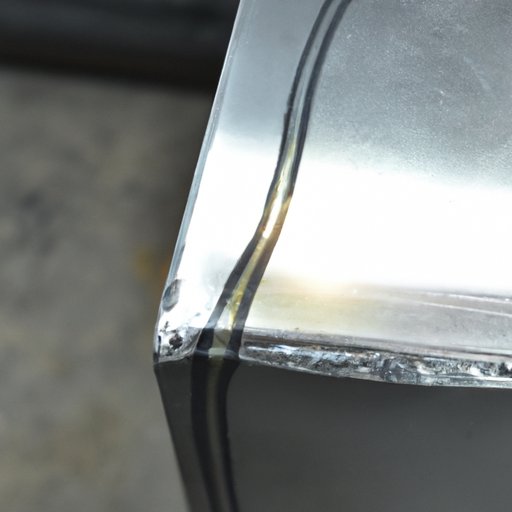
But the biggest villain in this tragic welding drama is something called intermetallic compounds. When molten steel and aluminum mix, they don't play nice. They form brittle, nasty compounds that are weaker than a toddler's resolve to eat broccoli. These compounds are essentially a layer of metallic glass, and they'll crack faster than my phone screen after a minor drop. So, direct fusion welding? A big, fat, spectacular NO.
So, Is It Just a Dream? Hold My Beer!
Before you give up and decide these metals are doomed to an eternal rivalry, here’s the kicker: the answer to "Can steel be welded to aluminum?" is actually a surprisingly enthusiastic, "Well, yes, but not in the way you're thinking!" It's less about traditional welding and more about clever engineering workarounds.
Method 1: The "Duh" Solution (But Don't Knock It!)
Sometimes the simplest answers are the best. We're talking mechanical fasteners. Bolts, rivets, screws. Like two people who can't live together but are perfectly fine being neighbors. No melting, no brittle compounds, just good old-fashioned brute force and clever design. It's often overlooked because it's not "welding," but it's incredibly effective for many applications.
Method 2: When Things Go BOOM! (Seriously)
This is where it gets exciting, folks. Imagine taking two sheets of metal, placing them slightly apart, and then setting off an explosion right on top of one of them. Sounds like a terrible idea for joining things, right? Wrong! This is called explosion welding (or explosive bonding), and it's less about blowing things up and more about using the incredible force of an explosion to literally smash the two metals together at super-high velocities. The impact is so intense that the surfaces flow like a fluid, bonding without melting the bulk material. It’s like a high-five from a superhero – powerful enough to join them instantly and permanently. No melting, no nasty intermetallics, just a solid, molecular bond. It's truly wild and creates some incredibly strong bonds!
Method 3: Stir It Up!
Picture a fancy kitchen mixer, but instead of cookie dough, it's churning solid metal. That's essentially what Friction Stir Welding (FSW) does. A rapidly rotating tool plunges into the joint line between the steel and aluminum. The friction heats the metals, but not to their melting point. Instead, it softens them into a plastic-like state, and the tool mechanically stirs them together, forging a bond. It’s like kneading dough – no melting, just intense mixing and pressure. Super cool, super clean, and surprisingly effective for certain applications.
Method 4: The Sandwich Trick
Perhaps the most common industrial solution for directly joining these two unlike metals involves a middleman, a chaperon, a peacekeeper: the transition joint. Think of it as a metallic "sandwich." You have a piece of material that is already explosively welded (or friction stir welded) with steel on one side and aluminum on the other. So, you weld aluminum to the aluminum side of the sandwich, and steel to the steel side. Voila! You've successfully joined steel to aluminum, albeit indirectly. These pre-fabricated transition pieces are invaluable in shipbuilding and other industries where you need to connect two incompatible materials without a direct, messy interface.
Method 5: The Fancier, Less Fiery Approaches
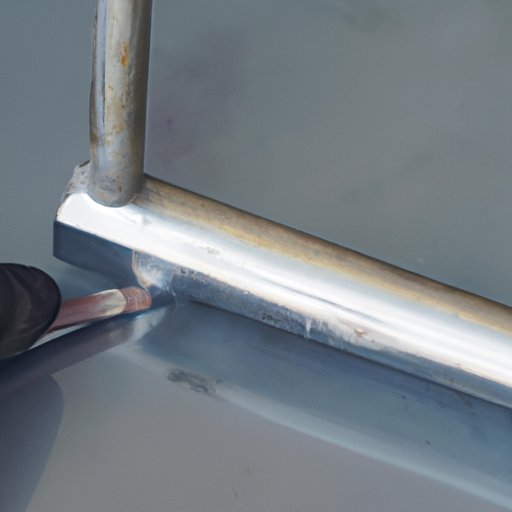
Other methods exist too! There’s brazing and soldering, which use a filler metal with a much lower melting point that simply "sticks" to both surfaces without melting the parent metals themselves. It's like super-gluing rather than fully fusing. Then there are experimental laser welding techniques that use special interlayers or coatings, meticulously controlling the heat to minimize those pesky intermetallics.
Where Do We See This Sorcery?
Why go to all this trouble? Because aluminum is light, and steel is strong. Imagine building a ship or a high-speed train where you want a strong steel superstructure but a lighter aluminum hull to save weight and fuel. Or in cars, where every ounce counts. Aerospace, defense, electrical industries – anywhere weight reduction, corrosion resistance, or specific strength-to-weight ratios are critical, you'll find these ingenious methods at play.
So, the next time someone asks if you can weld steel to aluminum, you can confidently lean back, take a sip of your coffee, and say, "Absolutely! Just don't try to melt them together like you're making s'mores. You need a little finesse, a lot of science, and maybe a small explosion or two." It turns out, even the most mismatched metals can find a way to stick together, sometimes with a little help from some truly spectacular engineering.