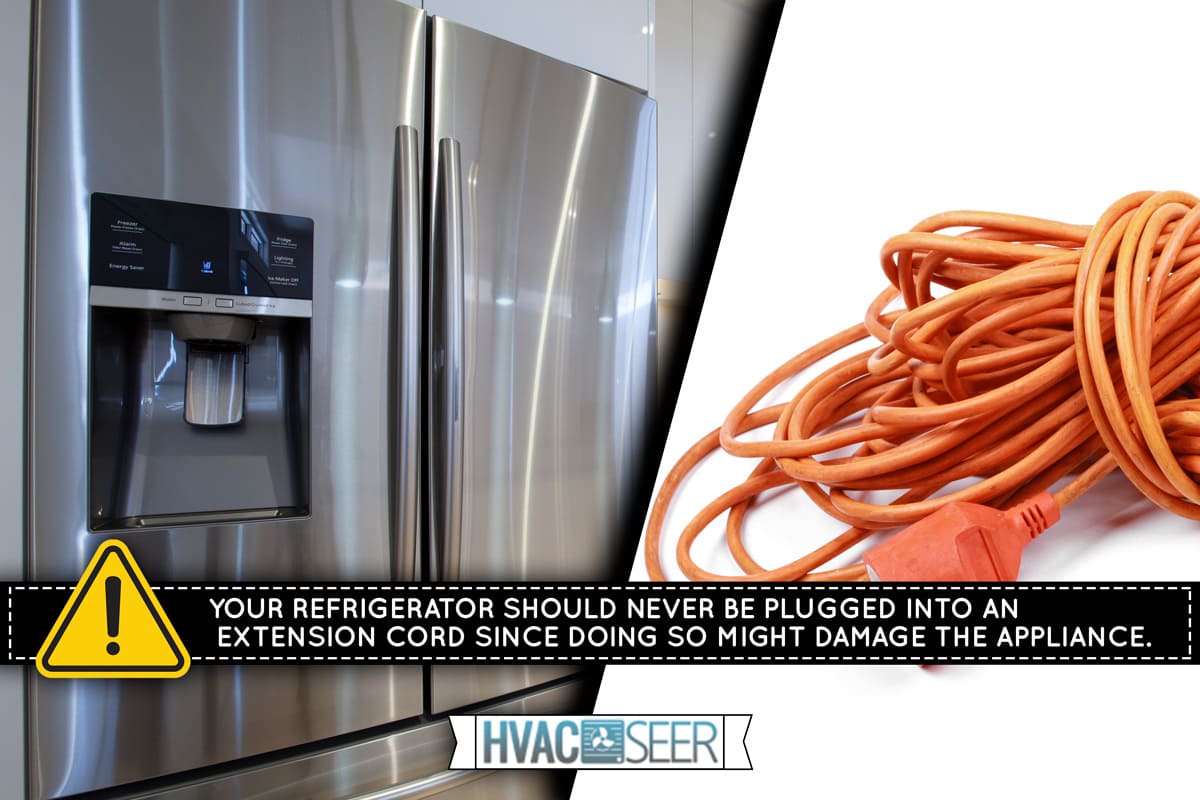
Can I Use An Extension Cord For A Refrigerator

Hey there, fridge fanatics! Ever find yourself in a kitchen conundrum? Maybe your fridge cord is just a tad too short, leaving you staring longingly at that perfect spot across the room. The question pops into your head: Can I use an extension cord for my refrigerator? It's a question as old as sliced bread (which, incidentally, you might want to keep in that fridge!). Let's dive in and see what's cool, what's not, and what you really need to know.
The Temptation of the Extension Cord
Oh, the convenience! Extension cords are like the duct tape of the electrical world – they seem to solve everything. Need to plug in that Christmas tree way over there? Extension cord! Want to power your outdoor string lights? Extension cord! But when it comes to appliances, especially power-hungry beasts like refrigerators, things get a little… complicated. Think of your fridge as a marathon runner and the extension cord as a slightly too-tight pair of shoes. It might work for a little while, but eventually, something's gonna chafe!
Why the Hesitation? The Power Hungry Fridge
Why all the fuss, you ask? Well, refrigerators aren't exactly delicate daisies. They require a significant amount of power to start up and keep running. It's like trying to start a vintage muscle car – it needs a jolt! This is where the potential problems with extension cords arise. Most standard extension cords aren't designed to handle the continuous, high-power demands of a refrigerator. Using the wrong cord can lead to:
Must Read
- Overheating: The cord can get hot, really hot, and potentially melt, leading to a fire hazard. Think of it like running a marathon with a wool sweater on. Not good!
- Voltage Drop: Your fridge might not get enough power, causing it to run inefficiently, work harder, and potentially shorten its lifespan. It's like trying to drive that muscle car with low tire pressure – sluggish and bad for the engine.
- Appliance Damage: Inconsistent power supply can damage the refrigerator's sensitive components. Nobody wants a fridge on the fritz!
The Right Cord for the Job: It's All About the Specs
Okay, so maybe your basic extension cord is a no-go. But what if you really need that extra reach? The key is to choose the right extension cord. Here's what to look for:
- Heavy-Duty: Opt for a heavy-duty extension cord specifically designed for appliances. These are built to handle higher amperages (amps).
- Gauge: Pay attention to the wire gauge. A lower gauge number indicates a thicker wire, which can carry more current. Look for a 12-gauge or even a 10-gauge cord for a refrigerator. Think of it like water pipes – a wider pipe allows for more water to flow through!
- Length: Shorter is better! The longer the extension cord, the more resistance and voltage drop you'll experience. Keep it as short as possible to minimize potential problems.
- UL Listed: Make sure the cord is UL (Underwriters Laboratories) listed, which means it has been tested for safety.
A Dedicated Circuit: The Gold Standard
Ideally, the best solution is to have your refrigerator plugged into a dedicated circuit. What's a dedicated circuit? It's an electrical circuit that serves only one appliance. This ensures that the refrigerator has a consistent and reliable power supply without having to share with other devices. It's like having a private highway lane just for your fridge – smooth sailing all the way!

So, Can You Do It? The Verdict
So, can you use an extension cord for a refrigerator? The answer, like most things in life, is... it depends! Using a standard extension cord is generally not recommended. However, if you absolutely must use one, make sure it's a heavy-duty, low-gauge cord that's as short as possible. And remember, a dedicated circuit is always the ideal solution.
The Bottom Line: Safety First!
Ultimately, your safety and the longevity of your refrigerator are the most important things. When in doubt, consult with a qualified electrician. They can assess your specific situation and recommend the best course of action. Don't risk a fire or a broken fridge just to gain a few extra feet of reach! Think of it like this: would you rather spend a little extra money on proper electrical work, or a lot more on a new refrigerator (or worse, fire damage)? The choice is yours! Stay safe, and keep those leftovers cool!