Can Carbon Steel Be Welded To Stainless Steel

Ever tried to build a project that required joining two seemingly different worlds, like sturdy, reliable carbon steel and sleek, corrosion-resistant stainless steel? It's a bit like trying to mix oil and water, right? Well, not quite! The question of whether you can weld carbon steel to stainless steel is a popular one, and for good reason. Knowing the answer opens up a world of possibilities in fabrication, repair, and even artistic endeavors. It's not just a technical question; it's a gateway to more creative and efficient projects!
So, can you actually do it? The short answer is: Yes, you can! But, like many things in the world of metalworking, it's not always straightforward. There are definitely some "do's" and "don'ts" to keep in mind to avoid creating a weak or, worse, a failing weld. Think of it like cooking: you can mix ingredients, but the right technique is crucial for a delicious outcome.
The main purpose of welding carbon steel to stainless steel is to combine the unique benefits of each material. Carbon steel offers high strength and affordability, making it ideal for structural components. Stainless steel, on the other hand, provides excellent corrosion resistance, perfect for environments where rust is a concern. Imagine building a railing for a coastal property: you could use carbon steel for the main supports and stainless steel for the exposed handrail, providing both strength and long-lasting protection against the salty air. The benefits are clear: you get the best of both worlds!
Must Read
However, the key to a successful weld lies in understanding the potential challenges. The biggest issue is the difference in the chemical composition of the two metals. This difference can lead to something called "dilution," where the carbon from the carbon steel migrates into the stainless steel weld, potentially making it brittle and susceptible to cracking. To combat this, you need to use a special type of welding filler metal. Think of the filler metal as a bridge that allows the two materials to connect safely.
So, what filler metal should you use? Generally, a nickel-based alloy is recommended. These alloys are designed to be compatible with both carbon steel and stainless steel, minimizing the risk of cracking and ensuring a strong, durable weld. ERNiCr-3 and ERNiCrMo-3 are common choices. Always consult a welding chart or a qualified welding professional to determine the best filler metal for your specific application.

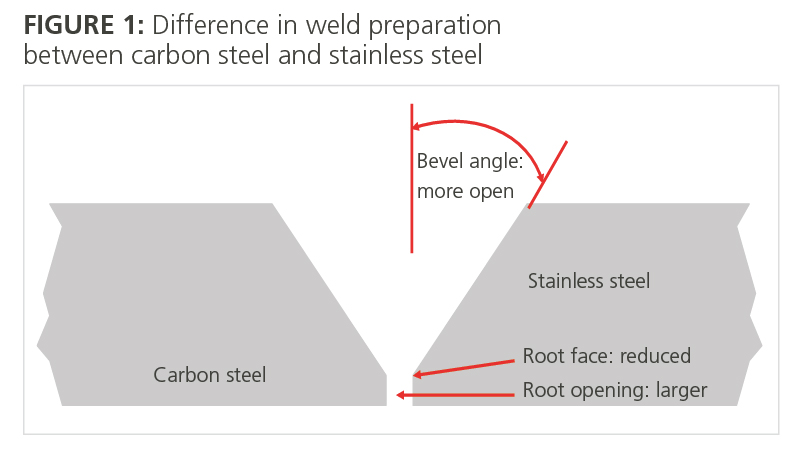
Beyond the filler metal, other welding considerations include: keeping the heat input low to minimize dilution, using proper joint preparation (cleaning the metal thoroughly!), and employing the correct welding technique. Shielded Metal Arc Welding (SMAW), Gas Metal Arc Welding (GMAW), and Gas Tungsten Arc Welding (GTAW) are all suitable processes, depending on the application and the welder's skill level. Remember to always practice safety precautions like wearing proper PPE (Personal Protective Equipment).
In conclusion, welding carbon steel to stainless steel is not only possible but often a practical solution for many projects. By understanding the purpose, choosing the right filler metal, and paying attention to the welding parameters, you can create a strong, reliable, and aesthetically pleasing joint that leverages the unique properties of both materials. So go ahead, explore the possibilities and build something amazing!