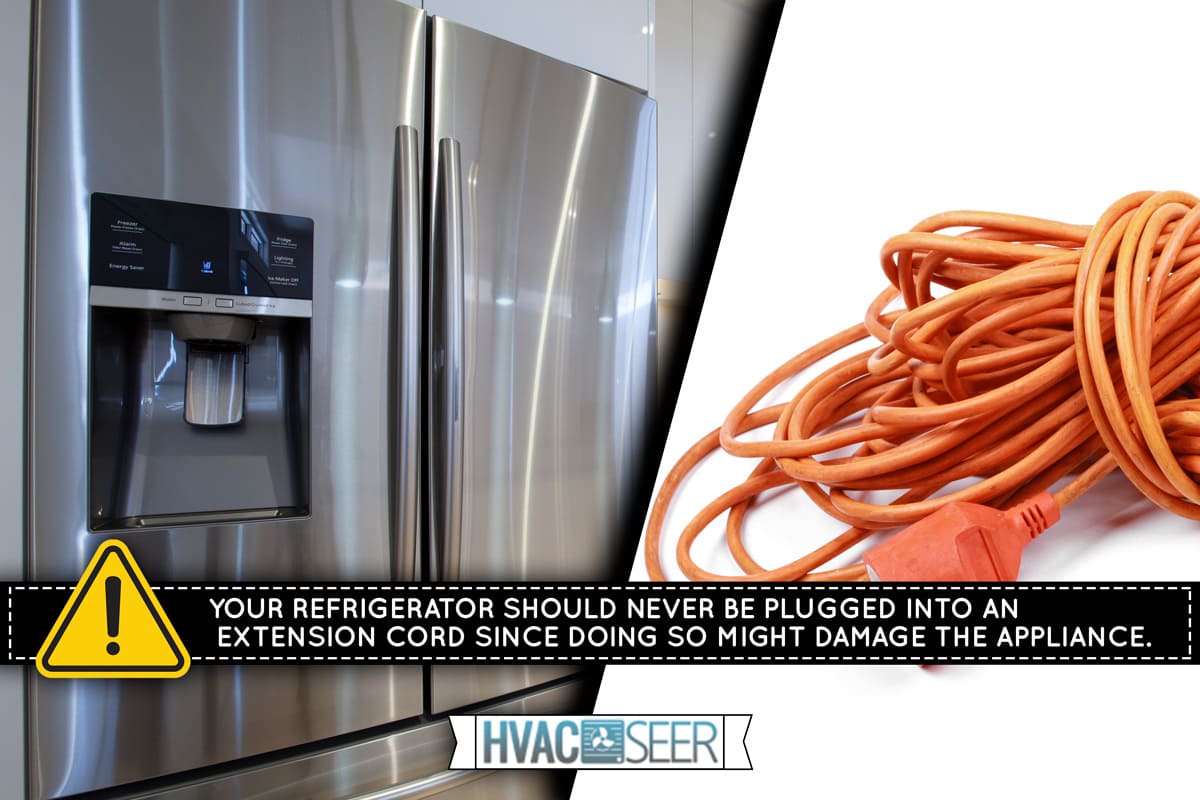
Can A Fridge Be Plugged Into An Extension Cord

Let's face it, we all love our refrigerators. They're the silent guardians of our groceries, the frosty fortresses protecting our leftovers from the perils of spoilage. They're also the reliable dispensers of midnight snacks and the creators of perfectly chilled beverages. But sometimes, life throws us a curveball. Maybe you're rearranging your kitchen, or perhaps your fridge is stubbornly refusing to be near a wall outlet. Suddenly, the question arises: can you plug a fridge into an extension cord?
The answer, like most things in life, isn't a simple yes or no. Extension cords provide convenience and flexibility. They bridge the gap between your appliance and the power source, allowing you to position things where you need them, when you need them. Think of holiday lights strung across the yard, power tools used far from an outlet, or even lamps placed perfectly in a living room corner – all thanks to the humble extension cord. They allow us to adapt our electrical setup to our living and working spaces.
The most common application, besides the aforementioned lights and tools, is in temporary setups. Perhaps you're hosting a party and need extra refrigeration in another room. An extension cord can seem like the perfect solution. Or maybe you're renting and the outlet placement is less than ideal. In these situations, the temptation to use an extension cord is strong. However, with refrigerators, you need to exercise extreme caution.
Must Read
Here's the crucial part: Refrigerators are power-hungry beasts. They require a significant amount of electricity, especially during start-up when the compressor kicks in. Using the wrong type of extension cord can be extremely dangerous. A standard, thin extension cord simply isn't designed to handle the load, and it can lead to overheating, damaged appliances, and even fires. This is why it's generally recommended to plug your fridge directly into a wall outlet.

However, if you absolutely must use an extension cord for your refrigerator, follow these tips to minimize the risks:
- Use a Heavy-Duty Extension Cord: Look for an extension cord specifically rated for appliances. It should be a thick gauge wire (12 or 10 gauge) designed to handle high amperage. The lower the gauge number, the thicker the wire and the more current it can safely carry.
- Keep the Cord Short: The longer the extension cord, the more resistance it offers to the flow of electricity. This can lead to voltage drop and overheating. Choose the shortest possible cord that meets your needs.
- Avoid Power Strips: Power strips, especially those with surge protectors, are generally not suitable for refrigerators. They can overload easily.
- Inspect Regularly: Check the extension cord frequently for any signs of damage, such as cracks, fraying, or exposed wires. Replace it immediately if you find any issues.
- Don't Overload the Circuit: Make sure the circuit your fridge and extension cord are plugged into isn't already overloaded with other appliances.
Ultimately, the safest and most recommended approach is to plug your refrigerator directly into a dedicated wall outlet. However, if you understand the risks and take the necessary precautions, using a heavy-duty extension cord can be a temporary solution. Remember, safety first!. When in doubt, consult a qualified electrician.