
Cable Connector Male And Female
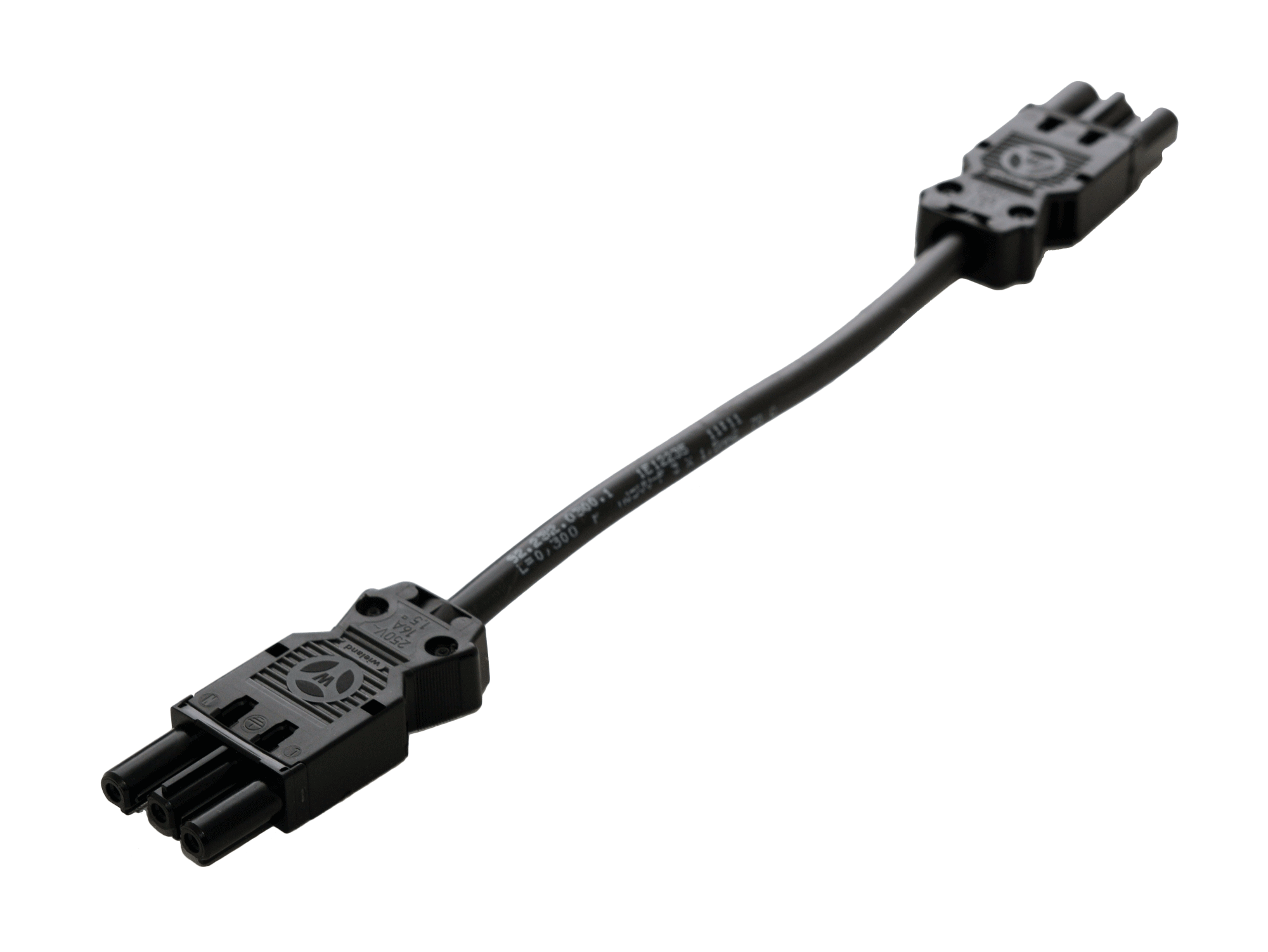
Ever tried to plug something in? Of course you have. It's a universal human experience, right up there with waiting in line at the grocery store. You grab the cable, eyes fixed on the port, ready for that satisfying click and surge of power.
But then, sometimes, the universe decides to mess with you. You try one way, it just doesn't quite fit. You flip it, still no luck, almost convinced it's laughing at your efforts. It’s like a tiny, inanimate puzzle designed solely to test your patience and dexterity.
This daily dance, this small moment of tech-induced frustration or triumph, usually involves two very specific types of ends. We call them male and female connectors. Yes, those are the official, widely accepted terms in the tech world.
Must Read
It’s a design choice that goes way back, rooted in simple, observable mechanics. Someone, somewhere, decided this was the clearest, most intuitive way to describe their functional difference. One end clearly sticks out, the other has a welcoming cavity ready to receive it.
"The great unsung heroes and villains of our tech lives are often just these little metal bits, quietly making or breaking our day."
The Great Cable Conundrum: A Universal Experience
Every single day, countless connections are made. From charging your phone to linking your gaming console to the TV, these connectors are the silent workhorses. They are the bridges between our devices, bringing them to life.
Think about it: your entire digital world relies on these interactions. No connection, no power, no data, no fun. They are truly fundamental, yet often overlooked until they misbehave.
Meet the Male: The Protruding Pioneer
Let's talk about the male connector first. Think of a tiny peg, a little prong, or a small finger reaching out. It's the part that always protrudes, eager to make contact.
Its job is refreshingly simple: go into something else. It's the active participant, always extending itself. From a classic USB-A to an HDMI cable, these guys are virtually everywhere you look.
They come in an astonishing array of shapes and sizes. Sometimes they are chunky and robust, ready for heavy-duty power delivery. Other times, they are delicate, slender pins that require the utmost care and precision during connection.
These are the ends you usually grasp. The ones you try to carefully guide into their proper place, sometimes with a little wiggle. And often, sadly, the ones you accidentally bend if you’re not careful or a bit too forceful.
Imagine a mini-robot arm reaching out to shake hands with another device. That's essentially what a male connector is doing, tirelessly. It actively seeks connection, almost yearning for that perfect alignment.

Sometimes, it's a simple, solitary pin for audio. Other times, it's a complex array of dozens of tiny needles, each with a critical function. Every single pin has a specific purpose in transmitting data or power flawlessly.
These guys are the universal "plug-in" standard, the initiator of all digital dialogue. Without them, nothing would really connect or communicate. They are literally the initial point of contact for almost all our beloved devices.
From the headphones in your ears to the power brick for your laptop, the male connector consistently leads the charge. It’s the explorer, venturing into unknown ports, hoping to find its perfect match.
It has to be incredibly tough and durable enough to withstand repeated insertions and removals. But also exquisitely precise enough to make perfect, reliable contact every single time. It's a remarkably delicate balance of engineering.
The male connector doesn't ask for much in return. Just a welcoming slot, a perfect, snug fit. And ideally, absolutely no frustrating wiggling, jiggling, or twisting required to get it to work properly.
They are the fundamental reason our devices can talk to each other so seamlessly. They allow electricity to flow freely and vital information to travel at incredible speeds. Truly, they are the often-overlooked backbone of our modern digital lives.
Without the male end, there's no going anywhere, no completing the circuit. It's the essential key that unlocks the door to functionality. It carries the spark.
"Without the male, there's no going anywhere. It's the key that unlocks the door, the hand extending in friendship or necessity."
Enter the Female: The Welcoming Port
Now, let's turn our attention to the female connector. This is the port, the receptacle, the inviting slot, the secure cavity. It's the part with the hole or opening, designed for reception.
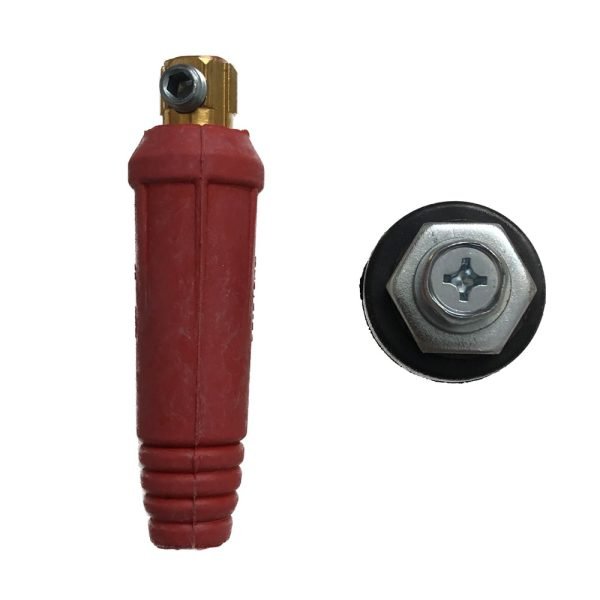
Its primary role is to receive and house its counterpart. It provides the perfect, secure, and stable environment for the male end to settle in. Think of it as the cozy, custom-built home for the plug.
You find these critical ports on the back of your television, on the side of your laptop, or neatly embedded inside the wall plate. They are usually stationary, patiently waiting for their moment of connection.
These ports need to be just as precisely engineered, if not more so, than the male ends. Too loose, and the connection becomes unreliable, prone to dropping out. Too tight, and you're wrestling with it for what feels like an eternity.
The female connector provides the crucial stability for the entire connection. It firmly holds the male in place, ensuring a steady, uninterrupted flow of whatever needs to pass through. It truly is the unshakeable anchor.
They often contain tiny springs, delicate metal contacts, or clever latches inside. These internal components work together to ensure a consistently snug and reliable fit. It's all about that firm, reassuring embrace.
Without a good, functioning female port, even the best, most robust male connector is rendered completely useless. It’s a quintessential partnership, a true duo working in perfect synchronicity. One cannot truly function effectively without the other.
Think of your smartphone's charging port, that vital slot on the bottom. That’s a prime example of a female connector, constantly waiting for its daily dose of life-giving power. It’s absolutely essential for your device’s survival.
They are seamlessly built into the very fabric, the very chassis, of our devices. Often hidden from view, sometimes discreetly tucked away. But always ready and prepared for their moment to shine and enable functionality.
A dusty or lint-filled female port is a true tech enthusiast's nightmare, a harbinger of doom. It can cause all sorts of infuriating connection issues and intermittent problems. Keeping them meticulously clean is absolutely crucial for optimal performance.

They come in an equally diverse range of forms. From a multi-pin VGA port for an old monitor to a simple, familiar headphone jack. Each and every one is a vital gateway, a point of entry.
The female connector is often the silent partner in this technological ballet. It performs its vital function without much fanfare or recognition. It just works, or at least that's the ideal scenario we all hope for.
It stands as the steady foundation, the receiving end that makes all communication possible. Without it, the male would have nowhere to go, no purpose to fulfill. It completes the circuit, quite literally.
"The female is the embrace, the welcoming port. It's where the magic happens, literally, where connections solidify and purpose is found."
The Unpopular Opinion (Maybe, Just Maybe)
Now, here’s my possibly unpopular opinion, a thought I believe many secretly share. Why are they still so frustratingly confusing sometimes? We intellectually know which is which. We understand the basic principle of "goes in here."
Yet, despite this knowledge, we still fumble. We still inevitably try to force a metaphorical square peg into a round hole, or more accurately, a male into a male. It feels like a universally shared, baffling struggle.
Perhaps it’s not the connectors at all. Perhaps it’s a universal design flaw of humanity itself. We are often impatient, always in a hurry. We don't always look closely enough before attempting the plug. We just want it to work, instantly.
Or maybe, just maybe, the connectors themselves are secretly judging us in those moments of struggle. Silently watching us wrestle with their very obvious, yet often overlooked, design. A tiny, metallic, triumphant chuckle echoing in our minds.
The names themselves, male and female, are pretty descriptive and visually accurate. One part clearly goes in, the other part clearly receives. It’s genuinely hard to argue with the straightforward visual and functional accuracy.

But then you encounter innovations like the reversible USB-C connector, and the lines begin to gloriously blur. Is it truly male or female if it goes in comfortably either way, regardless of orientation? A truly philosophical tech question for our times.
For most of us, though, the old, distinct ways persist and dominate. There's usually a clear, undeniable differentiator. A distinct, unmistakable design for each of their specific roles. No room for ambiguity there.
We've learned to live with this minor daily ritual. We sigh dramatically, we flip the connector over, we try again with renewed determination. And almost always, eventually, we make the satisfying connection. It's a small, quiet victory against inanimate objects.
So next time you're plugging something in, take a brief moment. Appreciate the elegant simplicity, and yes, the occasional, endearing frustration, of the humble male and female connector. They are more than just metal.
They are utterly fundamental to our interconnected digital lives. They bridge the literal and figurative gaps, making interaction possible. And they provide endless, tiny moments of contemplation, or just plain exasperation.
It’s a world meticulously built on these small, often forgotten, interactions. A constant, intricate flow of connections and information, all powered by these simple, yet profoundly important, ingenious designs.
They may not be glamorous, they won't win any beauty contests, but they are undeniably essential. They keep our devices talking, our music playing, our photos transferring, and our movies streaming without a hitch.
So here's a playful toast to the humble cable connectors, in all their male and female glory. May your fits always be perfectly snug, and your connections forever true and steadfast. And may you never struggle with them again, not even for a second.
(Though, let's be honest with ourselves, you probably will, occasionally. And that, my friends, is simply part of the wonderfully quirky fun of living in a connected world.)