
Brinell Hardness To Rockwell Hardness Conversion

Ever wondered how they ensure your favorite stainless steel kitchen gadgets can withstand the daily grind (pun intended!)? Or how engineers guarantee the robustness of that bridge you drive over? The answer often lies in something called hardness testing. And two big players in this world are Brinell and Rockwell hardness tests.
Think of it like this: Brinell and Rockwell are like two different measuring tapes for your DIY project. Both measure length, but one might be in inches and the other in centimeters. Similarly, both Brinell and Rockwell measure the resistance of a material to indentation, but they do it in slightly different ways. This is why we sometimes need a conversion – to understand the data across the board. It's like translating between two languages – essential for clear communication!
Brinell: The Big Indenter
The Brinell hardness test, developed way back in 1900 by Swedish engineer Johan August Brinell, is a bit of a brute. It uses a large indenter – typically a hardened steel or tungsten carbide ball – to press into the material being tested. The size of the resulting indentation is then measured, and a formula is used to calculate the Brinell Hardness Number (BHN).
Must Read
Think of it like pressing your thumb into a lump of clay. The bigger the dent, the softer the clay. BHN works on the same principle. It's great for relatively soft materials like aluminum and some steels. Imagine it being used to test the metal used in vintage car bumpers – ensuring they can withstand those little parking lot bumps!
Fun Fact: Brinell testing is often used on castings and forgings, ensuring the material is consistently strong throughout.
Rockwell: The Quick and Precise
The Rockwell hardness test, on the other hand, is a bit more refined and faster. Introduced in 1914, it measures the depth of indentation under two different loads. A minor load is applied first to set the indenter, then a major load is applied. The difference in depth is measured, and that value is used to calculate the Rockwell Hardness Number (HR).
There are different Rockwell scales (like A, B, C) depending on the indenter used (different sized balls or diamond cones) and the load applied. This makes it much more versatile than Brinell and suitable for a wider range of materials, including hardened steels and ceramics. It’s like having a set of precision tools for different types of tasks!
Practical Tip: You'll often see Rockwell hardness values quoted in engineering specs, especially for things like cutting tools and machine parts. It's crucial for selecting the right materials for the job.
Why Convert? The Rosetta Stone of Hardness
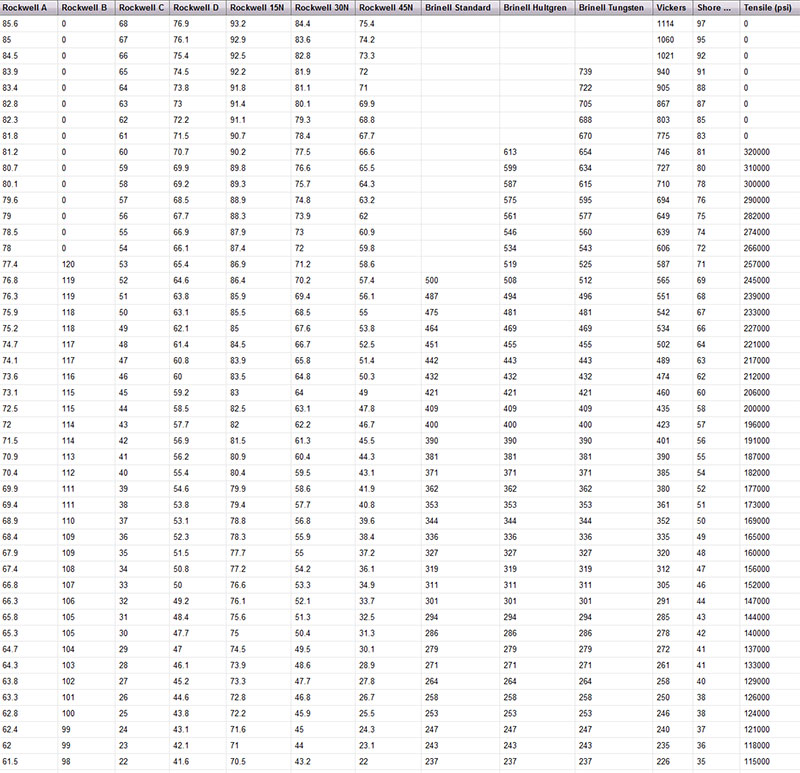
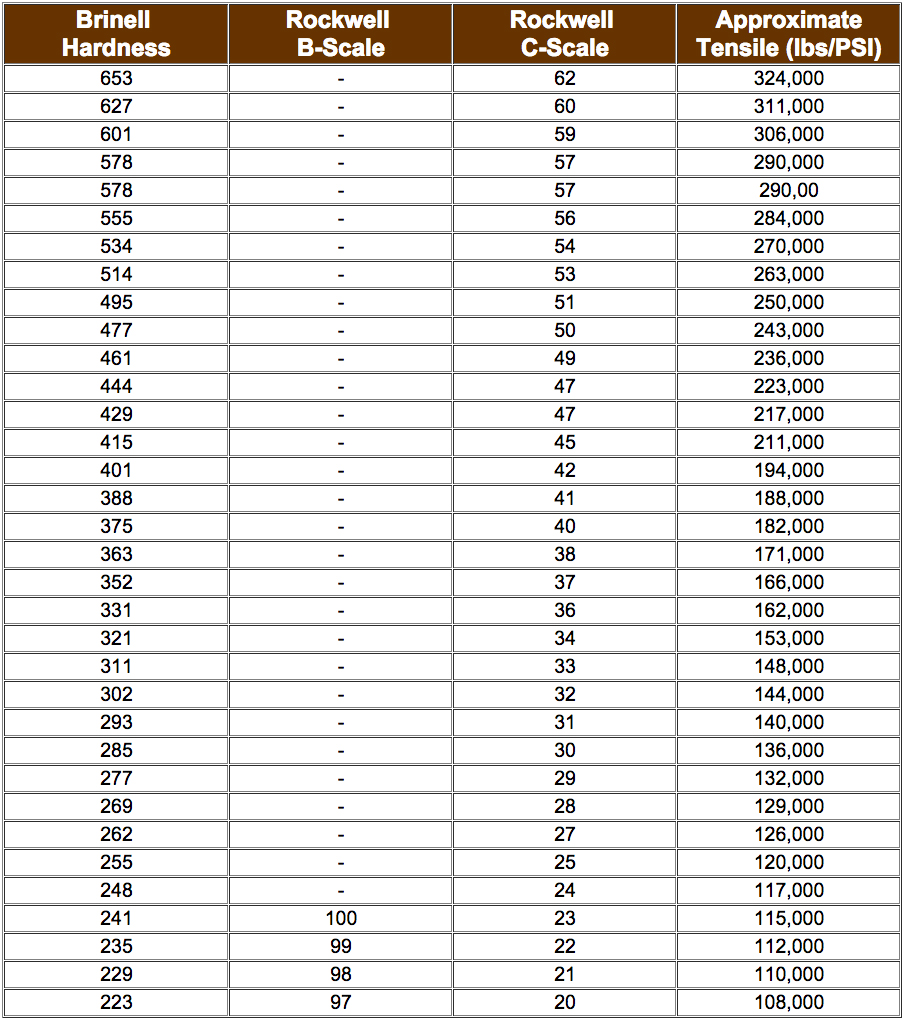
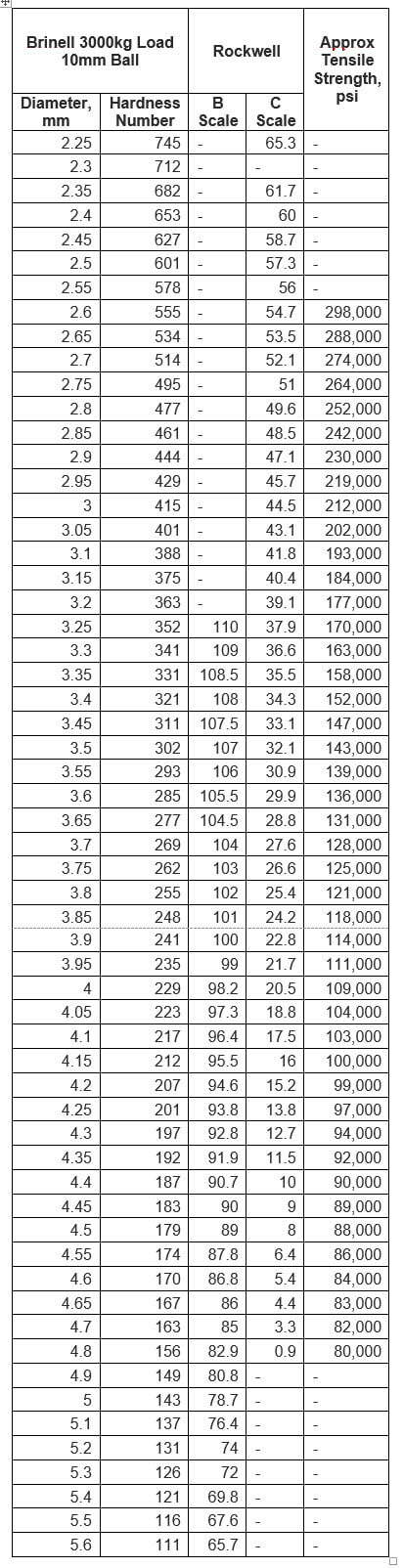
So, why do we even bother converting between Brinell and Rockwell? Well, sometimes you might have hardness data in one unit and need it in another. This could be due to equipment limitations (maybe your lab only has a Brinell tester), the material being tested, or simply for easier comparison across different studies and sources.
Think of it like reading a recipe. One recipe might list ingredients in grams, while another lists them in ounces. You need a conversion chart to make sense of it all and ensure you get the right proportions. Conversion charts and calculators are readily available online to help you translate between Brinell and Rockwell values. It’s all about ensuring apples are compared to apples (or, you know, hardened steel to hardened steel!).
Important Note: Conversions are not always perfectly accurate, especially for materials with unusual properties. The best practice is always to test the material directly using the desired method whenever possible.
Cultural Reference: Remember the movie Hidden Figures? The characters had to perform complex calculations by hand. Thankfully, we now have calculators and online tools for hardness conversions! No slide rules required.
Beyond Numbers: Hardness in Everyday Life
While Brinell and Rockwell hardness numbers might seem abstract, they actually have a profound impact on our daily lives. They ensure the strength and durability of everything from the cars we drive to the skyscrapers we work in. It’s all about material science ensuring our world is safe and reliable.
Next time you're using a stainless steel knife or admiring a sturdy bridge, remember the humble hardness test. It's a silent guardian, working behind the scenes to make our lives a little bit easier and a lot more secure.
The world around us is a testament to engineering and material science, the hardness test is only one small part of it. But it's a reminder that even the smallest things can have a big impact. Like how a single, well-chosen ingredient can elevate an entire meal, or how a carefully measured indentation can ensure the safety and reliability of the things we use every day.