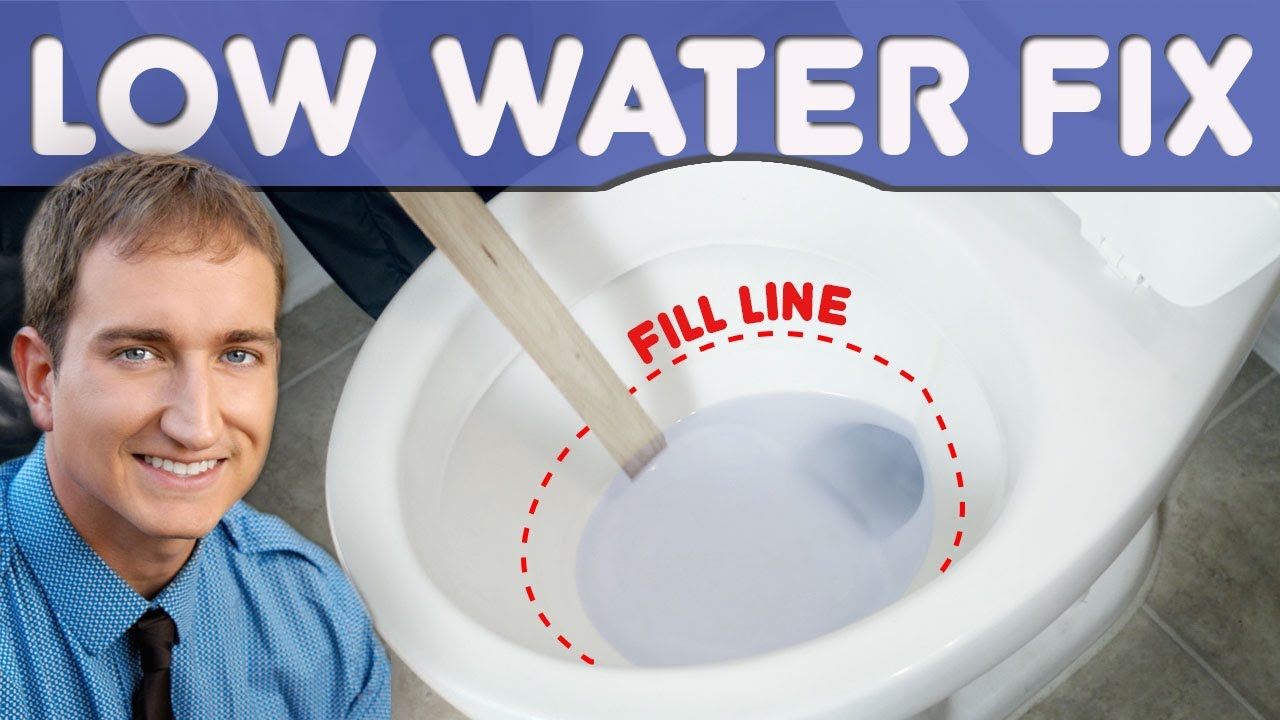
Ever stared into your toilet bowl and thought, "Where did all the water go?" It's like a mini-mystery unfolding right in your bathroom. Let's be honest, we've all been there.
The Case of the Vanishing Water
So, why does this happen? It's not like your toilet is secretly thirsty and drinking it all up. Although, wouldn't that be something? We'd all be buying self-hydrating toilets!
Maybe it's magic. Okay, probably not. But the real reasons are surprisingly common and sometimes even a little bit funny.
The Usual Suspects
First up, we have the evaporation culprit. Think of it like a slow, watery disappearing act. Especially in warmer months, the water in your bowl can evaporate.
Imagine your toilet is sunbathing! The water slowly turns into vapor. It's the circle of life, toilet edition.
Next, let's talk about the flapper. This little rubber or silicone friend sits at the bottom of the tank. Its job is to seal the drain after you flush.
But over time, flappers get old and worn. They might develop cracks or warp. This leads to a slow leak into the bowl.
It's like a tiny, silent rebel. Slowly betraying its duty. This is a common issue that often leads to the phantom flush phenomenon.
The Sneaky Siphon
Sometimes, it's not a leak, but a sneaky siphon at work. This is where the water level in your toilet bowl actually gets sucked down.
Think of it like a very slow, unintentional flush. This happens when there’s a pressure imbalance in your plumbing.
Usually, it means the drain line has a partial blockage. When other pipes are in use, the resulting vacuum draws the toilet bowl water away.
The Temperature Tango
Ever noticed that the water level seems to fluctuate with the weather? Temperature changes can affect the pipes. This is a fact that many people don't think about.
During colder months, pipes can contract. This might create tiny gaps or stress points, leading to leaks. It can be that subtle.
During summer months pipes can expand, and the water can evaporate at a faster rate. The temperature tango is real!
The Less Obvious Offenders
Now, for the less common, but still possible, scenarios. We're diving into the world of plumbing quirks.
Cracked porcelain can also be the issue. A small crack, unseen below the water line, can cause a slow leak. It's like a hidden fracture of the toilet's being.
And, believe it or not, sometimes it's the water supply itself. Issues with water pressure can occasionally cause strange fluctuations in the bowl.
My Unpopular Opinion: It's the Ghosts!
Okay, hear me out. What if it's not plumbing at all? What if it's something...else? I know, I know, it sounds crazy.
But think about it. Toilets are often located in bathrooms. Bathrooms can be old, quiet, and sometimes a little creepy.
Maybe a tiny spectral plumber is messing with your flapper late at night. Perhaps a ghostly cleaning lady is refilling it but leaves the water level incomplete.
Or perhaps mischievous spirits are playing pranks. Maybe they enjoy watching our confusion. Don't roll your eyes just yet!
I'm not saying it's definitely ghosts. But I'm not not saying it either. Occam's razor is not applicable when otherworldly entities are considered!
"The simplest explanation is usually the right one. Unless, of course, it involves plumbing. Then all bets are off." - Abraham Lincoln (probably)
Diagnosing the Dwindle
Alright, back to reality (maybe). How do you figure out why your toilet bowl is losing water? A little detective work is required.
Start with the obvious. Look for visible leaks around the base of the toilet. Check the supply line and the tank. Is it wet anywhere?
If you can't see anything, try the food coloring test. Put a few drops of food coloring in the toilet tank. Wait 30 minutes without flushing.
If the color appears in the bowl, you have a leaky flapper. It's a simple, effective way to spot the problem. Science!
The Fix-It Factor
Once you've identified the culprit, you can decide on a solution. Sometimes, it's an easy fix.
A new flapper is cheap and easy to install. You can find them at any hardware store. YouTube tutorials can be a lifesaver.
Tightening loose bolts or connections is another simple fix. Just be careful not to overtighten them. Snug is good. Stripped is bad.
If the problem is more serious, like a cracked porcelain or a drain issue, it might be time to call a professional plumber.
Prevention is Key
Of course, the best approach is to prevent problems in the first place. A little maintenance goes a long way.
Regularly check your toilet for leaks. Listen for running water when it shouldn't be. Address small problems before they become big ones.
Avoid flushing anything that shouldn't be flushed. That means no diapers, wipes, or feminine hygiene products. Your pipes will thank you.
Living with the Mystery (and Maybe Ghosts)
Ultimately, sometimes you can't figure out why the water is disappearing. Maybe it's a combination of factors. Maybe it really is ghosts!
In that case, you have a few options. You can accept the mystery and top up the bowl every now and then. Or, you can embrace the spooky side and name your toilet "Casper."
The important thing is not to let it drive you crazy. A little bit of toilet bowl drama is just part of life. Flush it away and move on.
So, the next time you see that the water level is low, don't panic! Think about the usual suspects. And maybe, just maybe, spare a thought for those spectral plumbers.
Who knows? Maybe leaving a small offering of toilet paper will appease them. Just kidding. Mostly.
But seriously, check your flapper. It's probably the flapper.