Okay, let's talk power. Not the "I can bench press a small car" kind of power, but the "keeping the lights on for the entire planet" kind of power. We're talking about nuclear energy, and specifically, why fusion is like the cool, responsible older sibling of fission.
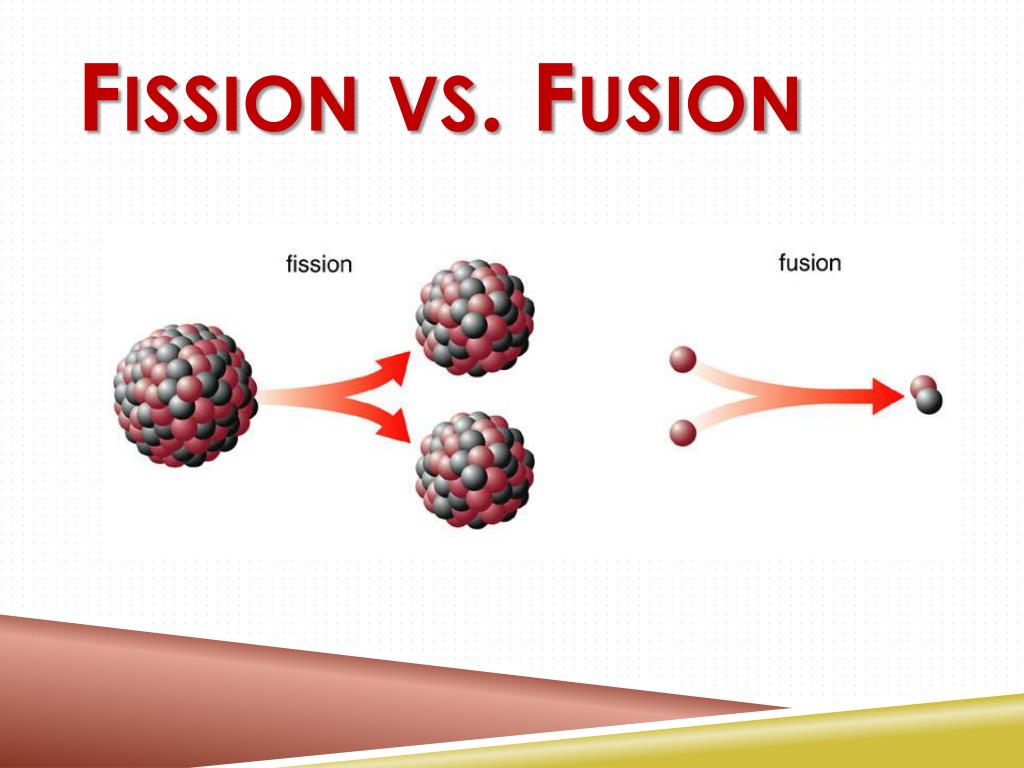
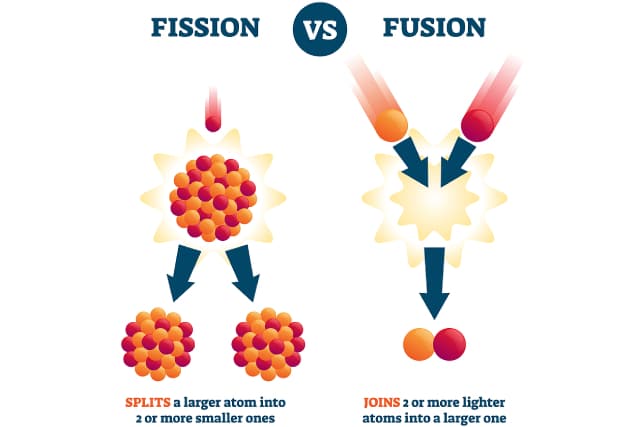
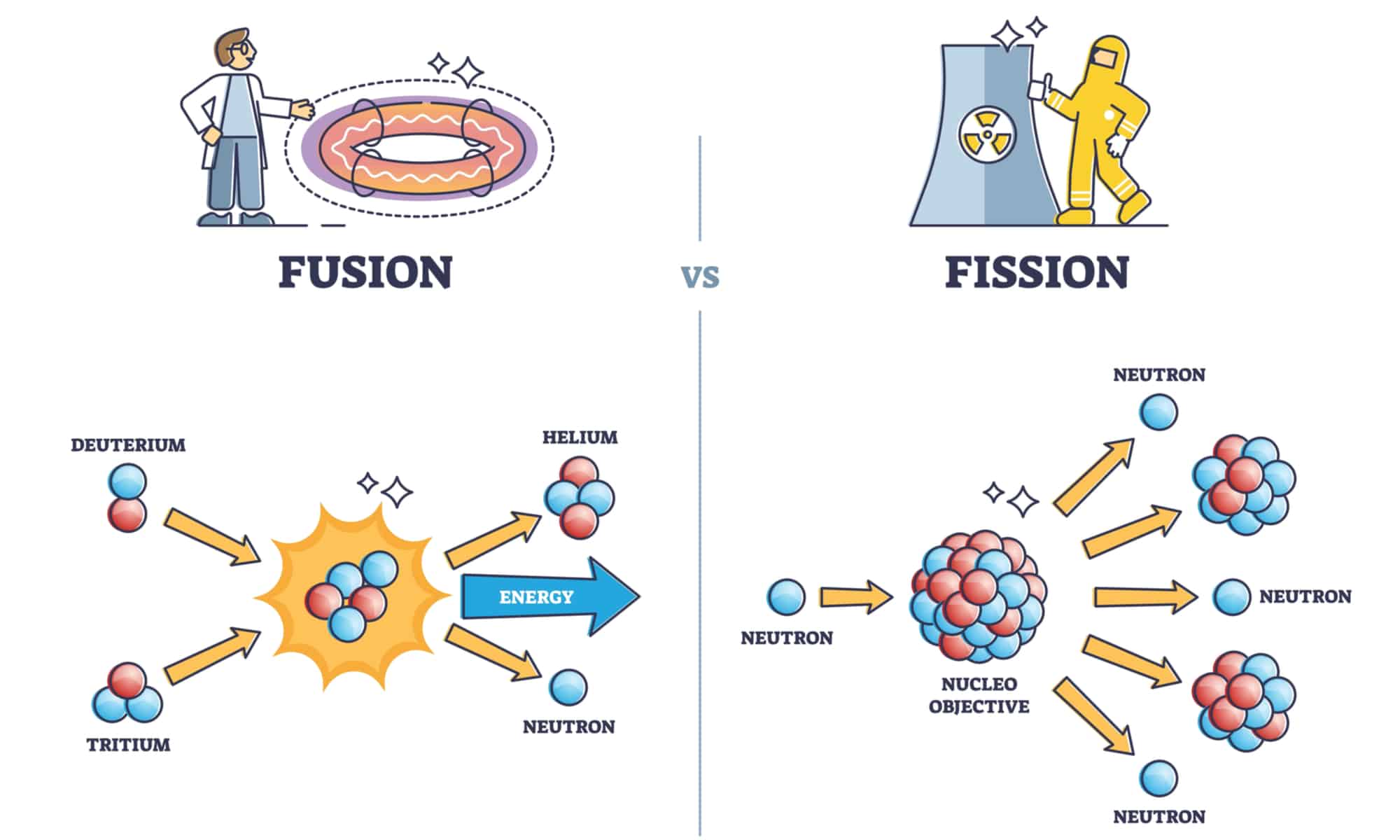
Think of fission like this: It's like that friend who likes to set off fireworks *inside* their apartment. Sure, you get a big burst of energy (and some pretty colors), but afterwards, you're left with a smoking mess, a frantic search for the fire extinguisher, and a nagging feeling that you probably shouldn't have egged them on. Fission, in a nutshell, is splitting atoms – specifically uranium – to release energy. It works, we use it every day, but it also creates radioactive waste that sticks around longer than that awkward silence after you accidentally call your teacher "mom."
Fusion, on the other hand, is like building a miniature sun in your backyard. I know, sounds insane, right? But hear me out! It involves smashing together light atoms, usually isotopes of hydrogen, to create helium. This releases an absurd amount of energy. Remember that feeling when you finally parallel parked perfectly after 17 attempts? Multiply that by a billion, and you're getting close to the satisfaction of successful fusion.
Why Fusion is the Future (And Why Fission Needs to Chill)
So, why is this backyard sun party superior to our firework-loving friend, fission? Let's break it down:
Fuel: Abundance is Key
Fission relies on uranium, which is relatively rare. It's like trying to bake a cake when you only have three chocolate chips. You *can* do it, but it's not going to be a very chocolatey cake. Fusion, however, uses isotopes of hydrogen, primarily deuterium and tritium. Deuterium is abundant in seawater. Seawater! That's like having an entire ocean of chocolate chips. Tritium is trickier, but we can *make* it using lithium, which is also pretty darn common. So, fusion basically has a near-limitless fuel supply. Problem solved.
Waste: Less is More (Like, *Way* Less)
Remember the smoking mess from our firework analogy? That's fission waste. It’s radioactive and needs to be stored safely for thousands of years. Imagine having to babysit that radioactive firework remnant for the next ten millennia. Not exactly a relaxing weekend. Fusion, on the other hand, produces helium as a byproduct. Helium! The stuff that makes balloons float and your voice sound squeaky. It's inert, harmless, and actually kind of fun. It's like the difference between cleaning up after a toddler's birthday party (fission) and cleaning up after a yoga retreat (fusion).
Safety: Control the Chaos
A meltdown in a fission reactor is a catastrophic event. Think Chernobyl or Fukushima. It's like accidentally dropping a whole box of fireworks in the aforementioned apartment – things go south *fast*. Fusion reactors are inherently safer. If something goes wrong, the reaction simply stops. Poof! No uncontrolled chain reaction, no massive release of radiation. It's like accidentally dropping a bouncy ball. Annoying, maybe, but not world-ending.
Power Output: Go Big or Go Home
Fusion has the potential to produce vastly more energy than fission. We're talking about a *game-changing* amount of power. It's the difference between powering your phone with a AA battery (fission) and powering your entire house with a lightning bolt (fusion). Okay, maybe not a lightning bolt, but you get the idea.
The Catch (There's Always a Catch)
So, if fusion is so awesome, why aren't we all living in a fusion-powered utopia? The main challenge is recreating the conditions found in the sun – extreme heat and pressure – here on Earth. It's ridiculously difficult. Think of it as trying to keep a toddler from touching a freshly baked cake. You need incredibly strong magnets, lasers, and a whole lot of ingenuity. But scientists are making progress, and breakthroughs are happening all the time.
In conclusion, fusion is the future of energy. It's cleaner, safer, and more abundant than fission. It’s like trading in your gas-guzzling minivan (fission) for a sleek, solar-powered spaceship (fusion). It might take a little while to get there, but the destination is worth the journey. And who knows, maybe one day we’ll all be sipping margaritas powered by our own backyard suns. Cheers to that!