Hey there, friend! Ever wondered where the energy powering your phone, lights, and that oh-so-important coffee maker comes from? We're bombarded with buzzwords like "renewable" and "sustainable," but what do they really mean? Let's break it down in a way that's as easy to digest as your morning toast.
Think of it like this: imagine a fruit bowl. Renewable energy is like picking apples from a tree. You can keep picking apples year after year because the tree replenishes them. Non-renewable energy, on the other hand, is like eating the last cookie in the jar. Once it's gone, it's gone! And nobody wants to be cookie-less, right?
So, what are these "renewable" apples we keep picking?
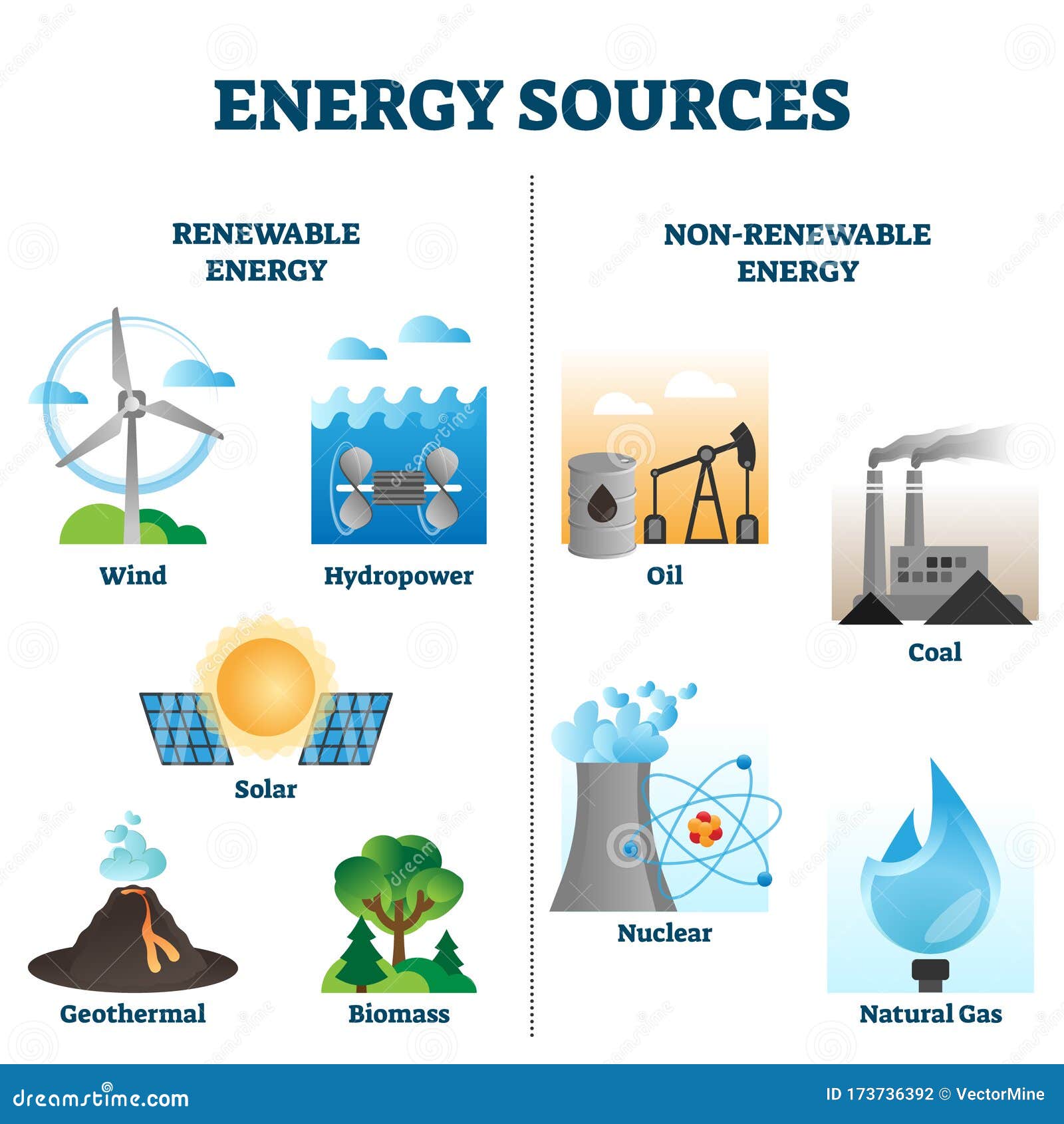
Renewable energy sources are those that naturally replenish themselves over a relatively short period of time. Think sunshine, wind, and flowing water. They're the gifts that keep on giving! Let's look at a few examples:
- Solar Power: Remember that awkward tan line from your last beach trip? That's the sun working its magic! Solar panels capture that energy and turn it into electricity. Pretty cool, huh?
- Wind Power: Those giant windmills you see on road trips? They're not just for show! They harness the power of the wind to generate electricity. It's like nature's own fan club powering your home!
- Hydropower: Remember playing in streams as a kid? Hydropower uses the force of moving water, usually from dams, to turn turbines and create electricity. It's a little like using a water wheel, but on a massive scale.
- Geothermal Energy: Imagine the Earth itself is a giant radiator! Geothermal energy taps into the heat from deep within the Earth to generate power. Think of it as Mother Nature's central heating system.
- Biomass Energy: This involves burning organic matter, like wood or crops, to create energy. It's similar to burning a campfire, but on a much larger, more controlled scale.
All these sources have one thing in common: they're constantly being replenished by nature. That makes them a more sustainable choice for our planet in the long run.
The Cookie Jar: Non-Renewable Energy Sources
Now, let's talk about those cookies in the jar – the non-renewable energy sources. These are resources that exist in limited quantities and take millions of years to form. Once we use them up, they're gone for good (at least, not in our lifetime!). The main culprits are:
- Coal: This black rock is formed from the remains of ancient plants that lived millions of years ago. We dig it up and burn it to generate electricity.
- Oil (Petroleum): Formed from the remains of tiny marine organisms, oil is used to make gasoline, plastics, and countless other products.
- Natural Gas: Often found alongside oil, natural gas is primarily methane and is used for heating, cooking, and electricity generation.
- Nuclear Energy: Now, this one's a bit different. Nuclear energy uses uranium, a radioactive element, to create energy through nuclear fission. While uranium is technically finite, the debate about whether it's "renewable" is complex and often leans toward non-renewable due to the limited supply of readily usable uranium and the waste it produces.
So, to answer the question: Which of the following is NOT a renewable energy source? The answer will always be something from that list above – coal, oil, natural gas, or in most cases, nuclear energy.
Why Should You Care? (Besides Saving the Planet!)
Okay, so maybe "saving the planet" sounds a bit grandiose. But think of it this way: relying on non-renewable energy is like being addicted to a really expensive, unhealthy habit. Eventually, you run out of money (the resources run out), and your health suffers (the planet suffers from pollution and climate change).
Investing in renewable energy, on the other hand, is like starting a healthy savings plan. It might take some upfront investment, but in the long run, it pays off with a more stable, sustainable, and cleaner future. Plus, renewable energy creates jobs, boosts local economies, and reduces our dependence on foreign energy sources. It's a win-win-win!
Even small changes in your daily life can make a difference. Think about switching to energy-efficient appliances, using public transport or cycling, and supporting companies that are committed to sustainability. Every little bit helps!
So next time you flip a light switch, take a moment to think about where that energy comes from. Are you picking an apple from the tree, or reaching for the last cookie in the jar?