Ever wonder how tiny things, like water and nutrients, move in and out of your cells? It's like a superhighway inside you, but without any traffic lights! One of the coolest ways this happens is through something called passive transport. Think of it as the VIP lane for molecules – no energy required!
So, What's the Big Deal About Passive Transport?
Imagine you're at the top of a slide. You don't need to push yourself down, right? Gravity does all the work! Passive transport is similar. It relies on the natural tendency of things to move from an area where they're packed together (high concentration) to an area where they're more spread out (low concentration). It's all about equilibrium, baby! It's the universe's way of saying, "Let's even things out."
Ready to play a game? Let's figure out which of these scenarios is the ultimate example of passive transport:
- A tiny water balloon bursting inside a cell.
- A protein kicking a sodium ion across a membrane.
- Oxygen moving from your lungs into your bloodstream.
- A cell eating a sandwich. (Okay, maybe not a literal sandwich.)
Drumroll, please! The answer is number 3: Oxygen moving from your lungs into your bloodstream.
Why Oxygen's Journey is the Perfect Example
Think about it. You inhale air, which is packed with oxygen. Your bloodstream, at that moment, is relatively oxygen-poor. Oxygen naturally wants to move from the crowded lungs (high concentration) to the less crowded blood (low concentration). BAM! Passive transport at its finest! No cellular energy needed – just good old concentration gradients doing their thing. It's like magic, but it's science!
The other options? Not so much. A bursting water balloon is, well, bursting. That's more about pressure than passive diffusion. And a protein actively kicking sodium ions? That's a different story called active transport, which *does* require energy. And a cell eating a sandwich? Definitely active – that's a full-blown cellular event! We are talking about endocytosis.
Meet the All-Stars of Passive Transport
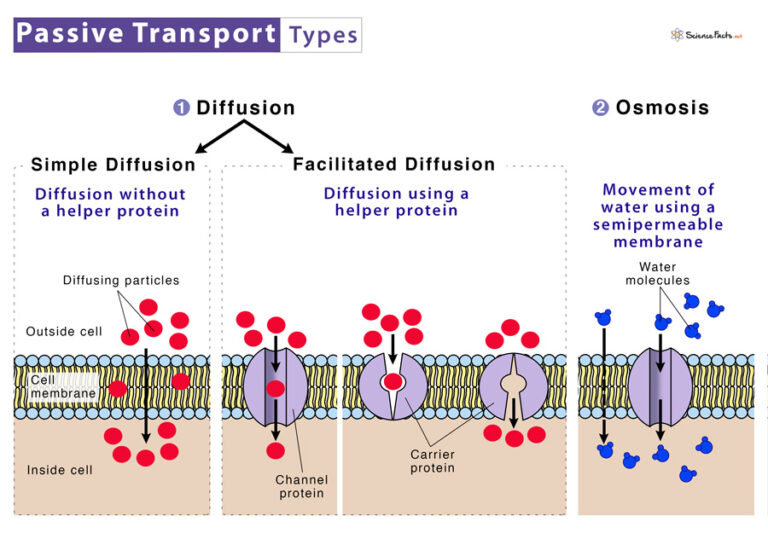
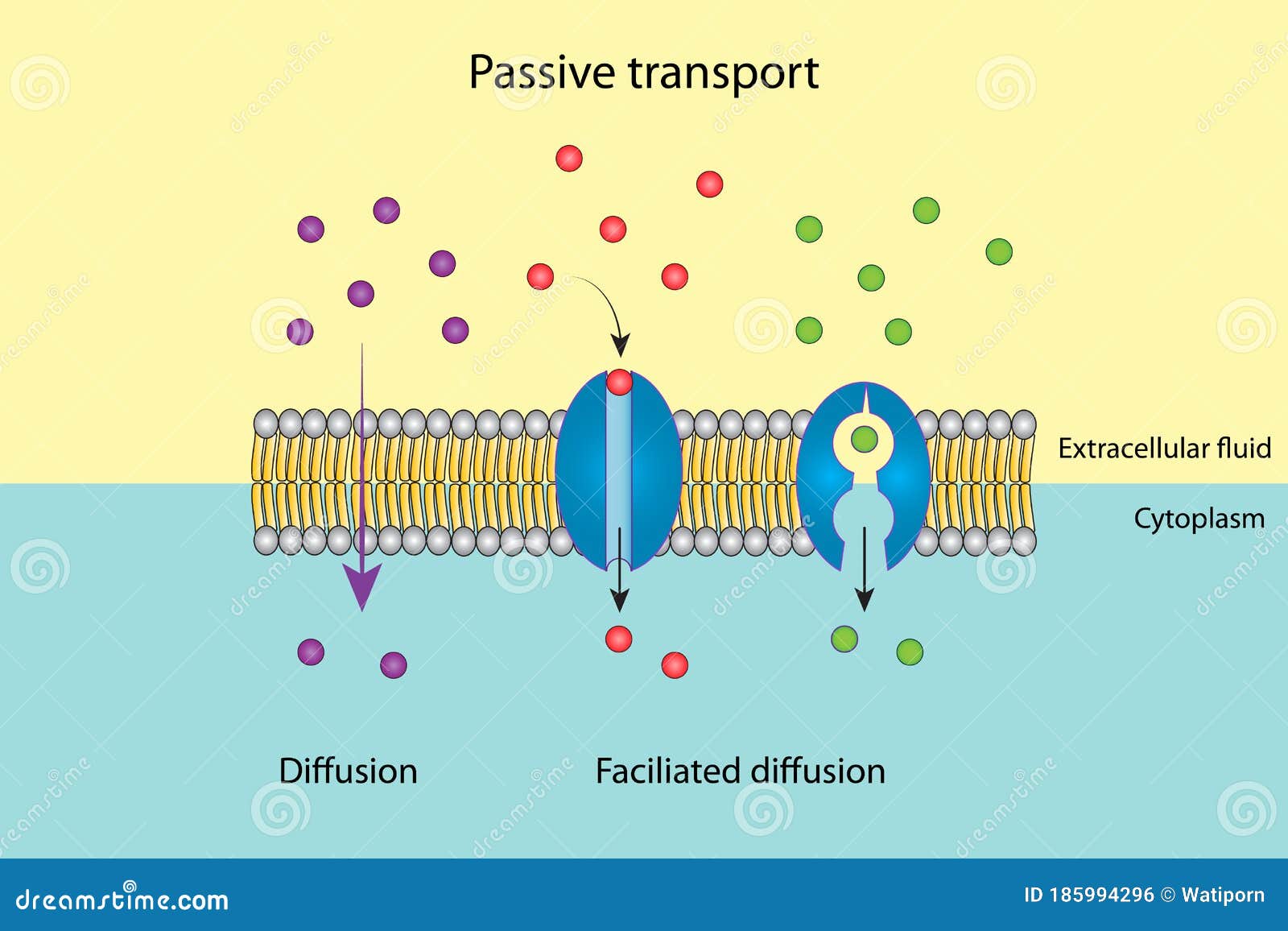
While simple diffusion, like oxygen moving into your blood, is a rockstar, there are other all-stars in the world of passive transport:
- Osmosis: The movement of water across a membrane. Think of a raisin plumping up in water. That's osmosis in action!
- Facilitated Diffusion: Some molecules are too big or charged to simply diffuse across the membrane. They need a little help from special proteins that act like doorways. It's still passive because the protein isn't using energy to force the molecule through – it's just making it easier.
These processes are crucial for everything from keeping our cells hydrated to getting the nutrients we need.
Why Should You Care?
Understanding passive transport is like having a secret key to the inner workings of your body. It explains how you breathe, how your kidneys filter waste, and how your cells stay alive! It’s a fundamental process that highlights the beautiful elegance and efficiency of nature.
It’s also surprisingly relevant! For example, understanding osmosis helps us understand why drinking too much pure water can be dangerous (it can throw off the balance of electrolytes in our cells). Or why doctors use saline solutions to rehydrate patients – it’s all about maintaining the right concentration gradients!
So next time you take a deep breath, remember that oxygen is making its way into your bloodstream thanks to the amazing power of passive transport. It's a silent, energy-free miracle happening inside you right now! Who knew science could be so fascinating? Want to know even more about the transport system? Check out some cool diagrams to learn more!
“The cell is not a bag, it is a highly organized and dynamic system.” - Albert Claude.