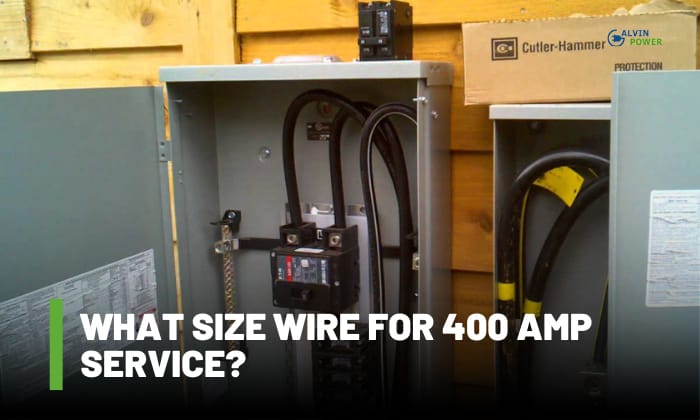
Alright, let's talk about something that might sound intimidating but is actually pretty fascinating: wiring up a 400 amp service. Now, 400 amps – that's a lot of power. We're not talking about charging your phone here; we're talking about potentially powering a small business, a very large home, or maybe even a whole bunch of electric vehicle chargers. So, what wire size do you need for that kind of juice? And why is it so important to get it right?
Why Wire Size Matters: Think of it Like a Highway
Imagine electricity flowing through a wire like cars on a highway. A skinny little wire is like a one-lane country road. Sure, a few cars (amps) can trickle through, but if you try to shove too many through at once, you get a massive traffic jam (overheating and potential fire hazard!). A bigger wire, on the other hand, is like a multi-lane superhighway. Lots of cars (amps) can cruise through smoothly and efficiently.
That's essentially what wire size is all about. It's all about the ampacity, which is just a fancy way of saying how much current a wire can safely handle. Too much current for too small a wire? Bad news. We want to avoid that at all costs. It's not just about your appliances working; it's about safety. Think of it as giving electricity the proper "breathing room" it needs to do its job without causing problems.
So, What's the Magic Number (or Wire Size)?
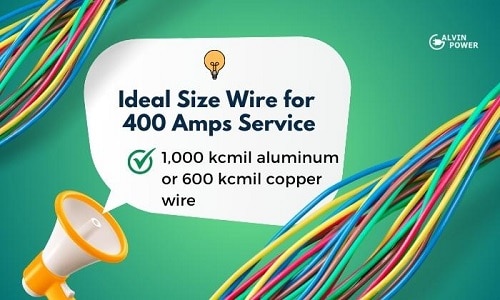
Okay, drumroll please… While I can't give you a definitive, 100% answer without knowing *all* the specifics of your situation (always consult a qualified electrician, folks!), let's talk generally. Typically, for a 400 amp service, you're looking at something in the realm of 4/0 AWG (American Wire Gauge) copper wire. Or possibly 600 kcmil aluminum wire.
Wait, what's "AWG" and "kcmil"? Glad you asked! AWG is a standard measurement for wire size. The lower the number, the thicker the wire. So, 4/0 is thicker than, say, a 10 AWG wire (which you might use for some lighting circuits). kcmil (kilo circular mils) is another unit for measuring wire cross-sectional area, typically used for larger wires.
But hold on! This isn't a one-size-fits-all situation. Several factors can influence the proper wire size:
- Material: Copper and aluminum are the most common choices. Copper is a better conductor, but aluminum is lighter and cheaper. Aluminum requires a larger size to carry the same amount of current as copper.
- Distance: How far is the service panel from the utility connection? Longer distances mean voltage drop, which means you might need a thicker wire to compensate. Imagine trying to shout across a football field versus whispering next to someone; you need more "power" (wire size) to reach them clearly.
- Installation Method: How the wire is installed – whether it's buried, run through conduit, or in free air – affects its ability to dissipate heat. Better heat dissipation means potentially smaller wire size.
- Local Codes: The National Electrical Code (NEC), and your local building codes, have specific requirements for wire sizing. These codes are there for a reason – to keep you and your property safe!
Why You Need a Pro: It's Not a DIY Project!
Let me be crystal clear: messing with a 400 amp service is not a DIY project for the average homeowner. We're talking about serious power here, and mistakes can be incredibly dangerous – potentially leading to electrical shock, fire, or damage to your equipment.
A qualified, licensed electrician will be able to accurately assess your specific needs, calculate the correct wire size based on all the relevant factors, and install the wiring safely and according to code. They'll also know how to properly terminate the wires, ensuring a solid and reliable connection.
The Cool Factor: Powering Your Dreams
While wire sizing might seem like a dry, technical topic, think about what that 400 amp service enables. It's the foundation for powering a modern lifestyle, whether that's running a state-of-the-art home theater, charging multiple electric vehicles, or operating a business that relies on heavy machinery.
It's about having the capacity to do what you want, without having to worry about overloading your electrical system. That's a pretty cool feeling, right? So, while you might not be sizing the wires yourself, understanding the basics can help you appreciate the power and potential that a properly installed 400 amp service provides.
Remember, electricity is powerful. Treat it with respect, and always consult with a professional when dealing with electrical work.