Okay, let’s talk electricity. I know, I know, it sounds about as exciting as watching paint dry. But trust me, knowing the right wire gauge for a 20 amp circuit is like knowing which size shoes to wear – get it wrong, and you're gonna have a bad time. Think of it like this: you wouldn't try to squeeze your size 12 foot into a size 8 shoe, would you? Same principle applies here, only instead of foot cramps, you could end up with a fire hazard. Not fun.
Why Wire Gauge Matters (aka "Don't Burn Down Your House")
So, what's the big deal with wire gauge anyway? Simply put, it's the thickness of the wire. Think of it like the width of a highway lane. A narrow lane (thin wire) can only handle so much traffic (electricity) before it gets congested and things start to overheat. A wider lane (thicker wire) can handle more traffic without a problem.
Imagine you're trying to run a marathon through a garden hose. Sounds ridiculous, right? That’s what happens when you use too thin a wire for a 20 amp circuit. The electricity is basically trying to sprint through a tiny pipe, and it's not gonna go well. It’ll get hot, it’ll resist, and eventually, something’s gonna give. That "something" could be insulation melting, a breaker tripping constantly, or, in the worst-case scenario… *poof* … a fire.
Don’t panic! This isn't meant to scare you silly. It's just a friendly reminder that electricity is powerful, and respecting its boundaries is key.
The Magic Number: What Wire Gauge DO I Need?
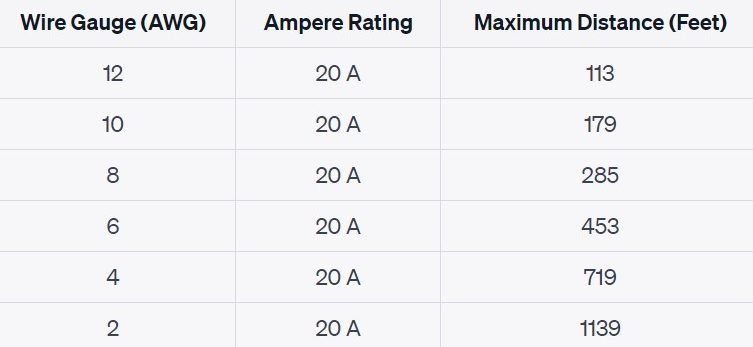
Alright, enough doom and gloom. Let's get to the good stuff. For a standard 20 amp circuit, the minimum wire gauge you should use is 12 AWG (American Wire Gauge). That's the golden rule, etched in the electrical code tablets (figuratively speaking, of course).
Think of it like ordering pizza. You *could* get a small pizza for a party, but you know everyone will be fighting over the slices. Getting a large pizza (12 AWG wire) just makes everyone happier and avoids potential pizza-related conflicts (electrical fires).
Now, some people might say, "Hey, can't I use 10 AWG wire just to be safe?" And the answer is, absolutely! You can always go thicker. It's like wearing an extra layer of socks on a cold day – it won't hurt anything. Using a thicker wire might cost a little more, but it gives you a little extra headroom and can handle the load with even less resistance.
Distance Matters (Like, Really Matters)
Here's where things get a little more interesting. The length of the wire run also plays a role. If you're only running the wire a short distance (say, a few feet), 12 AWG is usually fine. But if you're running it a long distance (like across your whole house), voltage drop can become a factor.
Voltage drop is basically like trying to shout across a football field. By the time your voice reaches the other end, it's barely a whisper. Similarly, electricity loses some of its "oomph" as it travels long distances through a wire. Using a thicker wire can help minimize this voltage drop, ensuring that your appliances get the full power they need.
To figure out if voltage drop is a concern for your specific project, you can use online voltage drop calculators. Just plug in the amperage, wire gauge, and distance, and it'll tell you if you're within acceptable limits.
When in Doubt, Call a Pro!
Look, I'm all for DIY projects. There's nothing quite like the satisfaction of fixing something yourself. But when it comes to electricity, safety is paramount. If you're not comfortable working with wiring, or if you're unsure about anything, please, please, PLEASE call a qualified electrician. It's better to spend a little money on a professional than to risk your safety or damage your home.
Think of it like trying to perform brain surgery on yourself after watching a YouTube video. Probably not the best idea, right? Same goes for tackling electrical projects without the proper knowledge and experience.
So, there you have it! A (hopefully) painless explanation of wire gauge for 20 amp circuits. Remember: 12 AWG is the minimum, thicker is always better, and when in doubt, call a pro. Now go forth and wire… safely!