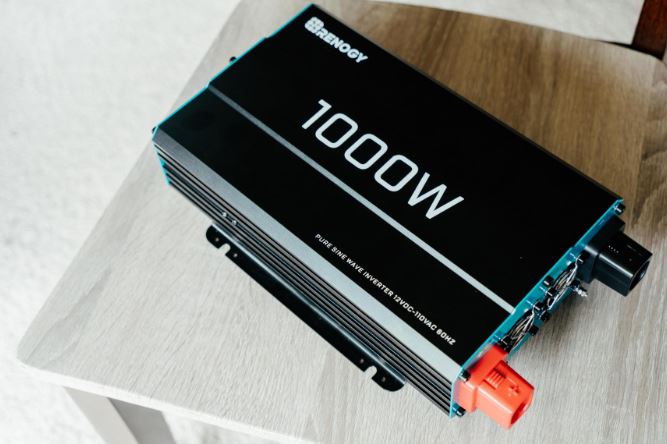
Alright, gather 'round, folks! Let's talk about the unsung hero of off-grid living, the magical box that turns your car battery into a portal to… well, slightly less exciting things than Narnia. I’m talking about the 1000-watt inverter!
Think of it as the caffeine converter for your electronics. Except instead of turning sleepiness into productivity (debatable, I know), it turns DC power from your car battery into glorious, usable AC power. The same stuff that flows from your wall sockets at home.
But the burning question is, what can this little powerhouse actually run? Can you power a small city? Probably not. A bouncy castle? Depends on the bouncy castle (and your car's alternator. Don't blame me if you drain your battery dry!).
The "Definite Yes" Category
Let's start with the obvious winners. These are the things a 1000-watt inverter can handle without breaking a sweat (or causing your car to make that sad, clicking noise).
First up, your trusty laptop. Unless you're rocking some NASA-grade supercomputer disguised as a laptop (in which case, why are you reading this?), it should be fine. Think of it as rewarding your laptop for all its hard work by giving it a little road trip.
Next, smartphones and tablets. Charging these little guys is like sipping water for an inverter. It barely notices. Your phone might even send you a thank you text, if it were capable of such things.
Then there's the whole army of small electronics: digital cameras, portable gaming consoles, e-readers. Basically, anything that plugs in with a USB charger or a small wall wart is usually a go.
And of course, the lightbulbs! LEDs are your best friend here. Forget those energy-sucking incandescent dinosaurs. Embrace the future with cool, efficient LEDs. You could probably light up a small disco with a 1000-watt inverter and a handful of LEDs.
The "Maybe, But Proceed With Caution" Zone
This is where things get interesting, and where a little bit of math (gasp!) comes into play. Don't worry, I promise to keep it pain-free. Every appliance has a wattage rating, usually listed on a sticker somewhere. Make sure the total wattage of everything you plug in is less than 1000 watts.
A small TV? Possibly. Check the wattage rating. A 32-inch LED TV is probably okay, but that 65-inch behemoth you use for movie nights? Probably not. Unless you want your car battery to have a very short, very dramatic life.
A coffee maker? Some might work. Single-serve coffee makers typically draw less power than a full-size drip machine. But be warned, some coffee makers have a *startup surge* where they briefly draw significantly more power than their rated wattage. This can trip the inverter's overload protection and leave you caffeine-less and grumpy.
Hair dryers and curling irons? The bane of off-grid power. These things are energy hogs. A low-wattage travel hair dryer might work, but don’t expect salon-quality results. And definitely don't try to run both a hair dryer and a curling iron at the same time unless you're feeling particularly adventurous (and have jumper cables handy).
The "Absolutely Not, Are You Crazy?" List
These are the appliances that will laugh in the face of your 1000-watt inverter, drain your battery faster than you can say "Help!", and possibly cause a small electrical fire. Just say no.
Refrigerators. Even small ones. They need a huge surge of power to start their compressors, and they run constantly. Your inverter will cry.
Air conditioners. See "refrigerators," but multiply the power draw by a factor of "unbearable summer heat."
Microwaves. Unless you enjoy the smell of burning electronics and the taste of cold leftovers, steer clear.
Power tools. Drills, saws, sanders... these are all power-hungry beasts. Unless you're trying to build a tiny birdhouse, leave them at home.
Anything with a heating element bigger than a travel coffee mug. Toasters, electric kettles, space heaters... they're all inverter kryptonite.
Pro Tips for Inverter Success
Invest in a good quality inverter. Cheap inverters are like cheap coffee: they might get the job done, but you'll probably regret it later.
Keep your car running. This is the golden rule. Unless you want to be stranded in the middle of nowhere with a dead battery, let your alternator do its job.
Use a battery monitor. This handy little device will tell you how much juice you have left in your battery. It's like a gas gauge for your electrical system.
Don't overload the inverter! I know I sound like a broken record, but it's important. Overloading an inverter is like asking your dog to carry all your groceries – it's not going to end well.
So there you have it! A (hopefully) entertaining guide to what a 1000-watt inverter can run. Now go forth and power your adventures, responsibly of course!