Okay, let's talk hurricanes. Big, blustery, water-filled nightmares. We all know they're bad news.
But which one was *the worst*? The deadliest, the most destructive, the one that made everyone collectively say, "Nope, I'm moving to the desert"?
It's a tricky question, actually.
The Usual Suspects: Names You've Probably Heard
Most people will immediately shout out names like Katrina. Or maybe Harvey. Powerful storms that left a lasting mark. We remember the news coverage and the heartbreaking stories.
Those storms were awful. Absolutely devastating. No argument there.
But were they *the deadliest*? Prepare for a curveball.
The Official Answer (and Why I Disagree)
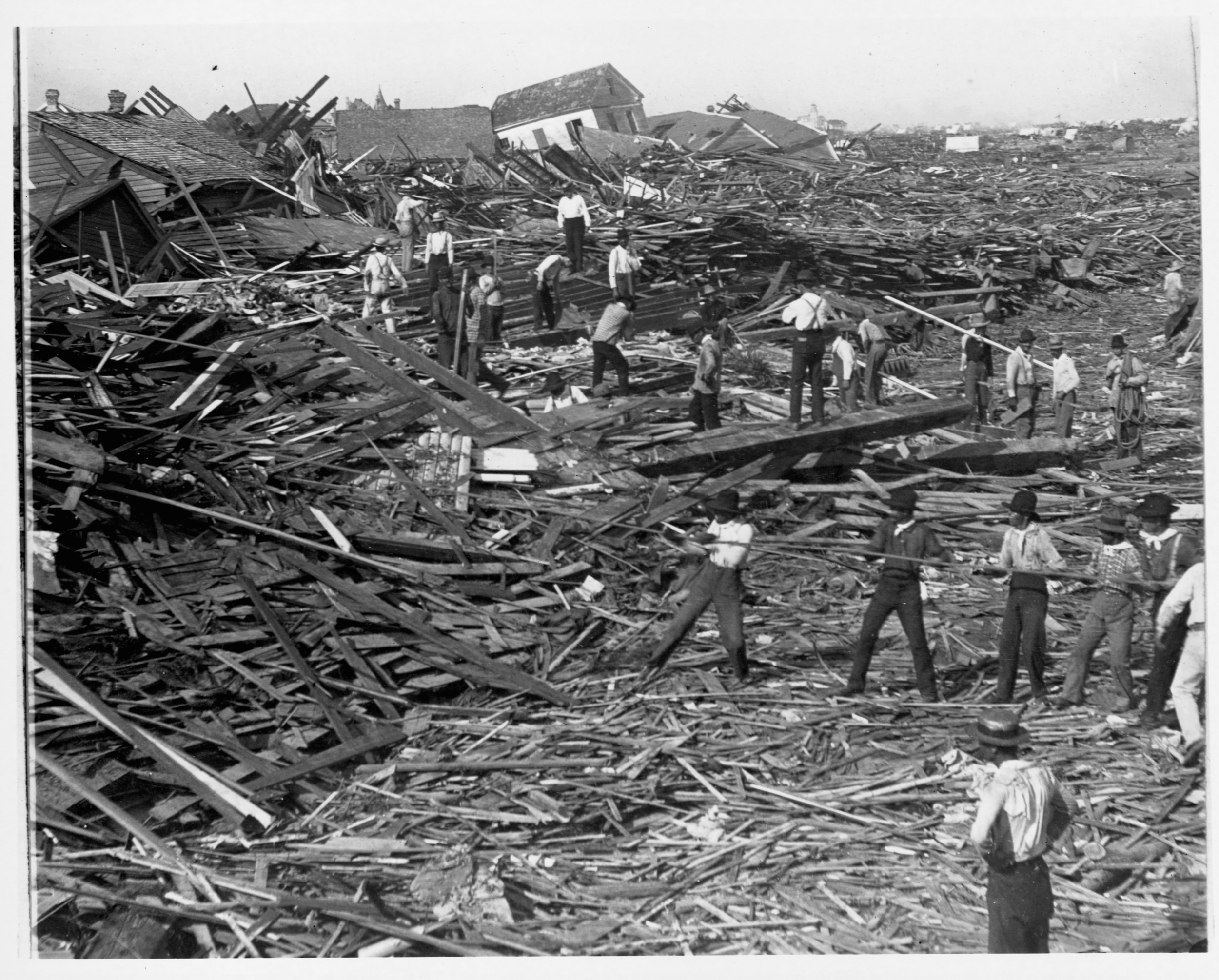
If you Google "deadliest hurricane in US history," you'll likely see the Great Galveston Hurricane of 1900. It wiped out the city of Galveston, Texas. Estimates range from 6,000 to 12,000 fatalities.
That's a staggering number. Unimaginable, really. It's officially the deadliest.
Here's where my controversial opinion comes in. Buckle up.
My Unpopular Opinion: It's All About Perspective (and Plumbing)
I think crowning the Galveston Hurricane the "deadliest" is a bit…unfair. And, yes, I realize saying that about a tragedy is a little weird. Hear me out!
Think about it. 1900. Horses and buggies were still a thing. Communication? More like "yell really loud" or "send a telegram...eventually."
Modern forecasting wasn't even a twinkle in someone's eye. Warning systems? Nonexistent. Evacuation plans? "Run really fast"?
Infrastructure Matters, People!
And let's not forget building codes! Houses in 1900 weren't exactly engineered to withstand a Category 4 hurricane. Think flimsy wood and hopes and prayers.
Plumbing was also pretty basic. Probably contributed to some post-storm diseases.
So, yeah, Galveston was horrific. But it was horrific *given the circumstances*.
So, What *Would* Be the Deadliest "Modern" Hurricane?
That's the question, isn't it? A hurricane hitting today, with all our fancy technology and supposed preparedness, and *still* causing an unacceptable number of deaths.
Now, *that's* a true indictment of our society. That's a failure we can't just blame on "an act of God."
Here's where it gets even more subjective. Do we measure "deadliest" by absolute numbers? Or by percentage of the affected population?
The "What If" Game (Gets Dark Quickly)
Imagine a Category 5 hurricane hitting Miami dead-on. Millions of people. High-rise buildings. A complex network of infrastructure.
Even with warnings, evacuations, and modern construction, the death toll could be catastrophic. We're talking thousands, maybe tens of thousands.
Suddenly, Galveston's numbers, while still tragic, seem...less overwhelming in comparison to the *potential* for modern devastation. I know, dark thoughts.
The Invisible Toll: Long-Term Effects
And what about the *indirect* deaths? The people who die in the aftermath from disease, lack of medical care, or the sheer stress of losing everything?
Those numbers often get overlooked. They're harder to track, harder to quantify. But they're real.
Hurricane Maria in Puerto Rico is a prime example. The official death toll was initially disputed, and many believe the true number was far higher due to the long-term consequences.
Mental Health Matters Too
And what about the mental health toll? The PTSD, the depression, the anxiety that lingers long after the storm has passed?
Those are also casualties of the hurricane. They just don't show up on a neat, official list.
So, when we talk about "deadliest," are we only counting the bodies found right after the storm? Or are we looking at the broader, more complex picture?
The Real Takeaway: We Need to Do Better
Okay, I'll step down from my soapbox now. The point isn't to diminish the tragedy of Galveston. It was a horrific event.
The point is to remind ourselves that we can't become complacent. We can't assume that modern technology makes us immune to the power of nature.
We need to invest in better infrastructure, improve our warning systems, and address the underlying social and economic inequalities that make some communities more vulnerable than others.
It's Not Just About Numbers
Ultimately, the "deadliest hurricane" isn't just about a number. It's about learning from the past, preparing for the future, and protecting the most vulnerable among us.
It's about acknowledging that even with all our advancements, we're still at the mercy of these powerful storms.
And maybe, just maybe, it's about reconsidering what we even *mean* by "deadliest" in the first place. My unpopular opinion stands: it's complicated.
So, What Now?
Well, now you're armed with my slightly-unhinged perspective on hurricane history. Go forth and impress your friends at parties!
Or, better yet, use this information to advocate for better preparedness in your own community.
Because let's face it: another hurricane is coming. It's not a matter of *if*, but *when*.
Stay Safe Out There!
And remember: be prepared, stay informed, and don't underestimate the power of a good weather app (and maybe a well-stocked supply of snacks).
Because sometimes, the only thing you can do is hunker down and wait it out.
And maybe, just maybe, hope that I'm wrong about that future "deadliest" hurricane.
But preparing is always better than not!