So, you're dreaming of pastel de natas in Belém, the soulful sounds of Fado echoing through Alfama, and maybe even a cheeky dip in the Atlantic? Sounds divine! But before you pack your bags and mentally prepare for sunset cocktails overlooking the Douro, let's talk something a little less romantic, but equally crucial: power plugs. Because nobody wants a dead phone when they're trying to capture that perfect Insta shot, right?
Portugal, like most of Europe, operates on a 230V supply voltage at 50Hz. Think of it as the electric current's rhythm – and it’s different in some parts of the world. Now, what about the actual shape of the plug?
The Lowdown on Plugs: Type C and Type F
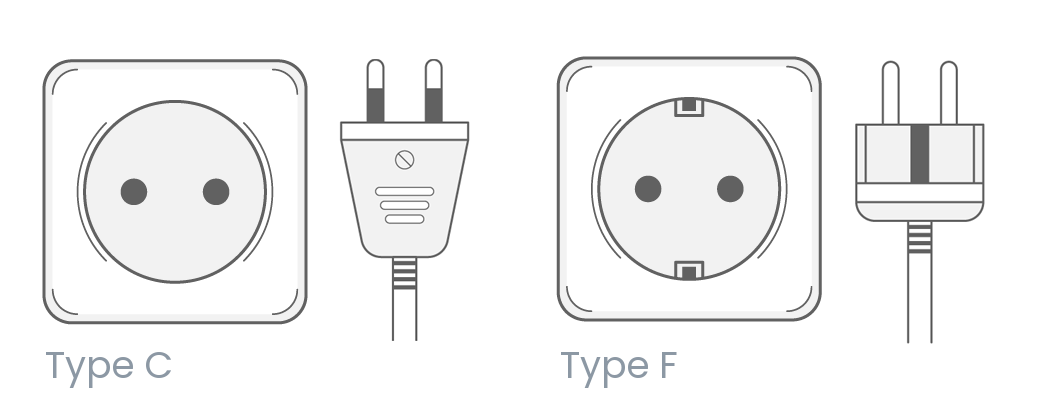
Get ready for a bit of plug geography! Portugal primarily uses two types of plugs: Type C and Type F. They are the standard European plugs.
Type C, also known as the "Europlug," is a two-pin plug with round pins. Think of it as the classic European plug you've likely encountered before. It's *un-grounded* and generally used for smaller appliances that don't require much power, like phone chargers, lamps, or small travel gadgets.
Type F, sometimes referred to as the "Schuko" plug, is also a two-pin plug with round pins, but it's *grounded*. It has grounding clips on the sides of the plug, offering an extra layer of safety. Type F plugs are common for larger appliances that draw more power, such as laptops, hair dryers (essential, obviously!), and kitchen gadgets.
Here’s a fun fact: While both Type C and Type F plugs are common in Portugal, most sockets are designed to accommodate both! So, if your device has a Type C plug, it will likely fit into a Type F socket without any issues. It's all about adaptability, *à la Portuguesa*!
Adapter Essentials: Don't Get Caught Short
Okay, so what does this all mean for you, the intrepid traveler? If your devices use plugs that are different from Type C or Type F (like those from the US, UK, or Australia), you'll need a plug adapter. These are readily available online, at electronics stores, and even at the airport. It’s a good idea to buy one *before* you arrive in Portugal, just in case.
Pro Tip: Consider investing in a universal travel adapter. These handy gadgets can adapt to a wide range of plug types, making them perfect for future adventures beyond Portugal.
Bold Move: If you’re bringing several electronic devices, a power strip with a European plug (Type C or F) and your native sockets could be a lifesaver. Just be mindful of the voltage!
Voltage Considerations: Check Your Devices
While plug adapters change the shape of the plug, they do not convert voltage. So, before you plug anything in, double-check the voltage rating on your device. Look for something that says "100-240V," which means it's compatible with both the US (110V) and European (230V) voltage. Most modern electronics, like laptops and phone chargers, are dual voltage, but it's always a good idea to check!
If your device is only rated for 110V, you'll need a voltage converter in addition to a plug adapter. Using a 110V device in a 230V socket without a converter can seriously damage your device, and potentially even cause a fire. Not the kind of sparks you want on your vacation!
Beyond the Plug: A Little Portuguese Charm
Think of this plug situation as a small cultural immersion experience. It's a reminder that the world is diverse, and even something as mundane as a power plug can be a window into different ways of doing things. Embracing these little differences is part of the joy of travel, right? And who knows, maybe you'll even learn a new Portuguese phrase related to electricity ("Tomada" means socket, for instance!).
So, armed with this knowledge, you can confidently charge your devices, capture those breathtaking moments, and fully immerse yourself in the Portuguese experience. From the bustling streets of Lisbon to the serene beaches of the Algarve, you'll be powered up and ready to go.
A Moment of Reflection
In a world of constant connection, even the simple act of plugging in a device can be a reminder of our shared humanity. Whether you're using a Type C or Type F plug, the need for electricity is universal. So, go forth, explore, connect, and remember to pack your adapter. *Boa viagem!* (Have a good trip!)