Ever wondered what makes your lawnmower roar to life and keep your yard looking pristine? It all starts with the right fuel! Understanding the type of gas your lawnmower needs is more than just a chore; it's about keeping your machine running smoothly, saving money in the long run, and even being a bit more eco-friendly. Think of it as a little bit of backyard science that pays off. Let's dive in!
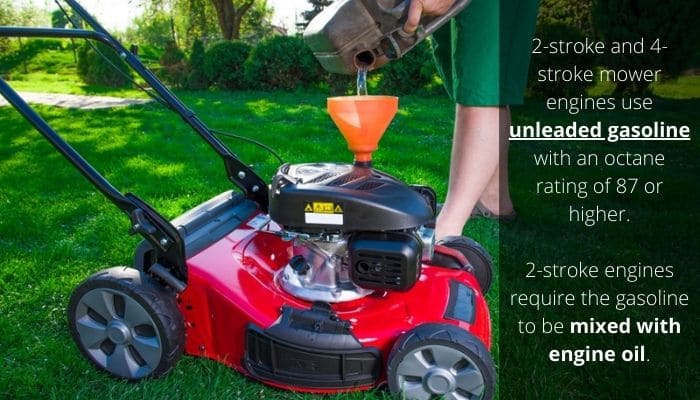
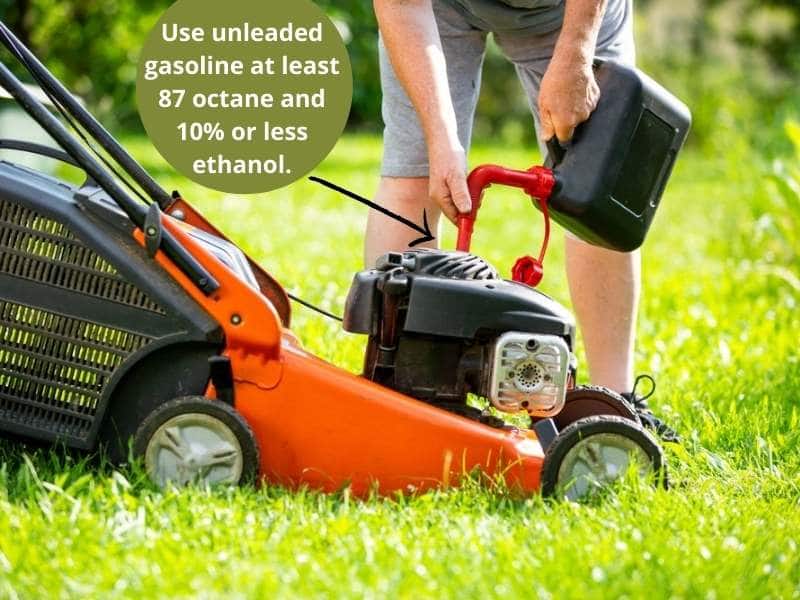
For beginners, knowing the right gas is crucial to avoid damaging your brand-new (or gently used) mower. Mismatched fuel can lead to engine problems, and nobody wants that! The standard recommendation for most lawnmowers is unleaded gasoline with an octane rating of 87 or higher. You'll often see this at the pump as "Regular" or "87 Octane." The important thing is to make sure it's unleaded.
Families can benefit from understanding the importance of using fresh gasoline. Gas can degrade over time, especially if it's left sitting in a gas can for months. Using stale gas can make your mower hard to start or cause it to run poorly. To keep things simple, only buy as much gas as you'll use in a month or two. Consider adding a fuel stabilizer to the gas can; it helps to keep the fuel fresh for longer. This is especially helpful during the off-season when your mower is hibernating in the shed.
Hobbyists, who often take pride in maintaining their equipment, might explore alternative fuel options. While standard unleaded gas is the norm, some mowers can handle gasoline with ethanol blends. However, it's crucial to check your mower's manual before using gasoline containing more than 10% ethanol (E10), as higher concentrations can damage the engine. Some enthusiasts even prefer using ethanol-free gasoline for their prized machines, as it's believed to offer better long-term performance and reduce the risk of corrosion.
Here are a few practical tips to get you started:
- Read your lawnmower's manual! It's the ultimate guide to your specific machine.
- Use fresh gasoline. Don't let gas sit around for too long.
- Consider a fuel stabilizer, especially during storage.
- Avoid using gasoline with high ethanol content unless your manual specifically allows it.
- Store gasoline properly in an approved container away from heat and open flames.
Variations to consider might include pre-mixed fuel options. These are often used for two-stroke engines (common in trimmers and blowers) and are already mixed with the correct ratio of oil. Check if your mower uses a two-stroke engine. If so, a pre-mixed fuel is the way to go. For four-stroke engines, however, do not use pre-mixed fuel.
Choosing the right gas for your lawnmower might seem like a small detail, but it can make a big difference in its performance and longevity. By understanding the basics and following a few simple tips, you can keep your lawnmower humming happily for years to come. Enjoy the satisfaction of a well-maintained lawn and the peace of mind that comes with knowing you're treating your machine right!