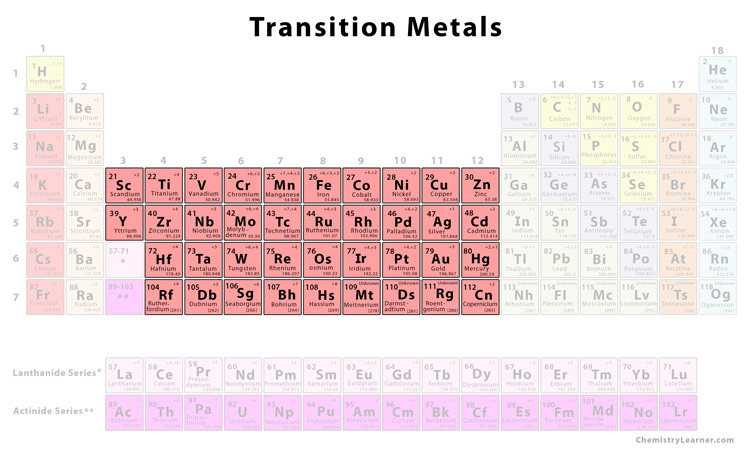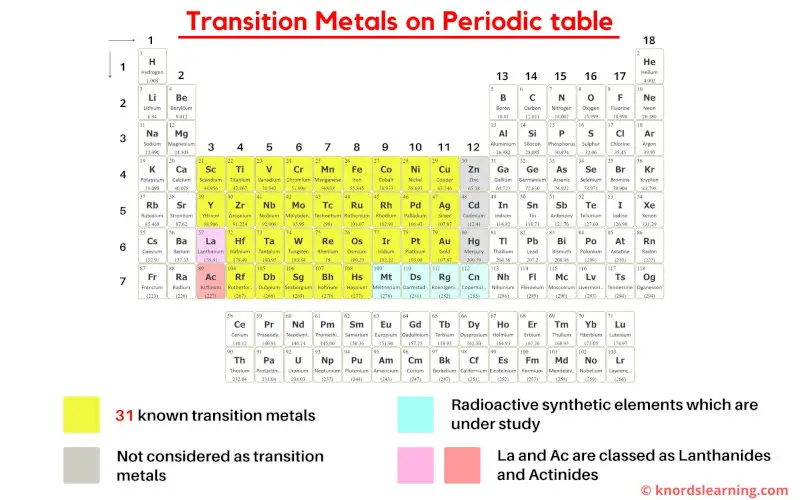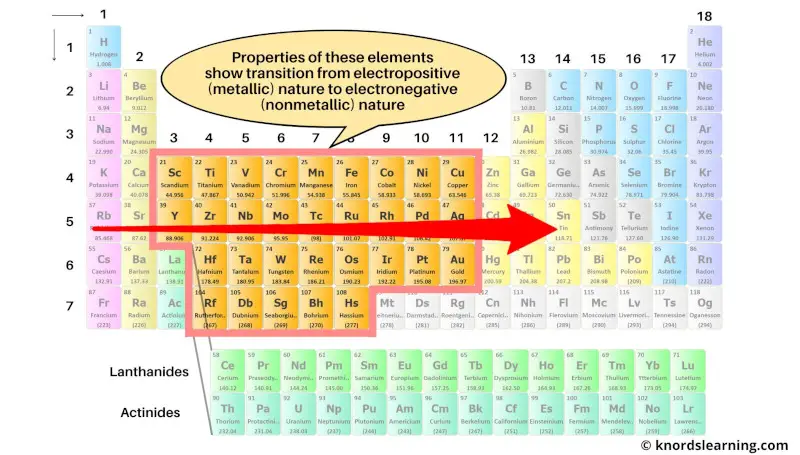
Ever wonder what's so special about those metals in the middle of the periodic table? The ones often called the transition metals? Get ready for a wild ride!
Unlocking the Mystery: Sublevels and the Transition Metals
Forget everything you thought you knew about boring science. We're diving into the chaotic, yet beautiful, world of electron filling! It's like a game of Tetris, but with tiny particles and mind-bending rules.
Think of atoms as tiny apartments. Each apartment has different rooms, or sublevels. These sublevels are named s, p, d, and f.
Now, imagine electrons are the tenants. They fill up these sublevels in a specific order. But with transition metals, things get interesting!
The Drama of the d-Sublevel
The d-sublevel is where the real action happens. It’s got five different "rooms," each holding two electrons. That's a potential for ten electrons to reside in the d-sublevel!
With transition metals, the filling of this d-sublevel is not always predictable. It’s like watching a reality show where the contestants constantly change their minds. Buckle up!
We expect electrons to fill the sublevels in a straightforward manner. 1s, then 2s, then 2p, and so on. However, the d-sublevel filling throws a wrench in the machine.
Why the Fuss? Energy Levels and Electron Preferences
It all comes down to energy levels. Electrons prefer to be in the lowest energy state possible. Makes sense, right? Who wants to be stressed?
Sometimes, it’s energetically more favorable for an electron from the *s-sublevel* to jump over to the *d-sublevel*. This is where the exceptions pop up, making things so exciting.
Think of it as a strategic move. The atom decides a slightly less-filled *s-sublevel* and a more-filled *d-sublevel* is the best configuration for stability. It's all about minimizing that electron stress!
Chromium and Copper: The Rule-Breakers We Love
Let's meet some of the stars of our show! Chromium (Cr) and Copper (Cu) are notorious for their unusual electron configurations. They are the rebels of the periodic table!
Instead of following the predicted pattern, they steal an electron from the *s-sublevel* to achieve a half-filled or completely filled *d-sublevel*. It's like they're saying, "Rules? What rules?"
For example, we'd expect Chromium to have the electron configuration [Ar] 4s2 3d4. But it's actually [Ar] 4s1 3d5! A half filled d-sublevel is more stable, so it gets one electron from 4s orbital.
Similarly, Copper, which we expect to be [Ar] 4s2 3d9, is actually [Ar] 4s1 3d10. A filled d-sublevel is also more stable, and gets one electron from 4s orbital.
It might seem confusing, but it shows the complexity and fascinating nature of quantum mechanics. These exceptions aren't random; they're driven by the fundamental laws of physics.
Half-Filled and Fully-Filled: The Stability Craze
Why this obsession with half-filled and fully-filled *d-sublevels*? The answer lies in electron-electron interactions and symmetry. Don't worry, we won't get too technical!
Essentially, having all electrons with the same spin in a *d-sublevel* (half-filled) or having all the “rooms” occupied (fully-filled) creates a more symmetrical and stable arrangement. Symmetry makes everything better!
Imagine a perfectly balanced scale versus one that’s slightly tilted. The balanced scale is more stable, right? That's kind of what's happening with the electrons.
Colors, Magnetism, and More!
This unusual electron filling has amazing consequences! It's responsible for the vibrant colors of many transition metal compounds. Think of the blues of copper salts or the greens of nickel solutions.
The partially filled *d-sublevels* also give rise to interesting magnetic properties. Some transition metals are strongly magnetic, like iron, while others are not.
So, the next time you see a colorful gemstone or a powerful magnet, remember the electron shenanigans happening at the atomic level! These fascinating properties are also exploited in catalytic converters.
Beyond the Basics: Lanthanides and Actinides
And just when you thought it couldn't get any weirder, there are the lanthanides and actinides! These elements involve the filling of the *f-sublevel*, which is even more complex.
The *f-sublevel* has seven "rooms," so there are even more possibilities for electron arrangements. This leads to a whole new level of chemical behavior and properties!
These elements are like the special guests on our reality show. Their presence spices things up and keeps us on the edge of our seats.
Why Should You Care?
Okay, so electron configurations might not seem like the most exciting topic at first glance. But they are fundamental to understanding the world around us!
This knowledge helps us design new materials with specific properties. From stronger alloys to better catalysts, the possibilities are endless.
Understanding these electron filling rules helps us understand the reactivity of the elements. It helps us to engineer better materials to solve many of the worlds challenges.
Ready to Explore Further?
This is just a glimpse into the fascinating world of electron filling in transition metals. There's so much more to discover!
Dive deeper into the periodic table, explore quantum mechanics, and unlock the secrets of matter. You might be surprised at what you find!
So, are you ready to embrace the chaos and explore the beauty of electron configurations? It's a journey you won't regret!
Don't be intimidated by the jargon or the complexity. Start with the basics, ask questions, and let your curiosity guide you. The universe is waiting to be explored!
"The important thing is not to stop questioning. Curiosity has its own reason for existing." - Albert Einstein
Maybe you'll even discover a new element or invent a groundbreaking technology based on your newfound knowledge. The sky's the limit!
What are you waiting for? Let's dive in! The world of chemistry and the properties of the periodic table are waiting to be explored.
Remember: learning about the electron configurations is not just memorization, but an opportunity to marvel at the elegant and intricate workings of the universe.
Happy exploring! And may the odds be ever in your favor as you navigate the fascinating world of *d-sublevels*, *f-sublevels*, and the amazing transition metals.