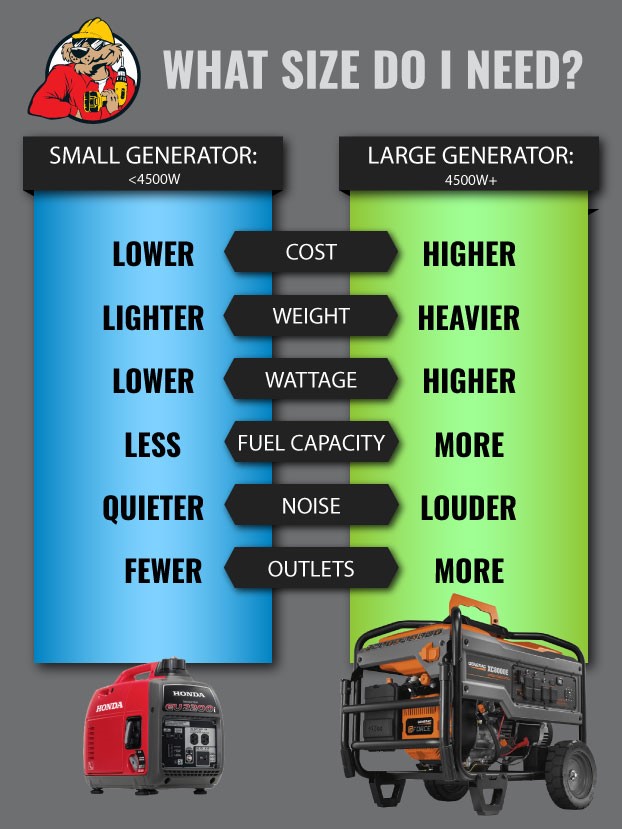
So, you're thinking about getting a generator, huh? Smart move! Power outages are *the worst*. But before you run out and buy the biggest, loudest, gas-guzzling monster you can find (resist that urge!), let's figure out what size generator you *actually* need. No point in overspending, right? Plus, your neighbors will thank you for not waking them up with a ridiculously overpowered machine.
First Things First: The Wattage Puzzle
Okay, let's talk watts. This is the key. Think of watts like the "energy currency" your appliances use. Everything from your fridge to your phone charger draws a certain amount of watts to function. Your generator needs to be able to supply *at least* that much power.
Now, where do you find this magical wattage information? Look for the appliance's label. It's usually on the back, the bottom, or somewhere equally inconvenient. You're looking for something that says "watts" or "W." Found it? Awesome! If you only see amps (A) and volts (V), don't panic! Just multiply them together: Amps x Volts = Watts. (Remember back in high school? Math *does* come in handy sometimes!)
Pro Tip: Keep a notebook (or, you know, your phone) handy to jot down the wattage of all the appliances you might want to run on the generator. Organization is key!
Starting Watts vs. Running Watts: The Sneaky Twist
Here's a little curveball: starting watts and running watts. Some appliances, especially those with motors (like refrigerators, air conditioners, and power tools), need a *burst* of power to get started. This is the starting wattage, and it's usually higher than the running wattage (the power they need to keep running smoothly).
Ignoring this is a classic generator-buying mistake. Imagine your generator can handle the running watts of your fridge just fine... but it chokes and dies when the fridge tries to kick on. Awkward! So, you need to account for the highest starting wattage among your essential appliances. (Probably that grumpy old refrigerator…)
The "Essentials Only" Strategy
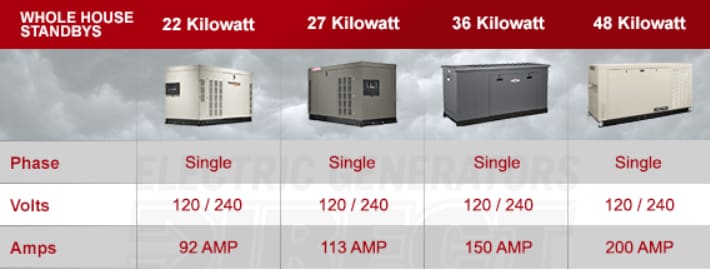
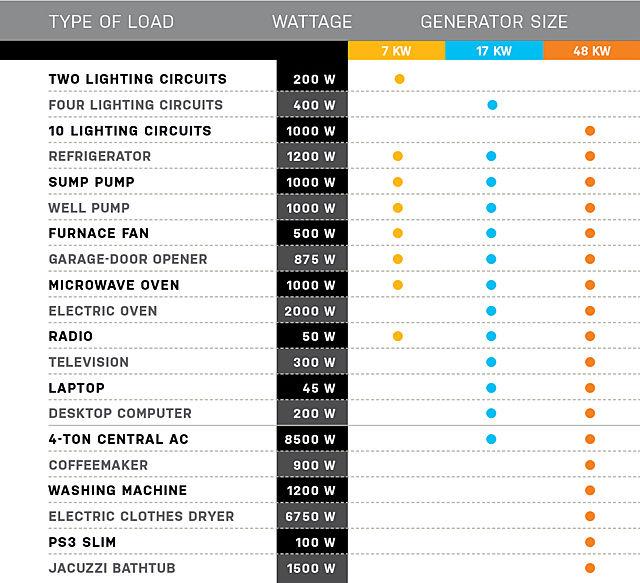
Unless you're planning on powering your entire house during a blackout (which is a whole different level of generator we're talking about, and probably requires professional installation), you'll likely want to focus on the essentials. What *absolutely* needs power to keep you comfortable and safe? Think:
- Refrigerator: Keeps your food from spoiling (and your ice cream from melting!).
- Lights: So you're not stumbling around in the dark. A few strategically placed lamps are usually enough.
- Heating/Cooling: Depending on the season, a space heater or a window AC unit can be a lifesaver.
- Medical Devices: If you rely on any medical equipment that requires electricity, this is *absolutely* a top priority.
- Phone Charger: Gotta stay connected, right? Plus, you might need to call for help.
Leave the non-essentials (like your giant TV and your fancy espresso machine) off the list… at least to start with. You can always add them later *if* your generator has enough capacity.
Adding It All Up: The Grand Total
Alright, time for some more (relatively easy) math! Add up the running wattage of all the appliances you want to run simultaneously. Then, identify the appliance with the highest starting wattage and add the *difference* between its starting wattage and running wattage to the total. This gives you a rough estimate of the minimum generator size you need.
Example:
- Refrigerator (Running: 200W, Starting: 800W)
- Lights (Running: 100W)
- Phone Charger (Running: 10W)
Total Running Watts: 200W + 100W + 10W = 310W
Starting Wattage Adjustment: 800W (Refrigerator Starting) - 200W (Refrigerator Running) = 600W
Minimum Generator Size: 310W + 600W = 910W
Important: It's always a good idea to add a little extra headroom, say 10-20%, to your calculation. This way, you won't be pushing your generator to its absolute limit, which can shorten its lifespan and potentially damage your appliances. So, in our example, you'd probably want a generator that can handle at least 1000W (1kW).
A Few Final Thoughts (Because Why Not?)
Choosing the right size generator can seem daunting, but it's really just about doing a little homework and understanding your power needs. Don't be afraid to ask questions at the store (they're there to help!). And remember, it's better to err on the side of caution and get a generator that's slightly *too big* than one that's hopelessly undersized.
Happy generating! (And may your power outages be short and sweet!).