
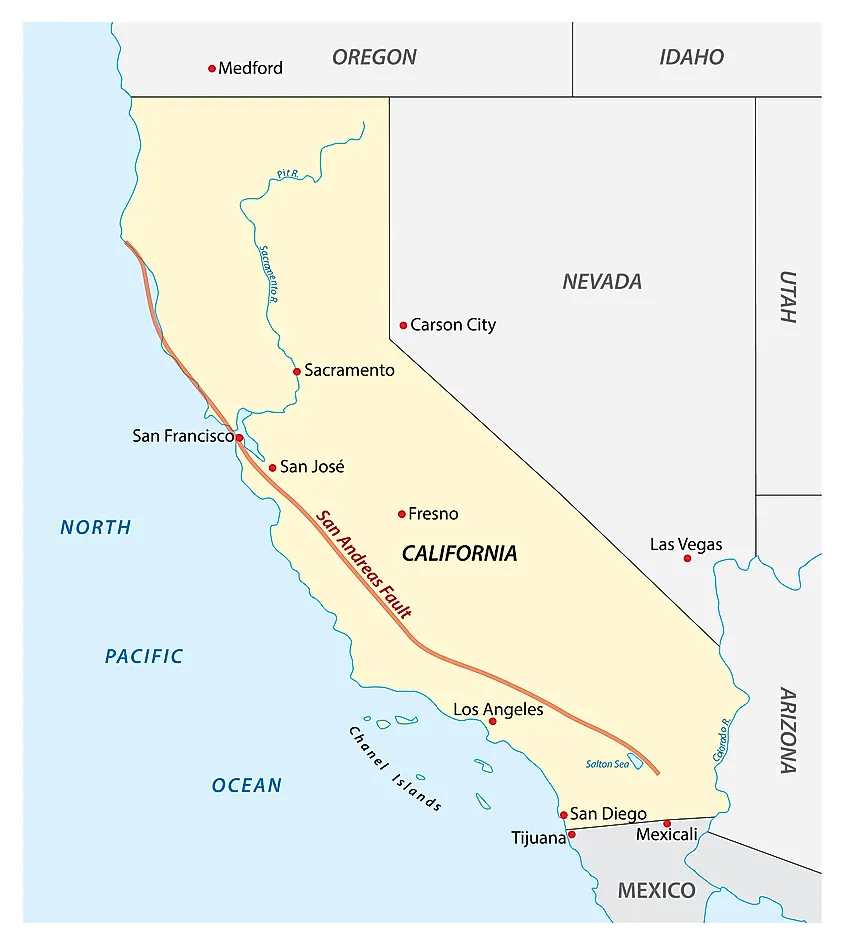
Okay, let's talk about the San Andreas Fault. That infamous crack in the earth that keeps California on its toes. But who actually lives close enough to feel the earth wiggle?
We're diving into a little geographical gossip, folks. Prepare for some potentially unsettling, yet undeniably interesting, information.
The Big Players: Cities Near the Fault Line
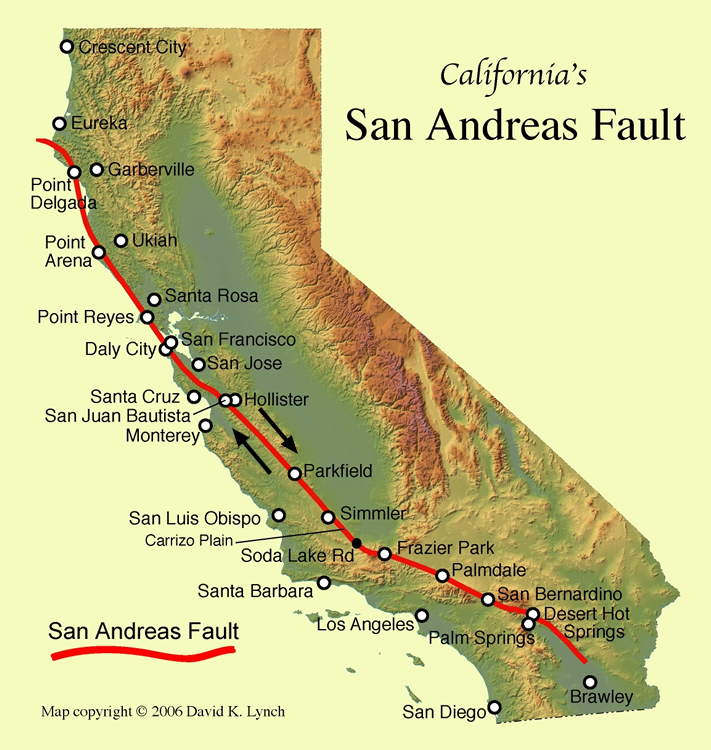
San Francisco: The "Almost" Winner
San Francisco is always mentioned. But it's not directly on the fault. Hear me out: I have an unpopular opinion. San Francisco gets all the earthquake spotlight, when other places are closer to the epicenter of anxiety.
It's close enough to worry, sure. But maybe, just maybe, SF gets a little overhyped in the earthquake department.
Los Angeles: A Little Further, But Still in the Game
Los Angeles is another big name. It's located near the southern end. The fault line is lurking nearby ready to make its presence known.
It's further from the "creeping" section of the fault. However, the potential "Big One" is what keeps Angelenos up at night (besides traffic, of course!).
San Jose: Silicon Valley's Shaky Secret
San Jose? Often overlooked. But the fault definitely cuts through the area. Maybe all that tech keeps the shaking a secret.
It's in a seismically active region. So, next time your app crashes, blame the San Andreas. I'm just saying!
San Bernardino: East of LA, Still Feeling the Vibes
San Bernardino is east of Los Angeles. It's definitely within the fault's sphere of influence. Don't let the sunshine fool you.
The area is no stranger to tremors. It's a constant reminder that Mother Nature is in charge.
Palm Springs: Desert Oasis With a Tectonic Twist
Palm Springs? Sun, relaxation, and...earthquakes? Yep! The fault runs right through the Coachella Valley. Talk about an unexpected twist.
Imagine sipping a margarita. Then feeling the ground tremble. Adds a little spice to your vacation, doesn't it?
Smaller Cities and Towns: The Unsung Shakers
Beyond the big cities, tons of smaller towns live even closer to the San Andreas Fault. These communities often bear the brunt of smaller quakes. They are the unsung heroes of seismic activity.
Think places like Parkfield, known as the "Earthquake Capital of the World". Or Hollister, where the streets literally creep along the fault. It’s literally a town that moves!
Unpopular Opinion Time: Perspective Please!
Okay, here's where I might lose some of you. But I believe other places are truly closer to the more active parts of the fault. Some get way less attention.
We often focus on the big names like San Francisco and Los Angeles. However, smaller communities are often at greater risk. They just don't make the headlines as often.
I mean, let's be real, a magnitude 6.0 in Parkfield isn't going to make international news. But for the people who live there? It's their reality.
Why the Focus on Big Cities?
Why all the focus on major cities? It's simple: population density and economic impact. More people and more businesses mean more potential damage.
A major earthquake in Los Angeles would have ripple effects across the entire country. That's why it's always the top concern.
Media loves a good disaster story, especially if it involves a famous landmark. It's just the way the world works.
Living With the Fault: It's Just Part of Life
For many Californians, living near the San Andreas Fault is just a fact of life. They learn to adapt and prepare. Earthquakes are part of the California experience.
It's like living in Florida with hurricanes. Or in the Midwest with tornadoes. You just have to be ready for anything.
And honestly, sometimes the anticipation is worse than the actual shaking. The constant "what if" can be exhausting.
Earthquake Preparedness: A Few Tips
Whether you live in a major city or a small town, being prepared is crucial. Here are a few basic tips to keep in mind.
- Have an emergency kit with water, food, and first-aid supplies.
- Know the safe spots in your home or office.
- Practice drop, cover, and hold on.
- Stay informed about earthquake risks and preparedness resources.
The Future: What to Expect
Scientists are constantly studying the San Andreas Fault. Their goal is to better understand earthquake risks and improve forecasting.
While predicting the exact timing of an earthquake is impossible, researchers are making progress. They hope to provide better warnings in the future.
Until then, it's up to each of us to be prepared and stay informed. Because when the earth moves, it's better to be safe than sorry.
Final Thoughts: A Shaky Conclusion
Living near the San Andreas Fault is a gamble. But it's a gamble that millions of people are willing to take. The California dream is strong, even if the ground beneath it is a little shaky.
So, the next time you hear about an earthquake in California, remember the smaller cities and towns too. They're all part of the story.
And maybe, just maybe, consider moving to Kansas. Just kidding...mostly!
:max_bytes(150000):strip_icc()/sanandreasmap-1000x1500-57ec123c3df78c690f4d0832.jpg)

:max_bytes(150000):strip_icc()/aerial-view-direction-of-view-is-from-the-northwest-to-the-southeast-of-san-andreas-fault-near-taft-california-usa-177242210-57ebfd553df78c690f375ae8.jpg)