Okay, picture this: I'm trying to move my ridiculously heavy couch across the living room. I'm pushing, grunting, practically giving myself a hernia. My friend walks in, takes one look at me struggling, and says, "Dude, you need more... force." Thanks, Captain Obvious! But it got me thinking, how do we even measure that 'force' I was so desperately lacking? Is it like, "Oh, I applied, like, three 'aughs' of force?" Clearly not. So, let's dive into this force thing, shall we?
The Mighty Newton: Our Unit of Force
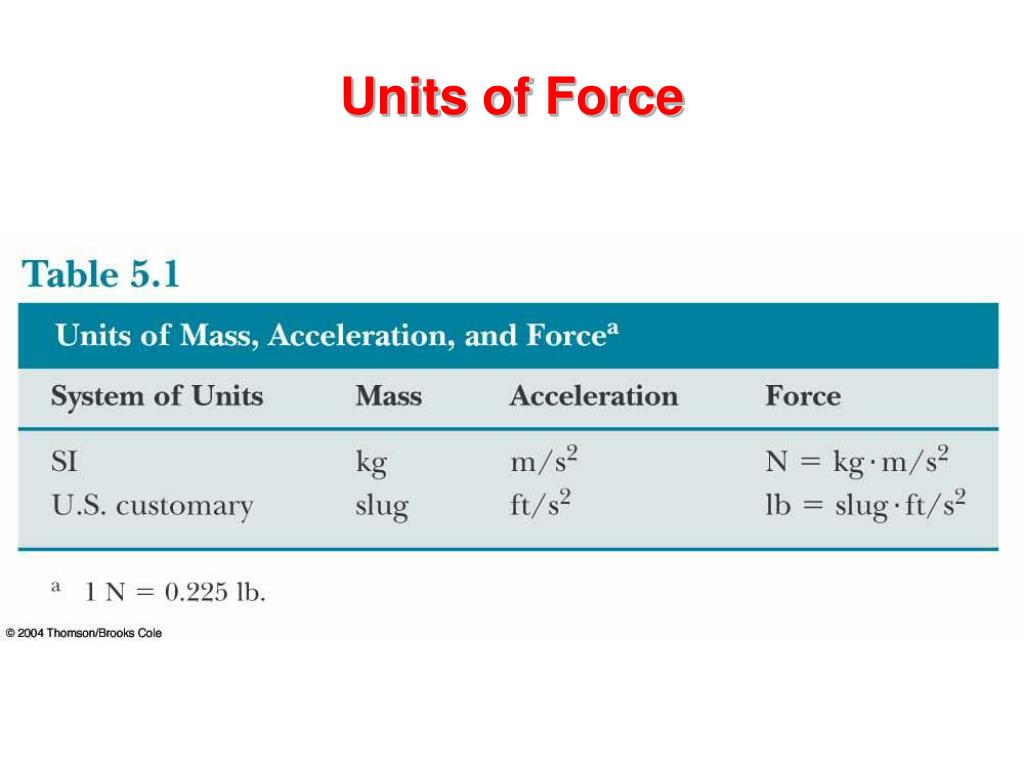
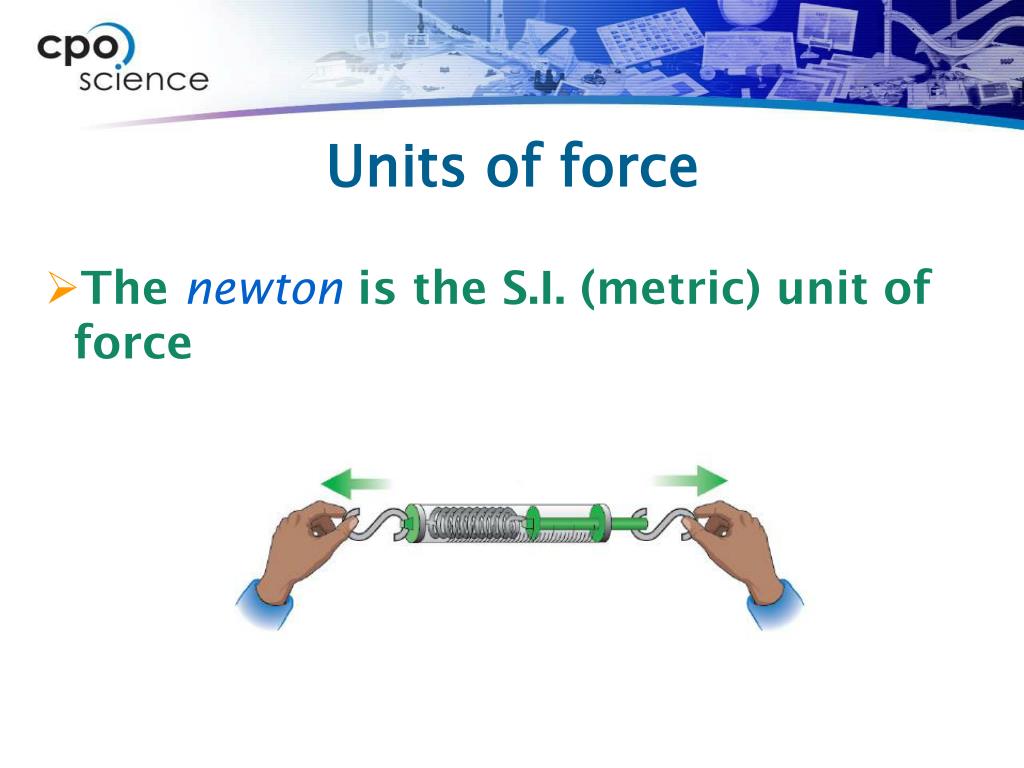
So, what *is* the unit measure of force? Drumroll please... It's the Newton, cleverly abbreviated as N. Named after the OG physicist, Isaac Newton himself (you know, the apple guy), it's a pretty important unit to understand, especially if you're ever planning on, say, launching a rocket into space (or, you know, just moving your couch).
But what *exactly* is a Newton? It's not just some random number someone pulled out of a hat, I promise. A Newton is defined as the amount of force required to accelerate a 1 kilogram mass at a rate of 1 meter per second squared. Sounds a bit technical, right? Let's break it down.
Think of it like this: you've got a kilogram of, I don't know, bananas (everyone loves bananas, right?). To get those bananas moving faster and faster, specifically increasing their speed by 1 meter per second every second (that's the acceleration part), you need to apply 1 Newton of force. Simple, right? (Okay, maybe not *simple*, but hopefully a little clearer!)
Why the Newton Matters
The Newton is crucial because it’s part of the SI (International System of Units) system. This means it's a standard, universally recognized way to measure force, no matter where you are in the world. It ensures scientists, engineers, and even couch-movers (like yours truly) are all speaking the same language. Imagine the chaos if everyone used their own arbitrary units of force! We'd be back in the Dark Ages of measurement.
Using Newtons allows us to calculate and predict how objects will move under different forces. Want to know how much force a car engine needs to produce to reach a certain speed? Newtons. Need to calculate the gravitational force between the Earth and the Moon? Newtons again! Basically, if force is involved, Newtons are there to help.
Speaking of gravity, that's another place where Newtons pop up. Remember that apple? The force of gravity pulling that apple to the ground can be measured in Newtons. In fact, on Earth, the force of gravity acting on a 1 kg mass is approximately 9.8 Newtons. So, those bananas we talked about earlier? They're being pulled downwards with about 9.8 Newtons of force. (And now you know! Bet you never thought you'd learn banana physics today.)
Beyond the Newton: Other Units of Force (That We Mostly Ignore)
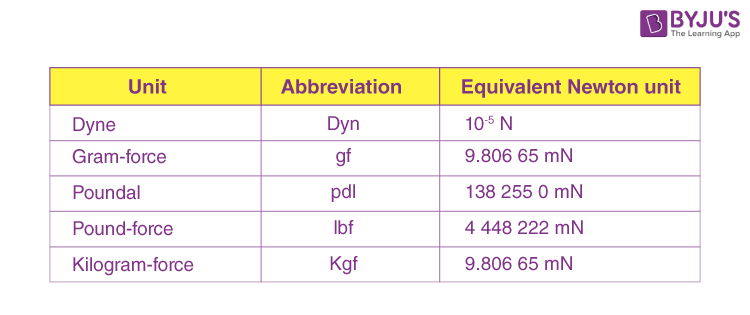
While the Newton is the standard, there are other units of force out there. You might occasionally stumble across terms like pounds-force (lbf), especially in the US. Don't get me started on the imperial system... (Okay, maybe a *little* started. Why do we need feet and inches when we have perfectly good meters and centimeters?!). While Pounds-force are still in use in certain contexts (like, say, measuring tire pressure or thrust of some engines), stick with the Newton. It's the universal language of force!
Also, you might see the term dyne, which is a unit of force in the centimeter-gram-second (CGS) system. It's smaller than a Newton (1 Newton = 100,000 dynes), and honestly, it's mostly used in older scientific literature. You probably won't encounter it too often unless you're digging through dusty archives. But hey, now you know!
So, next time you're pushing something heavy (like that darn couch), remember the Newton. It's not just a name; it's a real, measurable unit of force that helps us understand the world around us. And maybe, just maybe, knowing about Newtons will give you the extra *oomph* you need to finally get that couch moved! (Or, you know, just hire movers. No shame in that!)