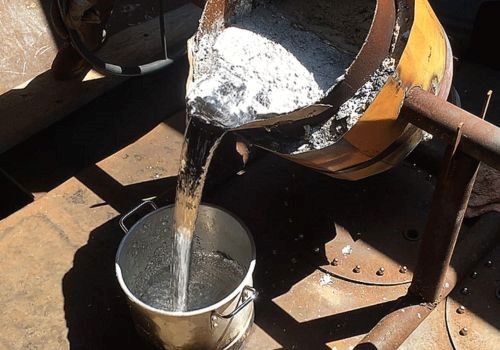
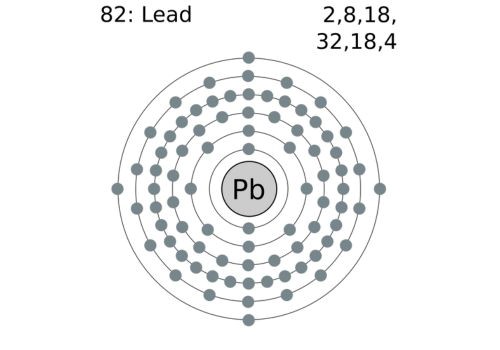
Okay, folks, let's talk about something seriously cool – or rather, seriously hot! We're diving into the world of melting points, specifically, the melting point of good ol' lead.
You might be thinking, "Lead? Isn't that, like, kinda boring?" But trust me, once you understand how this stuff melts, you'll be the star of your next trivia night.
What Exactly Are We Talking About?
First things first, what is a melting point? Imagine you've got an ice cube. It's solid, right? Then you leave it out on a summer day, and *poof*, it turns into water!
That exact temperature where solid turns to liquid? That's the melting point! It's like a secret temperature password that unlocks a substance's liquid potential.
And lead? Well, it has its own secret password too.
The Magic Number: 327.5 Degrees Celsius (621.5 Degrees Fahrenheit)
Here it is, the moment you've all been waiting for! The melting point of lead is 327.5 degrees Celsius, or 621.5 degrees Fahrenheit.
Memorize it, tattoo it on your arm (kidding… mostly), because this is important stuff! This is the temperature where solid lead waves goodbye to its rigid form and slips into a molten, liquid state.
Think of it like this: Lead is throwing a "liquidation" party, and 327.5°C (621.5°F) is the entry fee!
Putting It Into Perspective: Is That Hot?
Now, 327.5°C might sound like a lot (and it is!), but let's put it in perspective. Water boils at 100°C (212°F). So, lead needs to be over three times hotter than boiling water to melt!
Imagine trying to take a bath in that – yikes! You’d be needing more than just a rubber ducky; you'd need a full-body heat shield and a team of paramedics on standby.
Your oven, even when set to its highest self-cleaning temperature, usually doesn't reach these scorching heights.
Everyday Examples (Sort Of)
Okay, you probably won't be melting lead in your kitchen anytime soon. (Seriously, don't.) But where do we see these kinds of temperatures in action?
Well, think about soldering. Soldering involves melting a lead-tin alloy to join metal parts. That’s why you need a soldering iron that can reach those high temperatures!
Also, in some industrial processes, lead is melted for various applications, like casting or creating certain types of batteries.
And... well, maybe you saw it melt in a cartoon once? Let's just say you're more likely to encounter molten cheese before you encounter molten lead in your everyday life.
Why Does The Melting Point Matter?
You might still be wondering, "So what? Why should I care about the melting point of lead?" Good question!
Knowing a material's melting point is crucial in all sorts of engineering and manufacturing processes. It helps engineers choose the right materials for specific applications.
For example, if you're building something that's going to be exposed to high temperatures, you wouldn't want to use lead unless you specifically needed it to melt at that temperature! Imagine building a rocket out of chocolate: fun in theory, catastrophic in practice.
Lead's Other Interesting Properties
Lead is not just defined by its melting point. It is a dense and soft metal. This softness makes it easily malleable, meaning it can be hammered or pressed into shape without breaking.
It's also known for its high density, which makes it great for things like weights and radiation shielding. In fact, lead is so good at blocking radiation that it's often used to line the walls of hospitals and laboratories.
Plus, lead is surprisingly resistant to corrosion, which means it can last for a very long time, even in harsh environments.
Fun Facts About Melting Points In General
Did you know that every substance has its own unique melting point? It's like a fingerprint for materials!
Some substances, like water, have relatively low melting points, while others, like tungsten (used in light bulb filaments), have incredibly high melting points. Tungsten melts at a whopping 3,422°C (6,192°F)!
And get this: pressure can also affect a substance's melting point! Increase the pressure, and the melting point might change slightly.
Lead And Safety
While lead has some useful properties, it's also important to remember that it can be toxic. Exposure to lead can be harmful, especially to children.
That's why lead has been phased out of many products, like paint and gasoline. If you're working with lead, it's crucial to take proper safety precautions, like wearing gloves and a respirator.
Think of it like handling a grumpy dragon: respect its power and take precautions to avoid getting burned!
A Quick Recap
So, let's quickly recap what we've learned about the melting point of lead.
The melting point of lead is 327.5°C (621.5°F). This is where solid lead transforms into liquid lead.
Knowing this temperature is important for various applications, from soldering to industrial processes. And while lead has some interesting properties, it's also important to handle it safely.
Final Thoughts
Hopefully, this little journey into the world of lead melting points has been both informative and entertaining! Remember, science doesn't have to be boring.
It's all about exploring the world around us and understanding how things work. And who knows, maybe you'll even impress your friends with your newfound knowledge of lead!
Now, go forth and spread the word about the amazing melting point of lead! You're now officially a lead-melting-point expert (or at least, you know more than you did five minutes ago!).
Bonus Fun Fact
Did you know that scientists use sophisticated instruments called calorimeters to precisely measure the melting points of different materials? These devices allow them to determine exactly how much heat is required to transform a solid into a liquid.
It's like a super-accurate thermometer, but instead of just measuring temperature, it measures heat flow.
These calorimeters help us understand all sorts of things, from the properties of new materials to the energy content of foods.
Another Quick Fact
The melting point of lead can be slightly affected by impurities. Even a small amount of another metal mixed in with the lead can change its melting point by a degree or two.
This is why it's important to use pure lead in experiments where you need a precise melting point. The purer the lead, the more accurate the results.
It's like baking a cake: the quality of the ingredients affects the final product!
Thinking About Alloys
Lead is often alloyed with other metals to create materials with specific properties. For instance, solder is typically an alloy of lead and tin.
The melting point of an alloy is usually different from the melting points of its constituent metals. This is because the different atoms interact with each other in a way that changes the overall energy required to melt the material.
By carefully controlling the composition of an alloy, engineers can tailor its melting point to suit a particular application. Isn't science amazing?