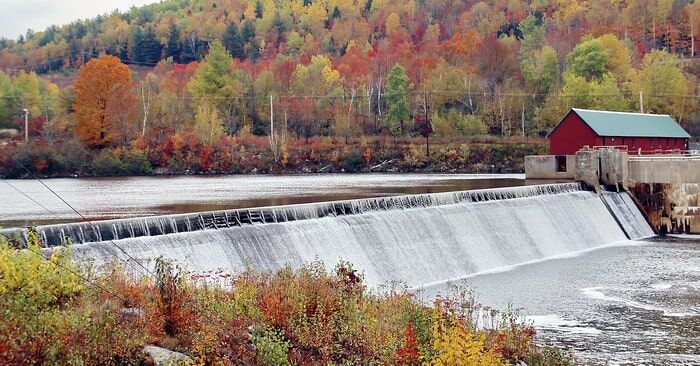
Alright, gather 'round, friends! Let's talk about hydroelectric power. You know, that "clean" energy source that conjures up images of happy salmon leaping upstream past glistening dams? Yeah, well, hold your horses (or should I say, hold your salmon?). It's not *quite* as squeaky clean as the brochures make it out to be.
Think of hydroelectric power like that friend who always offers to help you move. They're super enthusiastic at first, but then you discover they "accidentally" broke your favorite lamp and maybe rearranged your furniture in a... *unique* way. Good intentions, questionable execution, right?
The Good Stuff (Like, Really Good!)
Okay, let's be fair. Hydroelectric power does have its perks. It's a renewable energy source. The sun (that giant fusion reactor in the sky) constantly refills our water reservoirs. No solar panel factories needed for that part, at least!
And when the water does flow through those turbines, spinning them like a hyperactive hamster on a wheel, it generates electricity without spewing out tons of greenhouse gases into the atmosphere. In the world of energy production, it's like the vegan option at a barbecue – a slightly less smoky, more environmentally conscious choice. Much better for the environment than burning coal that's been sleeping for millions of years.
Plus, it's pretty darn efficient. Once a dam is built, the energy it generates is relatively cheap. Think of it as buying in bulk at Costco...but instead of an enormous bag of chips, you're getting a lifetime supply of electricity.
The, Uh, *Less* Good Stuff (The Environmental Drama)
Here's where things get a little...messy. Building a dam is basically like rearranging an entire river's life. Imagine someone building a giant wall across your favorite park. You wouldn’t be too thrilled, would you?
First, there's the whole displacement thing. When you dam a river, you create a reservoir. Which means… flooding a vast area of land. Think villages, forests, ancient burial grounds – all going for a swim! Sorry, trees, your services are no longer needed. We have electricity now!
Then, there are the fish. Oh, the poor, confused fish. Salmon, in particular, are famous for their upstream migrations to spawn. Dams are like a giant, concrete "NO U-TURN!" sign. Some dams have fish ladders (little watery staircases), but they're not always effective. Imagine trying to climb a ladder while battling strong currents and hungry bears. Good luck, little buddies!
And it's not just the fish. Entire ecosystems are disrupted. Water temperature changes, nutrient flows get altered, and the riverbed itself gets transformed. It's like performing open-heart surgery on the planet, but the patient (the river) isn't always given the best post-op care.
Methane Mayhem (The Super Secret Environmental Villain!)
Here's a fact that might surprise you: large reservoirs can actually release significant amounts of methane, a potent greenhouse gas. As organic matter (think drowned trees and vegetation) decomposes underwater, it produces methane. And that methane bubbles up into the atmosphere, contributing to global warming. Who knew that a "clean" energy source could have such a gassy secret?
It's like discovering that your healthy-looking smoothie is actually loaded with sugar and artificial flavorings. Sure, it *seems* good, but there's a hidden nastiness lurking beneath the surface. But you wouldn’t give up all smoothies, right? Let’s not throw the baby out with the bathwater!
The Verdict? (Drumroll, Please!)
So, is hydroelectric power good or bad? The answer, as always, is a resounding "it depends!" Large-scale dams can have significant environmental impacts. They’re like the monster trucks of energy – powerful, but prone to collateral damage.
Smaller, run-of-river hydro projects, on the other hand, can be more environmentally friendly. They don't create large reservoirs and have less impact on fish populations. But they also generate less electricity. Think of them as the sensible sedan of the energy world – less flashy, but more practical.
The future of hydroelectric power lies in finding ways to minimize its environmental impact. That means better fish ladders, more careful site selection, and exploring alternative technologies like pumped storage hydro (which basically uses excess electricity to pump water uphill, creating a giant battery). We need to work *with* nature, not against it, to ensure that our pursuit of clean energy doesn't turn into an environmental disaster. Because, let's be honest, nobody wants to live in a world powered by guilt-inducing, eco-unfriendly electricity. Let’s bring harmony to humans and nature!