

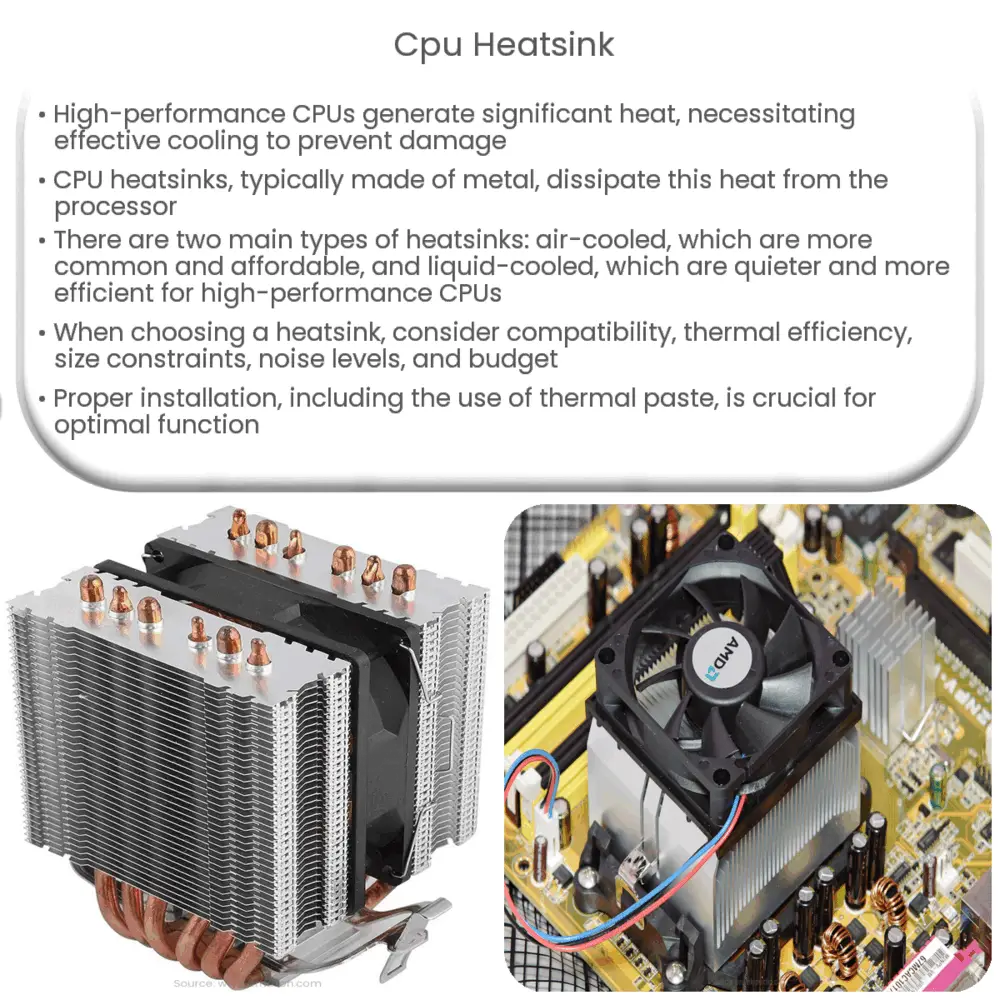
Ever wondered what that weird, often metallic, thing sticking out of your computer's insides is? The one that kind of looks like a futuristic city skyline? Chances are, you're looking at a heat sink! So, what exactly *is* a heat sink, and why is it so important?
Think of your computer's brain, the CPU (Central Processing Unit), as a tiny, incredibly hardworking athlete. It's constantly crunching numbers, running programs, and generally working its digital butt off. And just like a real athlete, all that activity generates heat. Lots of it!
Now, imagine that athlete running a marathon in a sauna. Not exactly ideal, right? Well, the same goes for your CPU. Too much heat can slow it down, make it glitch, and, in extreme cases, even fry it completely! Ouch! That's where our trusty friend, the heat sink, comes to the rescue.
What Does a Heat Sink *Do*?
In a nutshell, a heat sink is like a super-efficient radiator for your computer. Its job is to absorb the heat generated by the CPU (or other hot components, like the GPU - Graphics Processing Unit) and then dissipate it into the surrounding air. Think of it as the computer's built-in air conditioner.
But how does it actually *do* that? Well, it's all about surface area. The heat sink is designed with a large surface area, often with fins or other complex shapes. This allows it to expose a much larger area to the air, making it easier for the heat to transfer away from the hot component and into the surrounding environment.
Imagine trying to cool down a cup of hot coffee. Would it cool down faster if you left it in the cup, or if you spread it out thinly over a large plate? Exactly! The larger surface area allows the heat to escape much more quickly. The heat sink uses the same principle, but on a much smaller (and more technologically advanced) scale.
The Cool Materials (Literally!)
The materials used to make heat sinks are also crucial. Typically, they're made from metals with high thermal conductivity, like aluminum or copper. What does that mean? Simply put, these metals are really good at absorbing and transferring heat. Copper is generally better than aluminum, but it's also more expensive, so you'll often see a combination of both.
Ever touched a metal spoon that's been sitting in a hot bowl of soup? You'll notice it gets hot really quickly. That's because metal is a good conductor of heat. Heat sinks use this property to their advantage, quickly drawing heat away from the CPU and spreading it across their surface.
Heat Sink + Fan = A Dynamic Duo!
Often, you'll find a fan attached to the heat sink. This isn't just for show! The fan helps to actively move air across the heat sink's surface, further speeding up the heat dissipation process. It's like adding a breeze to that cup of coffee – it cools down even faster!
So, the heat sink absorbs the heat, and the fan blows it away. Together, they form a powerful cooling team that keeps your computer running smoothly and efficiently. Think of it as Batman and Robin, but for thermal management.
Why Should *You* Care?
Okay, so you know what a heat sink is and how it works. But why should you, the average computer user, even care? Well, a properly functioning heat sink can significantly impact your computer's performance and longevity.
Overheating can lead to:
- Slower performance: Your computer might start lagging and freezing.
- System crashes: Nobody likes the dreaded blue screen of death!
- Component damage: Excessive heat can permanently damage your CPU, GPU, or other components.
- Reduced lifespan: Consistent overheating can shorten the overall lifespan of your computer.
So, keeping your computer cool is essential for optimal performance and reliability. That's why the heat sink is such a crucial component.
More Than Just Computers
The interesting thing is, heat sinks aren't just found in computers. You'll find them in all sorts of electronic devices that generate heat, like power amplifiers, LED lighting, and even some car engines. They're a versatile and essential tool for managing heat in a wide range of applications.
Next time you peek inside your computer (carefully, of course!), take a moment to appreciate the humble heat sink. It might not be the flashiest component, but it's definitely one of the most important for keeping your digital world running smoothly. It's a silent, unsung hero, working tirelessly to keep your computer from melting down. And that's pretty cool, wouldn't you say?


.jpg)