Alright, buckle up buttercups, because we're about to dive into the surprisingly exciting world of... backfire flame arrestors! I know, I know, it doesn't exactly scream "thrilling," but trust me, this little gizmo is a hero in disguise, preventing potential fiery mayhem under your boat's hood (or your car's, in some cases, though we're mainly talking boats today!).
Think of your engine like a very hungry dragon. It's constantly inhaling air and fuel, mixing it all together, and then BOOM! - combustion happens, creating the power that gets you cruising (or, in the dragon's case, breathing fire). But sometimes, just sometimes, this dragon hiccups. And when a dragon hiccups fuel and fire... well, that's a backfire.
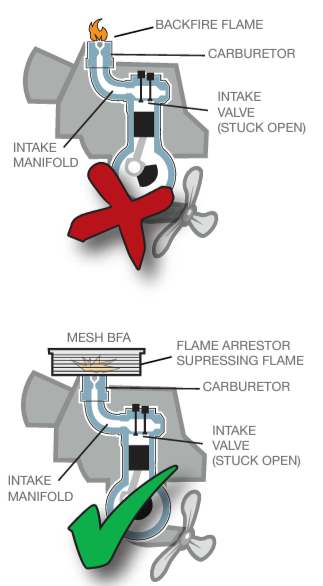
Now, picture this: You're happily motoring along, the sun's shining, the water's sparkling, and suddenly your engine lets out a cough. A *fiery* cough. Not good, right? That backfire could send flames shooting back up the intake manifold, potentially igniting all that lovely, flammable fuel vapor hanging out in there. Kaboom!
Enter the Flame Arrestor: Your Engine's Bodyguard
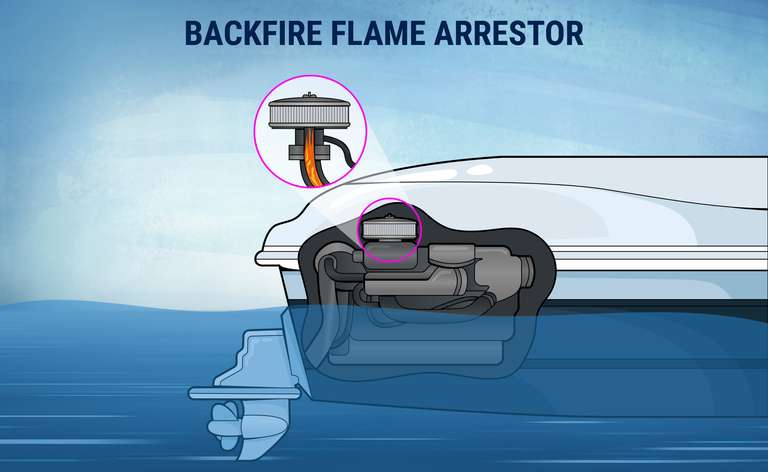
This is where our unsung hero, the flame arrestor, swoops in to save the day. It's essentially a finely crafted, usually metal, mesh filter that sits on top of your carburetor or throttle body. It acts like a tiny, but incredibly effective, bouncer at the door of your engine's intake.
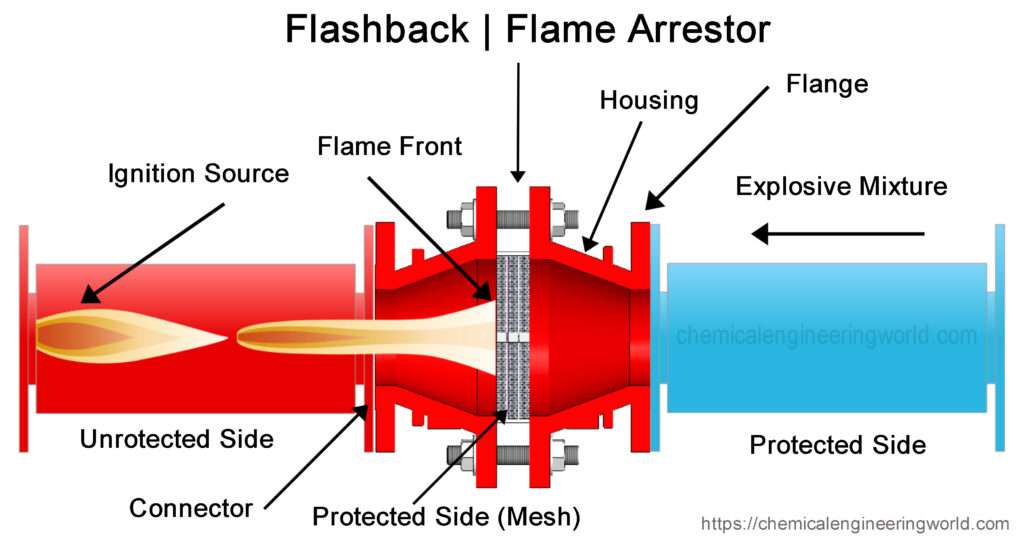
Think of it like this: imagine trying to throw a lit match through a screen door. Pretty tough, right? The mesh breaks up the flame, cooling it down and preventing it from passing through. That's exactly what the flame arrestor does! It stops the backfire flame dead in its tracks, preventing it from reaching the fuel vapors and causing a much bigger, potentially explosive, problem.
Why is this important? Because explosions on boats are generally frowned upon.
I'm not kidding. Boats tend to be made of fiberglass, which, while durable, is not exactly fireproof. Plus, you're surrounded by water, which is great for swimming but not so great for extinguishing a gasoline-fueled inferno. So, having a functioning flame arrestor isn't just a good idea; it's often the law. The Coast Guard takes this stuff seriously, and rightly so.
Now, you might be thinking, "My engine never backfires! I'm a perfect captain!" And maybe you are. But engines, like all of us, have their off days. A slight misfire, a lean fuel mixture, or even just a stray gremlin can cause a backfire. It's better to be safe than sorry, especially when you're surrounded by a giant pool of flammable liquid.
Maintenance is Key! (Don't Be That Guy)
Just like any other part of your boat, the flame arrestor needs a little TLC. Over time, it can get clogged with dirt, dust, and other gunk. A clogged flame arrestor is like a bouncer with one eye closed and a bad attitude – it's not going to do its job very well. Regularly inspect and clean your flame arrestor to ensure it's in tip-top shape. A little soap and water (and maybe a soft brush) will usually do the trick.
Imagine trying to breathe through a sock filled with dryer lint. That's essentially what your engine is trying to do with a dirty flame arrestor! Keep it clean, and your engine will thank you with smooth running and (hopefully) no fiery hiccups.
So, there you have it! The backfire flame arrestor: a small, unassuming device that plays a huge role in keeping you and your boat safe. It might not be the most glamorous part of your vessel, but it's definitely one of the most important. Next time you're out on the water, take a moment to appreciate this unsung hero. It's working hard to keep your dragon from breathing fire in all the wrong places.
And remember folks, a happy engine is a safe engine, and a safe engine is a backfire-arrestor-protected engine! Keep those flames where they belong – inside the engine, making power, and not exploding all over your boat!