Hey there, friend! Ever stared into the engine bay of your trusty car and felt like you were staring into the abyss? Yeah, me too. Especially when it comes to the battery. It's just… sitting there. But knowing what size battery your car needs? That's like unlocking a secret level in a video game. Don't worry, it's not as intimidating as it looks! Let's break it down.
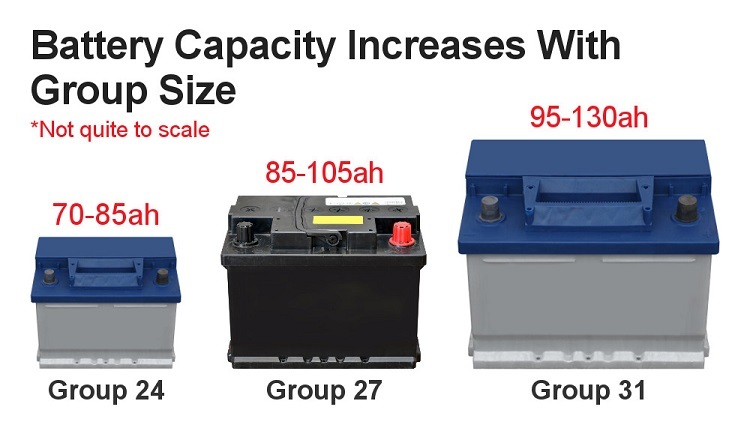
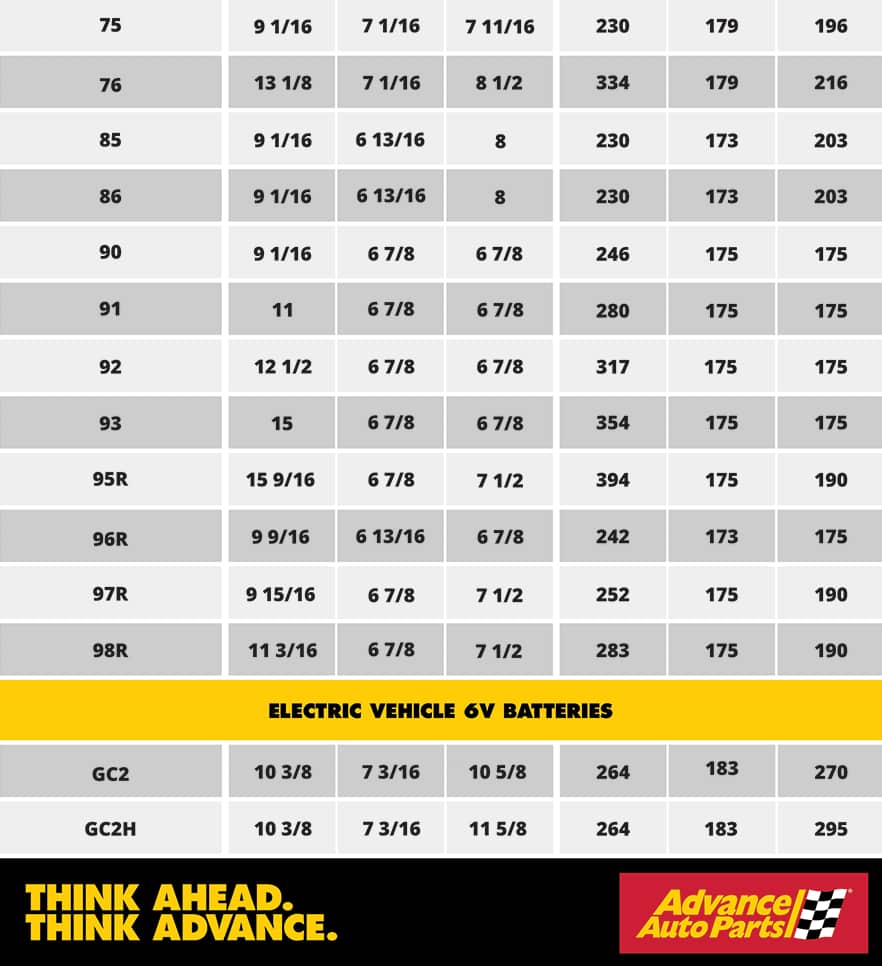
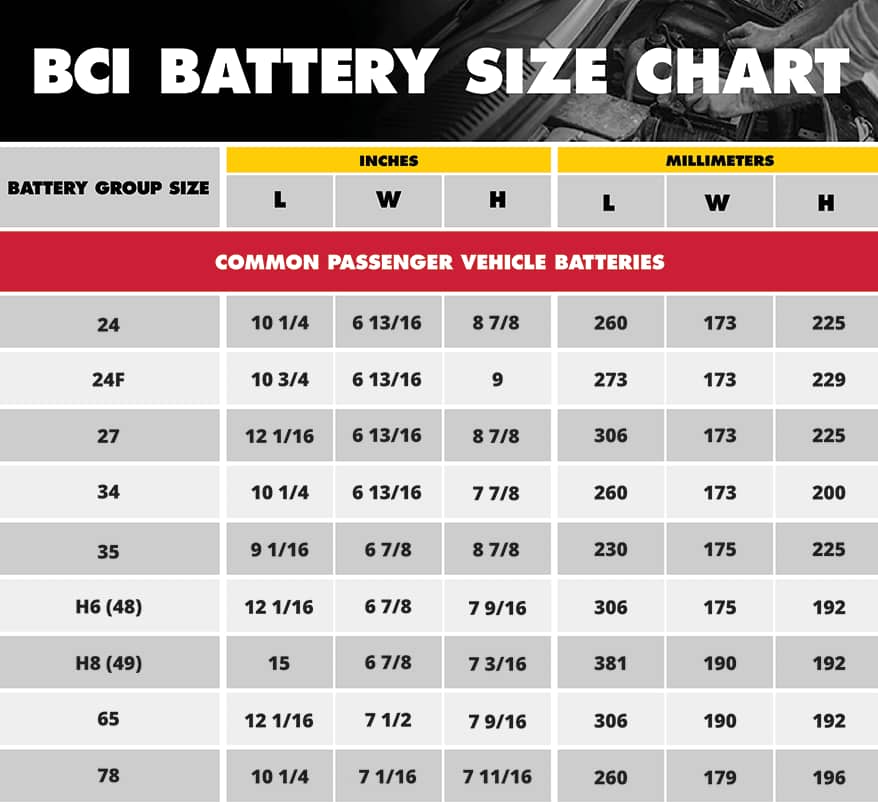
First things first: forget everything you think you know about car batteries. (Unless you're an actual battery expert, in which case, why are you reading this? Go invent something!) We're talking about group size, which is basically a standardized number that dictates a battery's physical dimensions and terminal placement. Think of it like shoe sizes. You wouldn't try to squeeze into a size 7 when you're clearly a size 10, right? (Unless you're into excruciating pain, then… you do you.)
Why Does Group Size Matter Anyway?
Okay, so why can't you just slap any old battery in there? Well, for starters, a too-small battery might not have enough cold cranking amps (CCA) to start your car, especially on a chilly morning. Imagine trying to run a marathon after only sleeping for an hour. Not gonna happen. And a battery that's too big simply won't fit properly in the battery tray. You'll be wrestling with it, and trust me, nobody wants that. Plus, an improperly secured battery can bounce around and cause damage. Nobody wants to replace more than just the battery!
It’s like trying to fit a square peg in a round hole, except this time the square peg is your battery and the round hole is your car's battery tray. Chaos will ensue!
Finding Your Car's Battery Group Size: Time for Some Sleuthing!
So, how do you figure out what group size your car needs? There are a few reliable ways:
- The Owner's Manual: This is your best friend. Seriously, read it! (I know, I know, nobody reads manuals, but this time, it's worth it.) The manual will usually specify the correct battery group size.
- Online Lookups: Most auto parts stores (both online and brick-and-mortar) have lookup tools. Just enter your car's year, make, and model, and they'll tell you the recommended battery group size. It’s like magic, but with algorithms!
- The Old Battery: Check the label on your current battery. The group size is usually printed right on there. If you can still read it, that is. Sometimes those labels have seen better days (much like ourselves, am I right?).
Important Note: Sometimes, a car *can* accommodate more than one group size. This is usually due to slight variations in dimensions. But always prioritize the recommended size. If you're unsure, ask a professional at your local auto parts store. They're usually happy to help (and avoid any potential battery-related meltdowns).
Decoding Battery Jargon: CCA and More!
Once you know the group size, you'll probably see other numbers and acronyms. Let's talk about CCA (Cold Cranking Amps). This is the amount of current a battery can deliver at 0 degrees Fahrenheit for 30 seconds while maintaining a voltage above a specified minimum. Basically, it's a measure of how well the battery can start your car in cold weather. The higher the CCA, the better! Especially if you live in a place where winter feels like it lasts approximately 7 years.
You might also see RC (Reserve Capacity). This is the number of minutes a fully charged battery can supply a constant load of 25 amps at 80 degrees Fahrenheit before the voltage drops below a specified minimum. In other words, it tells you how long your battery can run essential accessories (like headlights) if your alternator fails. A good RC can save you from being stranded on the side of the road, singing the blues.
Choosing the Right Battery: It's All About the Fit (and the Power!)
So, you know your group size, you understand CCA and RC… now what? When choosing a battery, make sure it meets or exceeds the manufacturer's recommendations for both CCA and RC. And, of course, make sure it physically fits in the battery tray.
Consider the climate you live in. If you live in a consistently cold environment, prioritize higher CCA. If you frequently use accessories that draw a lot of power (like a booming sound system), a higher RC might be beneficial. And if you like to brag to your friends, go for the biggest, baddest battery you can find. (Just kidding… mostly.)
Don't Be Afraid to Ask!
Look, this can all seem a little overwhelming. But don't be afraid to ask for help at your local auto parts store. They deal with batteries all day, every day. They're like battery whisperers! They can help you find the perfect battery for your car and your needs. Plus, most of them will even install it for you! Talk about service!
Final Thoughts: Figuring out the right battery group size for your car isn't rocket science. With a little research and maybe a trip to the auto parts store, you'll be cruising along with a reliable battery in no time. Remember, a happy battery equals a happy car, and a happy car equals a happy driver (that's you!). So, go forth and conquer that engine bay! You've got this!