Ever wondered how your phone charger knows just how much juice to give your battery? Or how electricians safely wire your house? The secret sauce behind much of electrical engineering and basic electronics lies in a deceptively simple equation called Ohm's Law. And while the entire law is fascinating, today we're focusing on one particular part: the "I". What exactly does "I" stand for in Ohm's Law, and why should you care? Let's dive in!
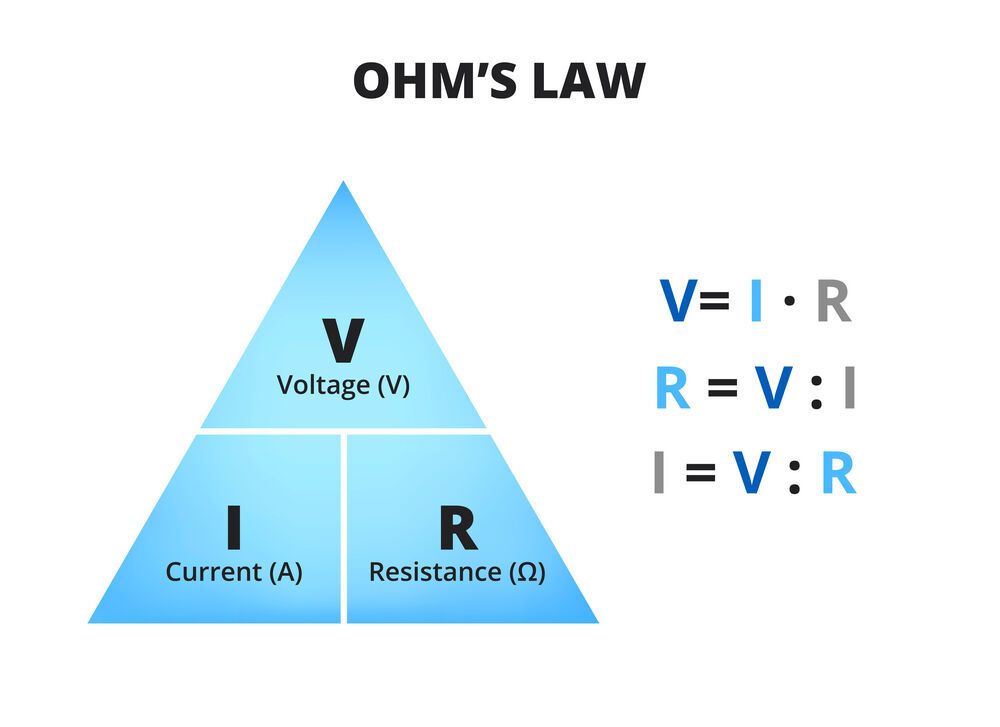
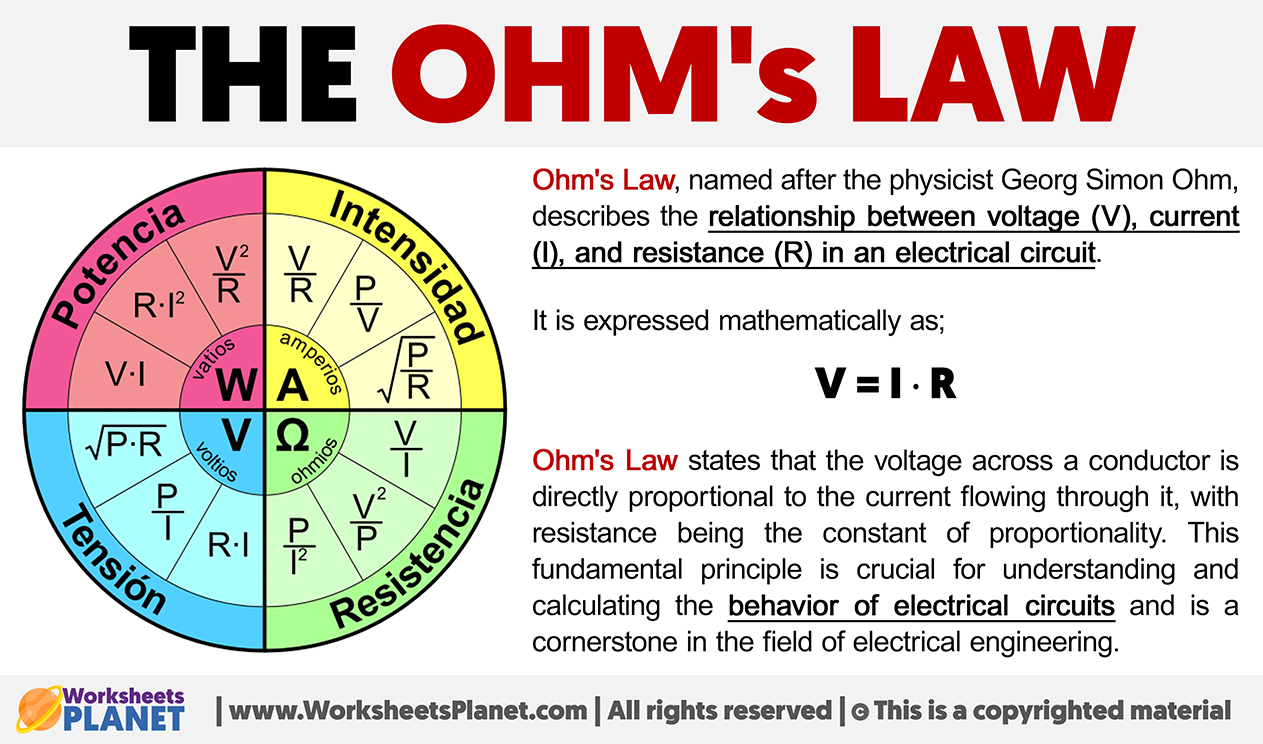
Ohm's Law is like the foundation of understanding circuits. It describes the relationship between three fundamental properties: voltage (V), current (I), and resistance (R). Think of it like this: Voltage is the "push" that gets the electrons moving, resistance is the "obstacle" that slows them down, and current is the "flow" of those electrons. The law, expressed as V = I * R, tells us how these elements interact. Understanding this relationship allows us to predict and control how electricity behaves in a circuit. That's why it's so crucial for engineers, technicians, and even hobbyists tinkering with electronics.
So, what does that "I" represent? It stands for current, often referred to as electrical current. Current is the rate at which electric charge flows through a circuit. It's measured in amperes, often shortened to "amps" (A). Imagine a river: the voltage is the slope of the river, the resistance is how rocky the riverbed is, and the current is the amount of water flowing past a certain point per second.
Why is understanding current so important? Because too much current can be dangerous! It can overload circuits, cause fires, and damage equipment. That's why circuit breakers and fuses exist: to interrupt the flow of current if it exceeds a safe level. Similarly, too little current can mean that a device isn't getting enough power to operate correctly.
Ohm's Law, and thus understanding the meaning of "I," has practical applications everywhere. In education, it's a cornerstone of physics and engineering courses. Students learn to calculate current in different circuit configurations, predict voltage drops, and design circuits that meet specific requirements. In daily life, electricians use Ohm's Law to determine the correct wire gauge for household wiring, ensuring that circuits can handle the expected load. When you're troubleshooting a malfunctioning appliance, understanding current can help you pinpoint the source of the problem.
Want to explore Ohm's Law further? A simple way is to use an online Ohm's Law calculator. You can plug in values for voltage and resistance and instantly see the resulting current. Another fun project is to build a simple circuit with a battery, a resistor, and an LED. Use a multimeter to measure the voltage across the resistor and the current flowing through the circuit. You can then verify Ohm's Law and see it in action! You can even experiment with different resistors to see how changing the resistance affects the current.
Understanding what "I" stands for in Ohm's Law - current - unlocks a fundamental understanding of electricity and empowers you to safely and effectively interact with the electrical world around you. So next time you flip a light switch, remember the simple but powerful relationship described by Ohm's Law, and how the flow of electrical current makes it all possible.